


Portable Solar Power System for Home: Your Guide to Energy Freedom
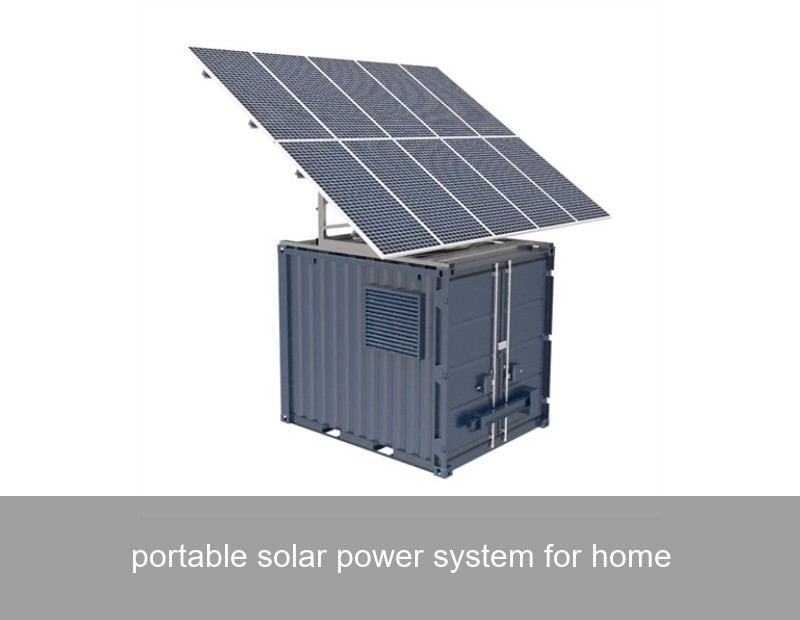
Have you ever been caught in a power outage, watching your refrigerator contents slowly warm up, or felt a pang of guilt (and a hit to your wallet) when the summer air conditioning bill arrives? You're not alone. More homeowners than ever are seeking reliable, clean, and independent power solutions. This is where the concept of a portable solar power system for home shines. Unlike permanent rooftop installations, these versatile systems offer a flexible path to energy resilience, allowing you to harness the sun's power for emergencies, outdoor activities, or even to strategically offset daily energy costs. As a leader in advanced energy storage, Highjoule understands this shift towards modular, user-centric power. We design intelligent systems that empower you to take control, starting with the simple, scalable concept of portable solar.
Table of Contents
- What is a Portable Home Solar Power System?
- Why Consider Portable Solar Now? The Data Behind the Demand
- Key Components of an Effective System
- A Real-World Case Study: Off-Grid Security in California
- Choosing the Right System for Your Needs
- How Highjoule Elevates Portable Solar Solutions
- Your Path to Energy Independence
What Exactly is a Portable Solar Power System for Home?
Let's clear up a common misconception. A portable solar power system for home isn't just a single solar panel you plug into a phone. It's an integrated, movable power station. Typically, it consists of one or more foldable or rollable solar panels, a high-capacity portable power station (a large battery with built-in inverters and charge controllers), and all necessary cables. The core idea is modularity and mobility. You can deploy it in your sunniest backyard spot during the day, power essential devices during a blackout, and easily pack it for a camping trip. It's your personal, plug-and-play microgrid.

Image: A typical portable solar setup for home backup. Source: Unsplash
Why Consider a Portable Solar Power System for Home Now? The Data Behind the Demand
The interest in home-based portable solar isn't just a trend; it's a logical response to global phenomena. Let's look at the facts.
The Phenomenon: Grid Uncertainty and Rising Costs
From extreme weather events in the US to energy market volatility in Europe, the traditional grid is under strain. The U.S. Energy Information Administration (EIA) reports that the average U.S. customer experienced just over 5 hours of power interruptions in 2021, with major events being a significant contributor. Simultaneously, residential electricity prices continue to climb.
The Data: Solar's Soaring Accessibility
While rooftop solar requires a significant upfront investment and installation, portable system prices have dropped dramatically. The technology inside—particularly Lithium Iron Phosphate (LiFePO4) batteries—has become safer, longer-lasting, and more affordable. You can now acquire a robust 1,500-watt-hour portable power station and 400 watts of solar panels for a fraction of the cost of a full rooftop system, providing immediate, tangible benefits.
The Case: The Preparedness-Minded Homeowner
Meet Sarah, a homeowner in Florida. After a near-miss with a hurricane, her primary concern was keeping a medical CPAP machine and a small refrigerator running for 48 hours. A permanent generator was noisy, required fuel storage, and was overkill. Her solution? A portable solar power system for home backup. She now has peace of mind knowing she can power critical health and safety devices from her sun-filled patio, without fumes or complex installation.
Key Components of an Effective Portable Solar Power System
Understanding the parts will help you make an informed choice. Think of it as a team where every member is crucial.
- Portable Solar Panels: These are the fuel harvesters. Monocrystalline panels are the standard for high efficiency in limited space. Look for foldable designs with robust kickstands.
- Portable Power Station: This is the heart and brain. It's a large battery, a pure sine wave inverter (for clean, safe power for electronics), and a solar charge controller in one box. Capacity is measured in watt-hours (Wh).
- Charge Controller & Management System: Built into quality power stations, this regulates the energy flow from panels to battery, preventing damage. Advanced systems, like those in Highjoule products, feature Maximum Power Point Tracking (MPPT) for 30% faster solar charging.
- Cables & Connectivity: Heavy-duty MC4 cables for panels and a variety of outputs (AC outlets, USB-C PD, 12V carports) are essential for connecting your devices.
| Device | Average Wattage | Estimated Runtime* |
|---|---|---|
| LED Light Bulb | 10W | 150 hours |
| Wi-Fi Router & Modem | 20W | 75 hours |
| Mini Refrigerator | 50W (cycling) | ~24-30 hours |
| CPAP Machine (without humidifier) | 30W | 50 hours |
| Laptop | 60W | 25 hours |
*Runtime varies based on actual power draw and conditions. Recharging via solar takes 4-8 hours with adequate sun.
A Real-World Case Study: Off-Grid Security in California's Fire-Prone Zone
Let's examine a concrete application with data. The Miller family owns a cabin in a Northern California forest area prone to Public Safety Power Shutoffs (PSPS) to prevent wildfires. Grid power can be cut for days.
Their Challenge:
Maintain security (gate, cameras, exterior lights), basic communication (satellite messenger, radio), and refrigeration for a weekend during a PSPS event. They needed a solution that was deployable without professional installation and silent to avoid disturbing the wildlife.
The Solution:
They implemented a scalable portable solar power system for home use, centered around a Highjoule Voyager 2000 portable power station (2048Wh LiFePO4 battery) paired with 4x200W foldable solar panels. The system is stored indoors and deployed on the cabin's south-facing deck when a PSPS is announced.
The Data & Outcome:
- Energy Budget: Their calculated daily critical load was ~800Wh.
- Generation: With 800W of solar input, even in winter, they can fully recharge the Voyager 2000 in 3-4 hours of sun.
- Result: During a 3-day shutdown in December 2023, the system provided uninterrupted power for their security and communication devices. The cabin remained secure, and they avoided losing hundreds of dollars worth of food. The system operated silently and required only one repositioning of the panels per day to follow the sun.
This case highlights how a portable system isn't just for gadgets; it's a serious tool for property and safety management.

Image: The core of a reliable system: durable LiFePO4 battery cells. Source: Unsplash
Choosing the Right Portable Solar Power System for Your Home
Your ideal setup depends on your "why." Ask yourself these questions:
- What are my critical devices during an outage? (List them and find their wattage, often on a label.)
- How long do I want to power them without sun? (This determines battery size in Wh.)
- How quickly do I need to recharge from solar? (This determines solar panel wattage. More watts = faster recharge.)
- Do I need to expand the system later? Look for power stations that support "capacity stacking" or extra battery packs.
How Highjoule Elevates the Portable Solar Power System for Home
At Highjoule, our expertise in large-scale commercial and residential energy storage directly informs our portable solutions. We don't just sell boxes; we sell intelligent, integrated energy resilience.
Our Highjoule Voyager Series portable power stations are built with the same core principles as our grid-tied systems:
- Industrial-Grade LiFePO4 Batteries: For 3,500+ life cycles (10x longer than standard lithium-ion), meaning a decade or more of reliable service.
- Advanced Hybrid MPPT Charge Controllers: Maximizing every watt of solar input, even on cloudy days, ensuring your system recovers faster.
- Seamless Scalability: The Voyager 2000 can connect to two additional battery units, tripling its capacity. It can also interface with Highjoule's home energy management system, allowing your portable unit to become part of a whole-home backup plan in the future.
- Smart App Control: Monitor solar input, battery level, and device output in real-time from your phone—a feature born from our larger system management platforms.
We see the portable solar power system for home as the most accessible entry point into energy self-sufficiency. It's a practical first step that teaches energy awareness and can grow with your needs, potentially integrating with a full Highjoule home battery system down the line.
Your Path to Energy Independence
The journey to taking control of your power doesn't have to start with a major renovation or a huge financial commitment. It can start with a single portable solar panel and a power station on your patio. What single appliance or device would give you the most peace of mind to keep running when the grid goes down? Identifying that is the perfect first step toward your own energy freedom.
 Inquiry
 Online Chat