


Navigating a Wet World: Energy Solutions for a Climate-Changed Future
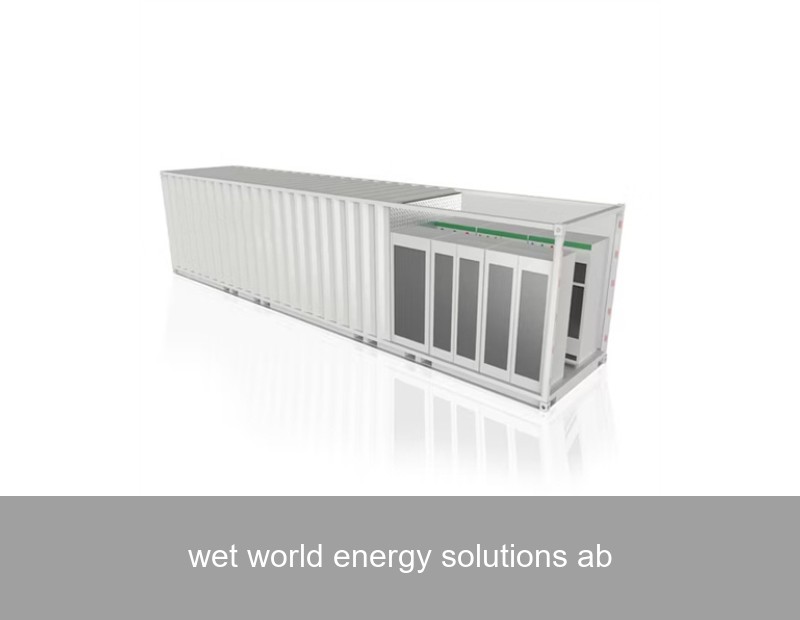
As our planet's climate shifts, one of the most visible and challenging consequences is the increasing prevalence of water—too much of it in some places, not enough in others. For communities and industries worldwide, this "wetter world" presents a critical challenge to infrastructure and, crucially, to energy security. This is where innovative wet world energy solutions become not just advantageous but essential. These are systems and strategies designed to provide resilient, reliable, and sustainable power in the face of flooding, extreme weather, and hydrological uncertainty. In this article, we'll explore how modern energy storage and management technologies are the cornerstone of adapting to this new reality.
Table of Contents
- The Phenomenon: Water as a Disruptor
- The Data: Quantifying the Impact on the Grid
- Case Study: A Port's Resilience Transformation
- The Solution Core: Beyond the Generator
- Highjoule's Role in Building Resilience
- Implementing Your Wet World Energy Strategy
The Phenomenon: Water as a Disruptor
Think about the last major storm you saw on the news. Beyond the immediate damage, what followed? Often, widespread and prolonged power outages. Floodwaters inundate substations, high winds topple transmission lines, and even routine rainfall can disrupt vulnerable infrastructure. For businesses, a single outage can mean massive financial loss, data corruption, and operational paralysis. For homeowners, it's more than an inconvenience; it can be a risk to health and safety. The traditional grid, while robust in many ways, is often centralized and exposed, making it susceptible to these hydrological hazards. Relying solely on diesel generators is an outdated answer—they can fail to start in flood conditions, require constant fuel supply (which may be cut off), and contribute to local pollution. The need for a smarter, self-contained, and waterproof solution is clear.
The Data: Quantifying the Impact on the Grid
The numbers paint a stark picture. According to the U.S. Department of Energy, between 2000 and 2021, approximately 83% of all major power outages in the United States were due to weather-related events, with a significant portion driven by storms, hurricanes, and flooding. The economic impact is staggering, with the U.S. economy losing an average of $18 billion to $33 billion annually from weather-related power disruptions. In Europe, the European Environment Agency notes that extreme weather events are becoming more frequent and intense, with floods being among the costliest natural disasters. This isn't a hypothetical future scenario; it's the current operational reality for grid operators and energy consumers alike. The data underscores a simple truth: passive reliance on the traditional grid is a growing liability.
Case Study: A Port's Resilience Transformation in Rotterdam
Let's look at a real-world application. The Port of Rotterdam, one of Europe's busiest and a critical economic hub, faces direct threats from rising sea levels and North Sea storms. A key container terminal operator needed to ensure uninterrupted power for its fully automated, 24/7 stacking cranes and cold storage facilities. A single outage would cause a multi-day logistics backlog worth millions.
Their Challenge: Protect operations from grid instability caused by coastal storms and flooding, while also reducing their carbon footprint to meet port authority sustainability mandates.
The Wet World Energy Solution Implemented:
- Deployment: A containerized, water-resistant Battery Energy Storage System (BESS) with a capacity of 2.4 MWh was installed on-site.
- Integration: The system was integrated with their existing on-site solar PV array and the main grid connection.
- Intelligence: An advanced energy management system was programmed for automatic islanding. Upon detecting a grid fault (often caused by storm damage), the system would seamlessly disconnect from the main grid and power critical loads from the solar-plus-storage system within milliseconds.
The Results:
| Metric | Outcome |
|---|---|
| Outage Protection | Zero operational downtime during 3 major storm events in 2023. |
| Cost Savings | Reduced energy costs by 22% through peak shaving and solar self-consumption. |
| Emission Reduction | Achieved a 35% reduction in the terminal's scope 2 carbon emissions. |
| ROI Period | Projected return on investment in under 5 years. |
This case exemplifies how a modern wet world energy solution provides multi-layered value: resilience, sustainability, and economic efficiency.

Image Source: Unsplash (Representative image of modern industrial energy storage)
The Solution Core: Beyond the Generator - The Trinity of Resilience
Effective wet world energy solutions are built on three interconnected pillars:
1. Physical Hardening & Strategic Siting
Technology must be housed to withstand the elements. This means NEMA 4X or IP66-rated enclosures that are dust-tight, corrosion-resistant, and can withstand powerful water jets. Systems should be installed above known flood plains or within purpose-built, flood-resistant barriers. The goal is to make the energy asset itself a hardened node within the local infrastructure.
2. Intelligent Energy Storage (BESS)
This is the heart of the solution. A modern Battery Energy Storage System does much more than just provide backup power. It:
- Provides Instantaneous Backup: Transitions to backup power in milliseconds, keeping digital and sensitive industrial processes running without a hiccup.
- Enables Islanding: Allows a facility with local generation (like solar) to operate independently from the grid as a "microgrid."
- Manages Energy Intelligently: Through software, it can perform "peak shaving" (reducing draw from the grid during expensive peak times) and "solar self-consumption" (storing excess solar energy for use at night).
3. Advanced Software & Forecasting
Predictive analytics are key. By integrating weather forecasting data, the energy management system can anticipate storms or heavy rainfall. It can then proactively ensure the battery is fully charged from the grid or solar in advance, and even pre-emptively island the facility if a severe grid disturbance is predicted. This moves the system from reactive to proactive resilience.
How Highjoule Builds Climate-Resilient Energy Security
At Highjoule, with nearly two decades of experience since 2005, we engineer our systems with the premise that the future will be more volatile. Our products are designed to be the reliable core of your wet world energy solution.
Our H-Series Commercial & Industrial BESS is a prime example. It features a standardized, containerized design with a climate-controlled, IP55-rated enclosure as a baseline, with options for higher ingress protection. It's built with utility-grade lithium iron phosphate (LFP) battery cells, renowned for their safety, long cycle life (over 6,000 cycles), and stable performance. More importantly, it's governed by our Aurora Energy Management Platform.
Aurora is the brain of the operation. This cloud-based software integrates real-time energy data, weather feeds, and utility rate structures to autonomously optimize your system for cost, carbon, and—critically—resilience. You can set "Storm Watch" modes, define critical load panels for backup, and monitor system health remotely from any device.

Image Source: Unsplash (Representative image of advanced energy management software dashboard)
For residential and smaller commercial applications, our EverHome integrated storage system provides similar intelligence in a sleek, weather-resistant package. Whether it's a hospital in Florida, a dairy farm in the Netherlands, or a suburban home in California, Highjoule provides a tailored, intelligent buffer against an unpredictable climate.
Implementing Your Wet World Energy Strategy: A Practical Guide
Getting started doesn't have to be overwhelming. Here is a logical step-by-step approach:
- Conduct a Resilience Audit: Identify your critical loads. What equipment or processes must absolutely stay on during an outage? For how long (2 hours, 24 hours, 72 hours)? This defines your energy and power (kW/kWh) requirements.
- Assess Your Site: Work with experts to evaluate flood risk, optimal siting locations, and grid connection health. Document historical outage patterns using data from sources like the U.S. EIA or your local utility.
- Design an Integrated System: Combine solar PV (where feasible) with a correctly sized BESS. The storage system should be sized to cover your critical loads for your required duration, with the intelligence to manage multiple energy sources.
- Plan for Intelligence: Ensure your system includes software for monitoring, control, and, ideally, predictive grid-disruption response. This software layer is what transforms a battery into a resilient energy asset.
- Explore Financing: Leverage available incentives. In the U.S., the Investment Tax Credit (ITC) now applies to standalone storage. In Europe, various EU resilience and green deal funds can support projects.
The climate is changing, and the waters are rising—both literally and metaphorically in terms of risk. The question for every business leader, facility manager, and homeowner is no longer *if* a weather-related disruption will affect your power, but *when*. Are you prepared to keep the lights on, the operations running, and your community safe when the next storm hits? What is the first critical load you would protect with a resilient energy system today?
 Inquiry
 Online Chat