


Demystifying the Price for a Solar Generator: A Smart Investment Guide
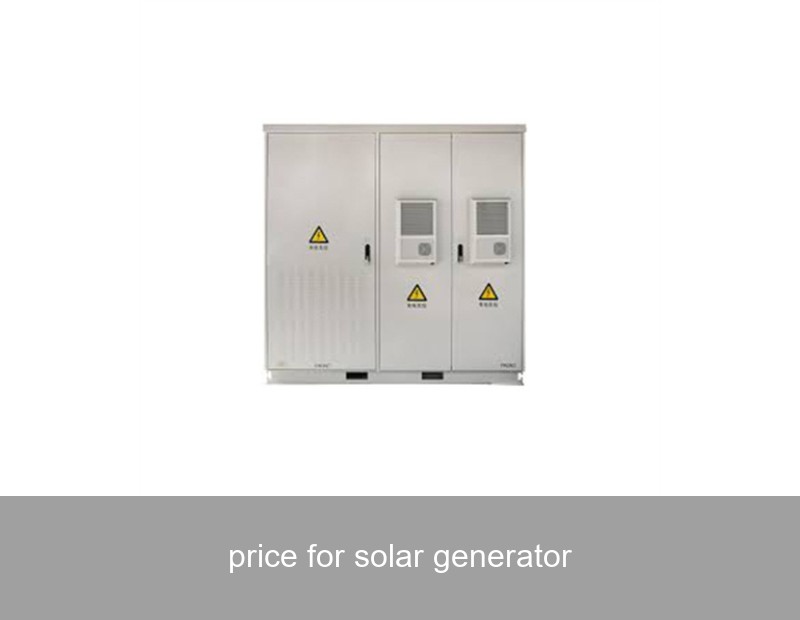
You've likely seen the sleek, silent boxes powering off-grid cabins or providing backup during a storm and wondered, "What's the real price for a solar generator?" It's a common starting point, but the answer is more nuanced than a single number. The cost isn't just about the box you buy; it's about the long-term value of energy independence, resilience, and sustainability. In this guide, we'll break down the components, the true cost of ownership, and how companies like Highjoule—a global leader in advanced energy storage since 2005—are making smart, efficient power solutions more accessible for homes and businesses across Europe and the US.
Table of Contents
- The Real Cost: More Than a Price Tag
- Key Components That Drive the Price
- Case Study: A German Bed & Breakfast's Journey
- Highjoule's Smart Solutions: Balancing Price and Performance
- Future Trends: Where is the Market Heading?
The Real Cost: More Than a Price Tag
When consumers search for the price for a solar generator, they often encounter a wide range, from a few hundred to several thousand dollars or euros. This immediate sticker shock can be misleading. Think of it this way: you're not just buying a device; you're investing in a personal power plant. The true cost encompasses the initial purchase, installation (if any), the lifespan of the system, and the savings it generates by offsetting grid electricity. A robust system from a trusted provider may have a higher upfront cost but delivers far greater value over 10-15 years through durability, efficiency, and superior warranty.
Image Source: Unsplash - A modern home solar and storage installation.
Key Components That Drive the Price
To understand the pricing, you need to know what's inside. A complete solar generator system typically includes:
- Solar Panels: The fuel source. Price varies by efficiency and brand.
- Battery Storage: The heart of the system. This is where technology and cost diverge significantly.
- Inverter/Charger: The brain, converting DC power from panels and batteries to usable AC power for your appliances.
- Balance of System (BOS): Wiring, mounting, monitoring systems, and professional installation.
The battery is the most critical cost and performance factor. Traditional lead-acid batteries are cheaper upfront but have a short lifespan and low depth of discharge. Modern Lithium-ion (Li-ion) batteries, especially Lithium Iron Phosphate (LFP), offer longer life, safer operation, and better value over time. This is where the expertise of a company like Highjoule becomes crucial. Our H-Joule Cube series for residential use utilizes advanced LFP chemistry, offering a 10+ year warranty and a design that seamlessly integrates with existing or new solar arrays, ensuring you get the most from every kilowatt-hour.
Case Study: A German Bed & Breakfast's Energy Transformation
Let's look at real data from a project in Bavaria, Germany. A family-run Bed & Breakfast with high seasonal energy demand faced rising electricity costs and wanted to improve its sustainability profile for guests.
- Phenomenon: High utility bills (€4,200 annually) and unreliable grid power during winter storms.
- Solution: A 15 kW solar array paired with a 25 kWh Highjoule H-Joule Cube battery storage system.
- Data & Outcome: The system covered 75% of the property's annual electricity needs. With Germany's Fraunhofer ISE reporting consistent drops in solar PV costs, the investment made solid financial sense. The upfront price for the solar generator system was €28,500. After leveraging available local subsidies, the net cost was €21,000. The business now saves approximately €3,150 per year on electricity and earns a small feed-in tariff surplus, leading to a payback period of under 7 years. Beyond numbers, the B&B now markets itself as "energy-independent," a unique selling point that attracts eco-conscious travelers.
This case illustrates that the price is an investment with a measurable return, both financially and operationally.
Highjoule's Smart Solutions: Balancing Price and Performance
At Highjoule, we engineer systems that optimize the balance between upfront cost and lifetime value. For commercial and industrial applications, our H-Joule Matrix scalable containerized solutions provide grid-scale storage capabilities, helping businesses manage demand charges and participate in grid services. For residential and small business owners, the modular H-Joule Cube allows you to start with what you need and expand capacity as your needs grow, making the initial entry price for a solar generator system more manageable.

Image Source: Unsplash - Technician monitoring an advanced energy storage system.
Our intelligent energy management software is the unsung hero. It learns your consumption patterns, automatically switches between solar, battery, and grid power to maximize savings, and can even provide backup power in milliseconds during an outage. This smart technology ensures you extract maximum value from your investment, effectively lowering the cost per reliable cycle over the system's lifetime.
Understanding Price Tiers in the Market
| System Type | Typical Capacity | Price Range (USD/EUR, installed) | Best For | Key Consideration |
|---|---|---|---|---|
| Portable Power Station | 0.3 - 2 kWh | $300 - $2,500 | Camping, tailgating, minor outages | Not a whole-home solution; limited expansion. |
| Residential Hybrid System (like Highjoule H-Joule Cube) | 5 - 30+ kWh | $10,000 - $35,000+ | Home backup, daily self-consumption, bill savings | Long-term investment; consider warranty, lifecycle costs, and integration. |
| Commercial/Industrial System (like Highjoule H-Joule Matrix) | 100 kWh - 10 MWh+ | Significant project-based investment | Peak shaving, demand charge management, microgrids | ROI depends on utility rate structure and grid service opportunities. |
Future Trends: Where is the Market Heading?
According to the International Energy Agency (IEA), global energy storage capacity is set to skyrocket, driven by falling costs and supportive policies. The price for solar generator technology, particularly batteries, is expected to continue a gradual decline as manufacturing scales and technology advances. However, the focus is shifting from pure upfront cost to total value: intelligence, software integration, grid interactivity, and longevity. Companies that, like Highjoule, prioritize system intelligence and robust design will provide customers with not just a product, but a resilient and future-proof energy asset.
So, as you evaluate your options, ask yourself: Is your primary goal the lowest price today, or the highest value and peace of mind for the next decade and beyond? What energy independence milestone do you want to achieve first—keeping the lights on during the next storm, eliminating your peak demand charges, or finally cutting the cord from fossil-fuel-dependent grid power?
 Inquiry
 Online Chat