


CP Solar in Kenya: How Much Does It Really Cost to Power Your Future?
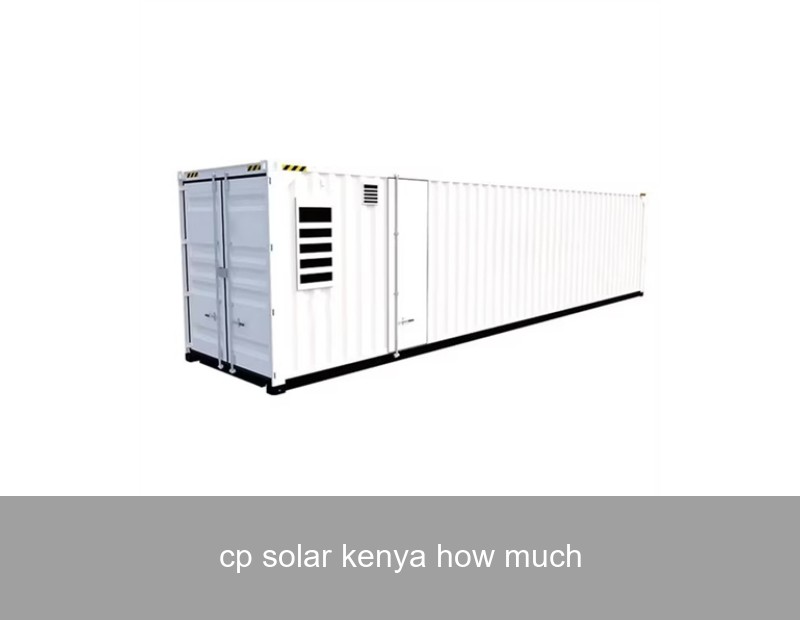
If you're exploring solar power in Kenya, you've likely come across the term "CP solar" and are now facing the crucial question: "How much?" It's a smart question to ask. The initial price tag is just one piece of the puzzle. The true cost encompasses the system's quality, its long-term performance, and the value of reliable, clean energy for your home or business. This article will demystify the costs of solar photovoltaic (PV) and battery storage systems in the Kenyan context, providing you with the data and insights needed to make an informed investment in your energy independence.
Table of Contents
- The Kenyan Solar Boom: More Than Just Sunshine
- Breaking Down the "How Much": System Components & Costs
- From Quote to Kilowatt: A Real-World Case Study in Nairobi
- Looking Beyond the Price: Quality, Storage, and Total Value
- The Highjoule Solution: Intelligent Storage for the Kenyan Market
- Your Solar Journey: What's the Right Next Step?
The Kenyan Solar Boom: More Than Just Sunshine
Kenya's embrace of solar energy is a powerful response to a clear challenge. While the country enjoys superb solar irradiance—averaging 4-6 kWh/m²/day—grid reliability and electricity costs can be concerns for many households and businesses. The phenomenon? A rapid shift towards self-generated power. The data is compelling: Kenya's solar PV capacity has been growing steadily, driven by residential, commercial, and industrial users seeking to mitigate power outages and reduce long-term energy expenses. This isn't just about saving money; it's about gaining control and ensuring productivity never halts because of a blackout.

Image: A growing number of Kenyan homes and businesses are investing in rooftop solar. (Source: Unsplash)
Breaking Down the "How Much": System Components & Costs
So, let's address the core question. The cost of a CP solar system in Kenya is not a single figure. It's a sum of parts, each varying based on your specific energy needs. A typical grid-tie or hybrid solar system with battery backup includes:
- Solar Panels: The cost per watt-peak (Wp) has decreased globally. In Kenya, you might find quotes ranging from KES 50 to KES 80 per Wp for quality tier-1 panels.
- Inverter: The heart of the system. A good hybrid inverter, which can manage solar input, battery charging, and grid interaction, is a significant cost component. Prices vary widely with capacity and features.
- Battery Storage: This is often the most variable and critical cost factor. Traditional lead-acid batteries have a lower upfront cost but a shorter lifespan. Modern Lithium-ion (Li-ion) batteries, like Lithium Iron Phosphate (LFP), have a higher initial price but offer far more cycles, deeper usable capacity, and longer warranties, providing better value over time.
- Balance of System (BOS): Mounting structures, cabling, protection devices, and installation labor.
To give you a tangible range, a quality 5kW hybrid solar system (sufficient for a medium-sized home with essential appliances) with a reliable lithium-ion battery bank (e.g., 10-15 kWh usable storage) can have a total installed cost in the range of KES 1.8 million to KES 3 million+. This wide range depends heavily on the battery technology and capacity chosen, as well as the brand and quality of all components.
From Quote to Kilowatt: A Real-World Case Study in Nairobi
Let's move from theory to practice. Consider the case of a small manufacturing workshop in Nairobi's Industrial Area. The challenge: frequent daytime power interruptions disrupting production lines, leading to lost revenue and idle labor.
- Phenomenon: Unplanned grid outages averaging 8-10 hours per week.
- Solution Deployed: A 25kW rooftop solar PV system coupled with a 40 kWh lithium-ion battery storage system, configured as a hybrid system to power critical machinery during grid failures.
- Data & Outcome: The system was commissioned in early 2023. In its first year, it provided over 95% uptime for critical loads, reducing diesel generator usage by an estimated 90%. The payback period, factoring in saved energy costs, avoided generator fuel/maintenance, and prevented production losses, is projected to be under 5 years. The workshop manager noted, "The solar and battery system isn't just an expense; it's an insurance policy for our productivity."
Looking Beyond the Price: Quality, Storage, and Total Value
When evaluating "how much," the cheapest quote can be the most expensive long-term investment. A system built with subpar components or poor design may fail to meet expectations, degrade quickly, or even pose safety risks. Your focus should be on Levelized Cost of Energy (LCOE)—the total lifetime cost of the system divided by the total energy it will produce. A slightly more expensive, high-efficiency system with a superior battery often has a lower LCOE.
The battery is the linchpin. Think of it this way: the solar panels harvest energy, but the battery bank liberates it, allowing you to use solar power at night or during outages. The technology choice here is paramount. This is where global expertise in advanced Battery Energy Storage Systems (BESS) becomes directly relevant to the Kenyan market.
The Highjoule Solution: Intelligent Storage for the Kenyan Market
At Highjoule, with nearly two decades of experience as a global leader in advanced储能系统, we understand that the core of a reliable solar investment is intelligent storage. For partners and clients in markets like Kenya, we provide the technological backbone that turns a simple solar installation into a resilient power solution.
Our Highjoule HPS Series of integrated energy storage systems are designed for commercial and industrial applications. These systems are built with ultra-safe and long-life LFP battery chemistry, coupled with sophisticated energy management software. What does this mean for a Kenyan business or large estate?
- Maximized Solar Self-Consumption: Our systems intelligently store excess daytime solar energy rather than exporting it, ensuring it's available for use in the evening, dramatically increasing the value of your solar panels.
- Uninterruptible Power Supply (UPS) Functionality: Seamless transition to battery power during a grid outage in milliseconds, keeping critical operations running without a flicker.
- Durability for Demanding Environments: Engineered for performance and longevity, reducing the total cost of ownership compared to less robust alternatives.
For residential and smaller commercial projects, Highjoule's technology is often integrated by our local partner installers, who utilize our battery modules and controls to build systems that are not just affordable upfront but are truly sustainable investments. We empower our partners with the technology to answer the "how much" question with a focus on lifetime value, not just initial price.

Image: Advanced, modular battery storage systems form the heart of a resilient solar power setup. (Source: Unsplash)
Your Solar Journey: What's the Right Next Step?
Asking "CP solar Kenya how much?" is the perfect starting point. The journey to a clear answer involves:
- Audit Your Energy Profile: Review your electricity bills. What is your average daily kWh consumption? What are your critical loads that must never go off?
- Seek Reputable Partners: Engage with certified installers who can provide detailed site assessments and transparent quotations that itemize components, especially the battery specs (capacity, chemistry, warranty cycles).
- Evaluate for the Long Term: Compare quotes not just on total price, but on the quality of key components, the proposed system design, and the expected performance over 10+ years.
Given your specific energy needs and the desire for true independence, what aspect of a solar and storage system—be it upfront cost, nightly backup duration, or total lifecycle value—is the most critical factor for your decision?
 Inquiry
 Online Chat