


Beyond the Price Tag: Understanding the True Value of a 300W Solar Panel in Nigeria
If you're searching for the "price of a 300 watts solar panel in Nigeria," you're likely at the beginning of a crucial journey towards energy independence. It's a smart first question, but let's be honest: focusing solely on that single component's cost is like buying a single spark plug and expecting a full car. The real story—and the real value—lies in what that panel can do for you when integrated into a reliable, high-performance system. For homes and businesses across Nigeria grappling with unreliable grid supply and soaring fuel costs, the goal isn't just to buy a panel; it's to secure predictable, clean, and cost-effective power.
The Nigerian Energy Context: More Than Just a Power Problem
You know the phenomenon all too well: the grid goes down, the hum of generators fills the air, and the budget for diesel or petrol evaporates. The data paints a stark picture. According to the World Bank, over 85 million Nigerians lack access to grid electricity, and for those connected, supply is often intermittent. Businesses and households are forced into a costly reliance on backup generators, which account for a significant portion of operational expenses and contribute to noise and air pollution.
This is where solar energy transitions from an alternative to a necessity. A single 300W monocrystalline panel, under ideal Nigerian sunlight, can generate approximately 1.2 to 1.5 kWh of electricity per day. That's enough to power essential loads like efficient lighting, a television, a fan, and charge mobile devices for a small household. But to harness that energy reliably day and night, you need a complete ecosystem.

Image: A modern solar installation, highlighting the panels and system components crucial for reliable power.
Decoding the 300W Solar Panel Price in Nigeria
As of 2023, the standalone price for a quality 300W monocrystalline solar panel in Nigeria can range from **₦85,000 to ₦150,000**. This wide range isn't arbitrary; it's driven by several key factors:
- Panel Technology & Efficiency: Monocrystalline panels (more efficient, space-saving) command a premium over polycrystalline. Higher efficiency means you need fewer panels to achieve your energy goal.
- Brand and Quality Assurance: Tier-1 brands with proven durability, longer performance warranties (25+ years), and reliable technical support typically cost more. This investment guards against premature degradation.
- Importation & Logistics: Fluctuations in customs duties, shipping costs, and forex rates directly impact the final market price.
- Supplier Markup: Prices vary between large-scale distributors and local retailers.
However, this panel cost is just the tip of the iceberg. Let's break down the typical cost composition for a functional 1.5kW solar system built around several 300W panels:
| System Component | Approximate Cost Share | Why It Matters |
|---|---|---|
| Solar Panels (e.g., 5 x 300W) | 25-30% | The energy harvesters; quality dictates long-term yield. |
| Inverter & Battery Storage | 50-60% | The heart and brain of the system. Converts and stores power for use when you need it. |
| Balance of System (Mounting, Cables, Protection) | 10-15% | Ensures safety, durability, and optimal performance. Cutting corners here is risky. |
| Installation & Professional Services | 5-10% | Critical for safety, efficiency, and unlocking product warranties. |
The System Behind the Panel: Why Balance of System is King
Think of it this way: a 300W panel is a brilliant water collector. But without a pump, pipes, a storage tank, and a filtration system (the Balance of System), you can't reliably get clean water to your tap. The same logic applies to solar. The inverter is arguably the most critical component. It's not just about converting DC to AC; a smart inverter manages energy flow between panels, batteries, and your loads with precision, maximizing efficiency and protecting your equipment.
This is where expertise matters. An undersized inverter will throttle your panel output. A low-quality battery paired with a mismatched charge controller will fail prematurely, turning your "cheap" system into a costly disappointment. The true metric is Levelized Cost of Energy (LCOE)—the total cost of the system over its lifetime divided by the total energy it produces. A slightly more expensive, high-quality system with robust components often delivers a far lower, more predictable LCOE.
A Real Case Study: From Generator Dependence to Solar Confidence
Consider the experience of a small medium enterprise (SME) in Lagos running a boutique hotel. Their monthly diesel bill for a 15kVA generator averaged ₦450,000, with noise and maintenance as constant headaches. They explored solar quotes fixated on panel price alone.
Instead, they partnered with a reputable integrator who designed a system focused on outcome: 24/7 power for guest rooms, reception, and critical loads. The solution utilized 24 high-efficiency 300W panels (7.2kW array), coupled with a scalable Highjoule H-IQ Commercial Battery System and a sophisticated hybrid inverter. The initial investment was significant, but the results were transformative:
- Diesel Savings: Generator runtime reduced by over 90%, slashing fuel costs to under ₦40,000 monthly.
- ROI: The system paid for itself in under 4 years through fuel savings alone.
- Brand Value: The hotel now markets itself as a "quiet, sustainable stay," attracting eco-conscious guests.
This case underscores that the value was unlocked not by the panels alone, but by the intelligent, storage-integrated system they powered.
Highjoule's Integrated Approach: Delivering Reliability, Not Just Hardware
At Highjoule, with nearly two decades of global experience in advanced energy storage, we view the solar panel as one vital component in a sophisticated energy orchestra. For the Nigerian market, we provide the core technology that makes off-grid and hybrid systems truly resilient: intelligent Battery Energy Storage Systems (BESS).
Our H-IQ series for residential and commercial applications is built for the challenges of diverse climates. These modular lithium-ion phosphate (LiFePO4) battery systems come with integrated energy management software. This means they don't just store energy; they optimize it. The system learns consumption patterns, prioritizes solar self-consumption, and ensures critical loads stay on during grid outages—all managed via a user-friendly app.

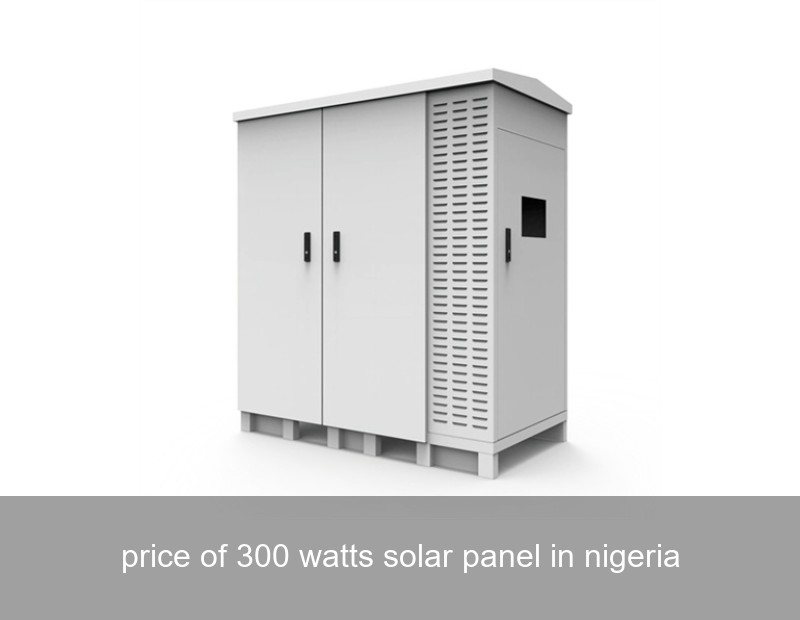
Image: A modern battery storage unit, similar to Highjoule's H-IQ series, essential for reliable solar power after sunset.
For larger industrial or microgrid applications, our Highjoule Grid-Scale BESS solutions provide grid stabilization and enable higher penetration of renewable energy. We partner with leading solar panel manufacturers and certified local installers across key regions, ensuring that when you ask about the "price of a 300 watts solar panel in Nigeria," you are guided towards a complete, Highjoule-optimized solution that delivers decades of reliable service.
Making the Right Investment: A Framework for Nigerian Consumers
So, how should you proceed? Shift your mindset from commodity purchasing to solution investing. Follow this logical framework:
- Audit Your Energy Needs: Don't guess. List your essential appliances, their wattage, and daily usage hours. This defines your required daily kWh consumption—the true target your system must hit.
- Prioritize System Components: Allocate your budget wisely. Invest in a high-quality inverter and battery (like Highjoule's H-IQ) that can grow with your needs. Choose durable, efficient panels from reputable brands.
- Demand a Professional Design & Quote: A credible provider will offer a detailed site assessment, system design, and a transparent quote that breaks down all component and installation costs, not just panel prices.
- Analyze Long-Term Value: Compare quotes based on total system cost, expected energy output, warranty terms (product AND performance), and the track record of the technology providers and installers.
Remember, as noted by the International Energy Agency (IEA), global solar PV supply chains are evolving rapidly, emphasizing the need for quality and sustainability in manufacturing.
Given Nigeria's immense solar potential and pressing energy needs, what specific challenge in your home or business—be it preserving perishable goods, powering critical medical equipment, or ensuring your children can study at night—will you choose to solve first with a properly designed solar-plus-storage system?
 Inquiry
 Online Chat