


Putting Solar Panels on Your Roof: Your Guide to a Smarter, More Resilient Home Energy System
So, you're thinking about putting solar panels on your roof. That's a fantastic decision, and you're not alone. Across Europe and the U.S., homeowners are turning their roofs into personal power stations. But here's a crucial insight from the industry: the solar panels themselves are just the beginning. The true magic—and the real value—lies in what you do with that clean energy once it's produced. Let's explore how to transform a simple solar installation into a comprehensive, intelligent, and resilient home energy solution.
Table of Contents
The Phenomenon: More Than Just Panels
For years, the primary goal of putting solar panels on your roof was to reduce electricity bills and lower your carbon footprint. And they do that brilliantly! However, many new solar owners quickly encounter a common reality: your panels produce the most energy in the middle of the day when you might not be home. Without a way to store that excess, it gets sent back to the grid, often for minimal credit. Then, in the evening when demand peaks, you're drawing expensive power back from the utility. This cycle leaves significant savings and self-sufficiency on the table.
Image Source: Unsplash - Professional photo of residential solar installation.
The Data: Why Storage is the Missing Piece
The economics of solar are evolving. In many regions, feed-in tariffs (what you get paid for excess solar) are decreasing, while time-of-use electricity rates are becoming more common. According to the U.S. Department of Energy, pairing storage with solar can increase a homeowner's consumption of self-generated electricity from 30-50% to over 80%. This isn't just about savings; it's about resilience. With severe weather events causing more frequent power outages, a solar system without storage may still go dark when the grid fails. A battery storage system keeps your lights on and your fridge running.
The Logical Energy Progression
- Step 1 (Basic): Install solar panels. Reduce daytime grid consumption.
- Step 2 (Smart): Add a battery. Store excess solar for use at night or during outages.
- Step 3 (Intelligent): Integrate an energy management system. This brain optimizes when to store, use, or even sell energy based on weather forecasts, usage patterns, and tariff rates.
Case Study: The Smith Family in California
Let's look at a real-world example. The Smith family in Sacramento, California, installed a 8kW solar system in 2020. While their bills dropped, they were still subject to high evening rates and wildfire-related Public Safety Power Shutoffs (PSPS). In 2022, they decided to upgrade their system by integrating a Highjoule ResiCore 10 battery storage unit and the Highjoule Energy Hub smart controller.
| Metric | Solar Only (2021) | Solar + Highjoule Storage (2023) |
|---|---|---|
| Self-Consumption of Solar | 42% | 92% |
| Monthly Bill Savings | 65% | 94% (near-zero) |
| Grid Independence During Outages | 0 hours | Critical loads powered for 48+ hours |
| Participation in Grid Services* | No | Yes (generated small income stream) |
*In some markets, utilities compensate customers for allowing controlled battery discharge during peak grid demand.
"The peace of mind is priceless," said Mr. Smith. "During the last outage, our neighbors were in the dark, but our house kept running. The system paid for the upgrade faster than we expected because it's constantly optimizing."
The Solution: Intelligent Energy Management
This is where the conversation moves beyond hardware to intelligent software. A modern home energy system should think for itself. This is the core of what Highjoule provides. When putting solar panels on your roof, consider them as the first component in an integrated ecosystem.

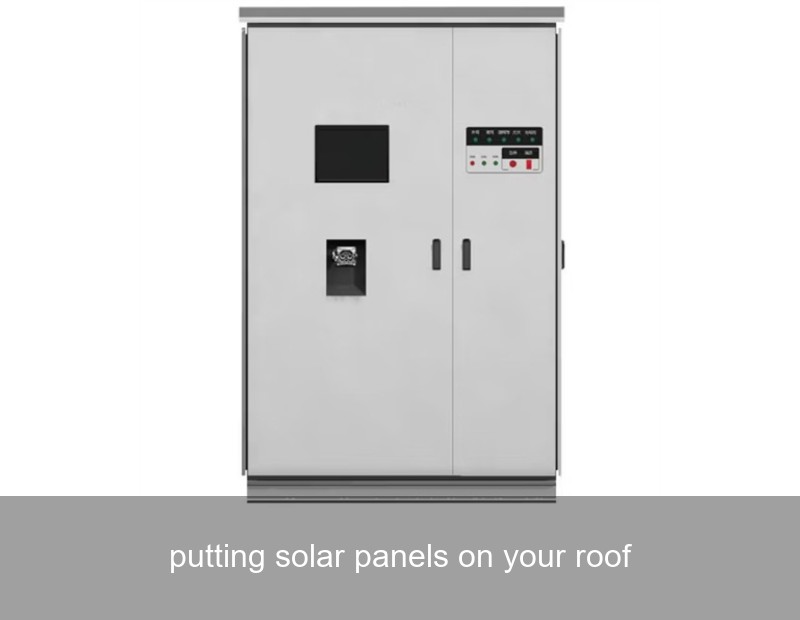
Image Source: Unsplash - Example of a sleek, installed home battery unit.
Highjoule's Energy Operating System (EOS) is the intelligence behind our storage systems. It doesn't just react; it predicts. By analyzing local weather data, it knows if tomorrow will be sunny or cloudy and adjusts charging strategies accordingly. It learns your household's daily rhythm and can be programmed to ensure your electric vehicle is charged with surplus solar, not grid power.
What Highjoule Brings to Your Solar Project
- ResiCore Home Battery Series: Scalable, modular lithium iron phosphate (LFP) battery systems known for safety, longevity, and seamless integration with new or existing solar arrays.
- The Energy Hub: A unified inverter and controller that manages power flow between solar, battery, home, and grid with military-grade cybersecurity.
- Highjoule EOS Software: The user-friendly app that gives you full visibility and control, allowing for modes like "Maximize Savings," "Storm Watch (auto-top-up before bad weather)," and "Full Backup."
Our systems are designed for the demands of both the European and North American markets, complying with the strictest safety and grid interconnection standards. For larger properties or small businesses, our Commercial & Industrial (C&I) solutions offer the same intelligent management at a greater scale.
Choosing the Right Technology Partner
When embarking on your solar-plus-storage journey, the partner you choose is as important as the technology. Look for a provider with deep system integration expertise, not just component sales. The Solar Energy Industries Association (SEIA) provides excellent resources on what to ask potential installers. Key questions should include: Is the battery chemistry safe and durable (like LFP)? Can the system integrate with my future needs, like an EV charger or heat pump? Does the software receive regular updates?
Highjoule works through a network of certified, trained installers. We ensure they are experts not only in mounting panels but in designing and commissioning a fully synchronized energy system that delivers on the promise of true energy independence. Our global experience since 2005 means we've navigated the complex grid policies of Germany, the variable climates of the UK, and the diverse utility markets across the U.S.
What's Your Energy Independence Goal?
Putting solar panels on your roof is a powerful first step. Now, we challenge you to envision the next step. Is it eliminating your electric bill entirely? Is it ensuring your family's safety and comfort through any grid disruption? Or is it contributing to a more stable, renewable grid for your community? The technology to achieve all this exists today.
What single energy concern—be it cost, reliability, or environmental impact—is most important for you to solve with your roof's new power plant?
 Inquiry
 Online Chat