


Unlocking Power and Longevity: A Deep Dive into the 84V 50Ah Lithium Battery
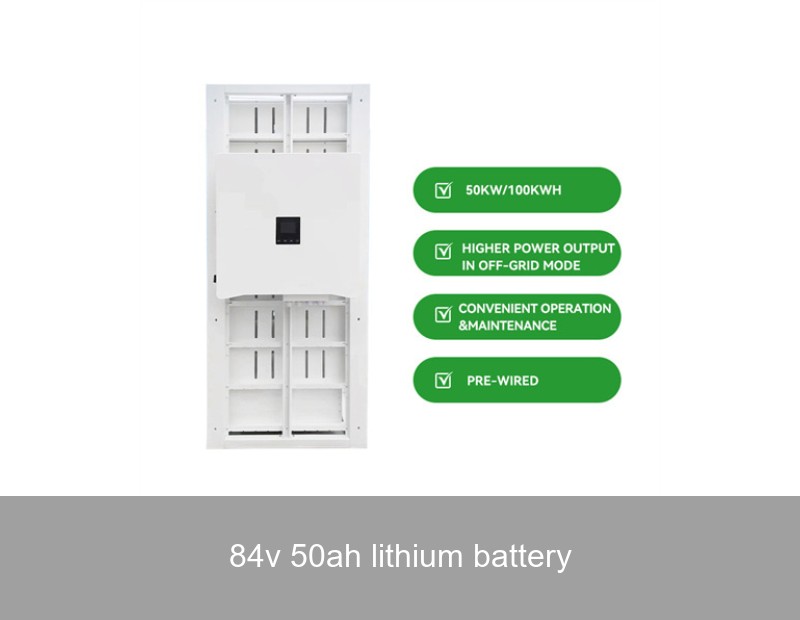
In the quest for reliable, high-performance energy storage, whether for powering an industrial forklift fleet, a robust off-grid cabin, or a sophisticated commercial microgrid, one specification is increasingly becoming a benchmark: the 84V 50Ah lithium battery. This isn't just a random set of numbers; it represents a specific and powerful sweet spot in battery technology, balancing voltage for efficient motor operation and ample capacity for extended runtime. But what makes this configuration so effective, and how can you ensure you're getting a system built for durability and intelligence, not just raw specs? Let's explore the architecture, benefits, and real-world applications of this powerful energy storage unit.
Table of Contents
- The 84V 50Ah Specification: More Than Just Numbers
- Why Lithium? The Core Advantages Over Legacy Tech
- The Critical Role of the Battery Management System (BMS)
- Real-World Application: A Case Study from Bavaria
- Choosing the Right System: Beyond the Cell
- The Future is Integrated: Smart Energy Ecosystems
The 84V 50Ah Specification: More Than Just Numbers
Let's break down what "84V 50Ah" truly means for your operation. Voltage (V) is the pressure, the force that pushes electrical current. An 84V system is a common standard for high-power applications like material handling equipment (e.g., electric pallet jacks, forklifts), large-scale solar storage, and specialty electric vehicles. It offers a superior power-to-weight ratio compared to lower voltages, meaning more torque and efficiency without excessive cabling.
Ampere-hours (Ah) is the capacity, the size of the fuel tank. A 50Ah battery can, in theory, deliver 50 amps of current for one hour. In practical terms, for a machine that draws an average of 25 amps, you'd get roughly two hours of runtime. When you multiply voltage and capacity, you get the total energy stored: 84V x 50Ah = 4.2 kilowatt-hours (kWh). That's a substantial amount of energy packed into a single battery pack.

Image Source: Unsplash - Representative image of advanced lithium battery modules.
Why Lithium? The Core Advantages Over Legacy Tech
The shift from lead-acid to lithium-ion (Li-ion) in industrial and commercial settings is nothing short of revolutionary. While a lead-acid battery might share a similar voltage and capacity on paper, the real-world performance differences are stark. Here’s why lithium, particularly in an 84V 50Ah configuration, is the clear winner:
- Depth of Discharge (DoD): Lead-acid batteries suffer if discharged beyond 50%. A lithium battery, however, can reliably use 80-90% of its rated capacity without damage. Effectively, your 4.2 kWh lithium pack delivers nearly twice the usable energy of a similarly rated lead-acid unit.
- Cycle Life: This is where longevity is defined. A quality lead-acid battery may last 500-800 cycles. A well-engineered 84V 50Ah lithium battery from a provider like Highjoule can exceed 3000-5000 cycles, translating to years of additional service life.
- Efficiency & Charge Speed: Lithium batteries charge significantly faster with near 99% round-trip efficiency, meaning almost all the energy you put in is available for use. Lead-acid systems lose more energy to heat and can take 8+ hours for a full charge.
- Maintenance & Space: No watering, no acid leaks, and minimal corrosion. Lithium systems are also far more compact and lighter, freeing up valuable space and reducing vehicle weight.
The Critical Role of the Battery Management System (BMS)
An 84V 50Ah lithium battery is only as good as its brain: the Battery Management System (BMS). This is where expertise matters immensely. A sophisticated BMS does much more than prevent overcharge. It actively manages:
| BMS Function | Benefit |
|---|---|
| Cell Balancing | Ensures every individual cell charges and discharges uniformly, maximizing pack life and safety. |
| Thermal Management | Monitors temperature and regulates it via passive or active cooling to operate in a safe, optimal window. |
| State of Health (SOH) Monitoring | Provides real-time data on battery degradation, allowing for predictive maintenance. |
| Communication & Integration | Enables seamless data exchange with chargers, inverters, and fleet management software via CAN bus or other protocols. |
At Highjoule, our H-IQ BMS is engineered into every 84V 50Ah battery pack we build. It's this intelligence that transforms a simple battery into a reliable, data-rich asset. Our systems provide granular insights into performance, allowing operators to optimize usage patterns and extend operational lifespan far beyond industry averages.
Real-World Application: A Case Study from Bavaria
Let's move from theory to practice. A mid-sized automotive parts manufacturer near Munich, Germany, faced a critical challenge. Their fleet of 15 electric forklifts (running on legacy 80V lead-acid batteries) was causing operational bottlenecks. Batteries required midday swaps, dedicated charging rooms, and constant maintenance, leading to downtime and high labor costs.
The Solution: In 2023, they partnered with Highjoule to replace their entire fleet with custom 84V 50Ah lithium battery systems, integrated with high-speed opportunity chargers.
The Data-Driven Outcome (12 Months Post-Installation):
- Downtime Elimination: Opportunity charging during breaks eliminated battery swap downtime, increasing productive machine hours by 18%.
- Energy Savings: Higher efficiency and reduced cooling needs for the battery room led to a 31% reduction in energy costs for fleet operation.
- Maintenance Cost Reduction: Elimination of watering, equalization charges, and acid-related repairs cut associated maintenance costs by over 90%.
- Space Reclaimed: The bulky charging room was repurposed into valuable production space.
This case underscores that the value proposition of a modern 84V 50Ah lithium solution isn't just in the chemistry—it's in the total cost of ownership and operational transformation it enables. For more on industrial energy trends, see this report from the International Renewable Energy Agency (IRENA).

Image Source: Unsplash - Electric forklift in a logistics setting.
Choosing the Right System: Beyond the Cell
Not all 84V 50Ah batteries are created equal. When evaluating a system, you must look at the complete package. Highjoule’s approach is to provide a fully integrated power solution:
- Cell Quality & Sourcing: We use premium, automotive-grade LiFePO4 (LFP) or NMC cells from tier-one suppliers, selected for their safety, cycle life, and performance stability. LFP, in particular, is renowned for its exceptional safety profile and longevity.
- Robust Enclosure & Thermal Design: Our packs are housed in IP-rated enclosures designed for harsh industrial environments, with integrated thermal management systems that ensure performance from -20°C to 55°C.
- Seamless Compatibility: Our engineers ensure plug-and-play compatibility with major OEM equipment or custom integration for specialized applications, including microgrids where our batteries interface with solar inverters and grid controllers.
This holistic engineering philosophy ensures that when you specify a Highjoule 84V 50Ah lithium battery, you're getting a resilient, smart, and application-optimized asset, not just a commodity cell pack.
The Future is Integrated: Smart Energy Ecosystems
The next evolution for high-capacity batteries like the 84V 50Ah unit is their role as a cornerstone in smart energy ecosystems. Beyond powering a single vehicle, these batteries can be aggregated to form the backbone of a commercial or industrial microgrid.
Imagine a scenario: A winery in California uses solar panels to generate power during the day. Multiple Highjoule 84V battery banks store excess energy. This energy not only powers the electric tractors and harvesters but also intelligently shifts the facility's load, reducing demand charges from the utility. During a grid outage, the system islandes, keeping critical cooling and operations online. This level of integration requires batteries that are not just energy containers but communicative, responsive assets. Highjoule's Energy Management System (EMS) platform provides this overarching intelligence, turning stored energy into a strategic tool for resilience and savings. For a deeper understanding of microgrid technology, the U.S. Department of Energy's Grid Modernization initiative offers valuable resources.

Image Source: Unsplash - Solar panels paired with energy storage units.
Your Power, Your Decision
The transition to an 84V 50Ah lithium battery system is a significant step toward operational efficiency and sustainability. It's an investment that pays dividends in uptime, savings, and control. But the key lies in partnering with a provider that understands the full spectrum of your needs—from the cell chemistry to the cloud-based software managing it all.
Is your current energy storage solution holding you back, or is it an intelligent asset driving your operations forward? What would a 30% reduction in your energy-related operational costs mean for your business this year?
 Inquiry
 Online Chat