


Renewable Energy Companies in Singapore: Powering a Sustainable Island Nation
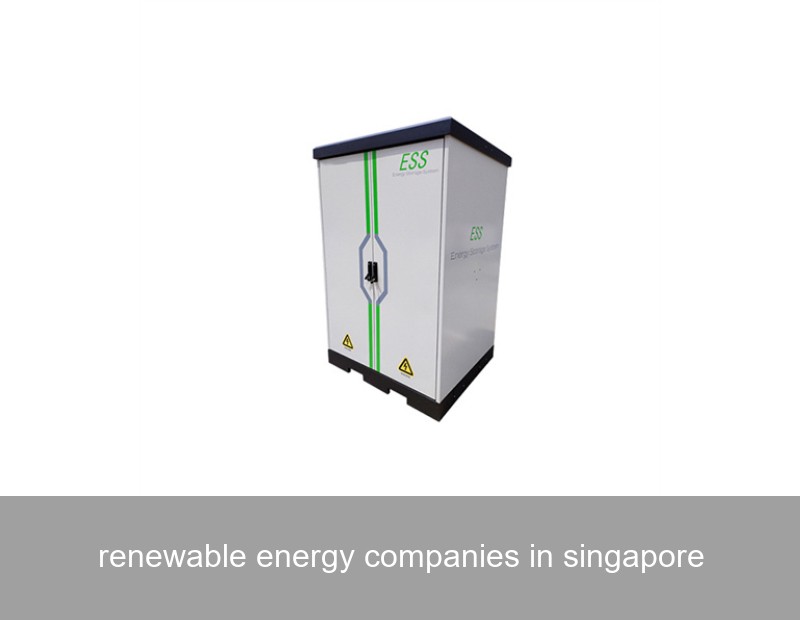
Singapore, a bustling metropolis known for its financial hub and urban density, faces a unique energy challenge. With limited land and no natural resources for conventional power generation, the nation has turned its ambition skyward—towards the sun. The drive for sustainability has catalyzed a dynamic ecosystem of renewable energy companies in Singapore, all innovating to overcome geographical constraints. For businesses and homeowners watching their energy bills and carbon footprint, the question isn't just about going green, but about finding reliable, intelligent, and efficient power solutions that work within Singapore's specific context. This is where the synergy between local solar innovators and global advanced energy storage experts becomes critical.
Table of Contents
The Singapore Challenge: Ambition vs. Geography
You might wonder, with so much sunshine, what's holding Singapore back from a solar revolution? The phenomenon is clear: high energy demand meets limited physical space. Rooftops, reservoirs, and even vertical façades are being tapped, but the intermittent nature of solar power creates a grid stability puzzle. Energy generated at noon must be stored for use during peak evening hours or cloudy periods. This gap between generation and consumption is the critical problem that renewable energy companies in Singapore are working to solve, and it's the precise challenge that advanced battery energy storage systems (BESS) are designed to address.
The Data Behind Singapore's Solar Surge
The numbers tell a compelling story of progress. According to the Energy Market Authority (EMA), Singapore's solar photovoltaic (PV) capacity has seen remarkable growth, aiming to deploy at least 2 gigawatt-peak (GWp) by 2030. To put that in perspective, 1 GWp can power approximately 350,000 households in Singapore a year. This push is supported by initiatives like SolarNova, which aggregates solar demand across government agencies. However, achieving these targets requires more than just panels; it requires a foundational shift in how energy is managed and stored to ensure reliability—a core expertise of global system integrators and storage specialists.

Image: Solar installations on urban rooftops are crucial in land-scarce Singapore. (Photo by American Public Power Association on Unsplash)
The Storage Imperative: Beyond Daylight Hours
Think of the energy grid like a bathtub. Solar panels are the faucet, filling it during the day. But without a plug (storage), the water (energy) simply drains away when demand is low. Battery storage acts as that plug, allowing excess solar energy to be saved for later. For renewable energy companies in Singapore, integrating storage is no longer a luxury; it's a necessity for maximizing self-consumption, reducing reliance on the grid during peak tariff periods, and providing backup power. The technology of choice? Lithium iron phosphate (LFP) battery systems, known for their long lifespan, safety, and stability—perfect for Singapore's dense urban environment.
Key Benefits of Coupling Solar with Storage:
- Energy Arbitrage: Store cheap solar energy for use during expensive peak grid hours.
- Enhanced Resilience: Provide critical backup power for operations during grid outages.
- Grid Support: Help stabilize the local grid by smoothing out solar power fluctuations.
- Sustainability Maximization: Increase the actual utilization of renewable energy generated on-site.
Case Study: A Tuas Industrial Pioneer
Let's look at a real-world example. A precision engineering firm in Tuas, a major industrial estate, partnered with a local solar developer. They installed a 1.2 MWp rooftop solar system. However, their machinery operated on 24/7 shifts, with high energy demand continuing long after sunset. The initial solar setup only covered ~30% of their total consumption.
The Solution: The developer integrated a 500 kWh / 1000 kW Highjoule HES-500 commercial battery storage system. This system was chosen for its compact footprint, advanced thermal management (crucial for Singapore's heat), and intelligent energy management software.
| Metric | Before Storage | After Storage Integration |
|---|---|---|
| Solar Self-Consumption | 68% | Over 95% |
| Grid Energy Draw During Peak Hours | ~850 kW | Reduced by ~60% |
| Annual Energy Cost Savings | S$180,000 | S$320,000+ |
| CO2e Reduction | 650 tonnes/year | 890 tonnes/year |
Highjoule's Role: Intelligent Storage for a Smart Nation
As a global leader in advanced energy storage since 2005, Highjoule partners with renewable energy companies in Singapore to deliver the missing piece of the sustainability puzzle. Our products are engineered for intelligence and durability. For the commercial and industrial (C&I) sector in Singapore, our HES Series offers scalable, containerized or modular solutions that seamlessly integrate with new or existing solar arrays. For residential and smaller commercial applications, our HomePower+ and BusinessPower systems provide safe, quiet, and automated energy management.
What sets our technology apart is the Highjoule Energy Operating System (EOS). This AI-driven platform doesn't just store and release energy; it learns your consumption patterns, weather forecasts, and utility tariffs to autonomously optimize every kilowatt-hour for maximum savings and efficiency. For our partners—the installers and developers on the ground—this means they can offer a superior, future-proof solution that builds customer trust and delivers long-term performance.

Image: Advanced battery storage systems require precise monitoring and control. (Photo by ThisisEngineering RAEng on Unsplash)
The Future: Towards a Resilient and Intelligent Grid
The journey for Singapore is evolving from simple solar adoption to building a distributed, resilient energy network. Concepts like virtual power plants (VPPs)—where hundreds of distributed storage systems are aggregated to act as a single power plant—are on the horizon. Renewable energy companies in Singapore equipped with smart, grid-responsive storage technology will be at the forefront of this transition. Highjoule's systems are designed with this future in mind, capable of participating in grid services and demand response programs, turning every business and home into a potential node of stability for Singapore's national grid.
The collaboration between local expertise and global technology is key. As one industry report from the International Renewable Energy Agency notes, system integration and smart policy are as vital as the hardware itself.
 Inquiry
 Online Chat