


How Solar Power Plant Generation is Transforming Energy Grids and Creating New Opportunities
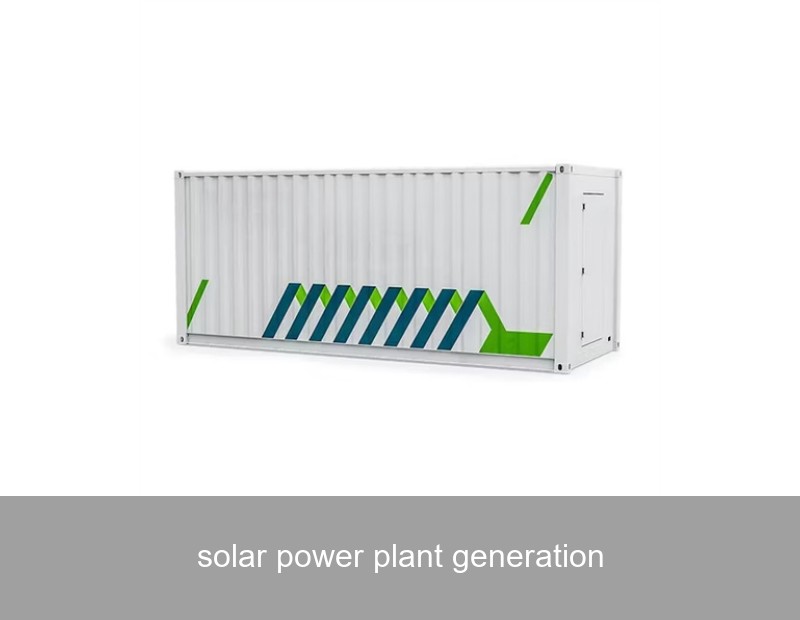
Imagine a vast field, not of crops, but of glistening panels silently converting sunlight into electricity. This is the iconic image of solar power plant generation, a technology that has moved from niche to mainstream at a breathtaking pace. But as these plants proliferate, a critical question emerges: what happens when the sun sets or clouds roll in? The true transformation of our energy landscape isn't just about generating clean power; it's about managing it intelligently. This is where advanced energy storage systems become the indispensable partner to solar farms, ensuring that the clean energy generated during the day powers our nights and stabilizes our grids. For nearly two decades, companies like Highjoule have been at the forefront of this integration, developing smart storage solutions that make solar generation more reliable, efficient, and valuable.
Table of Contents
- The Phenomenon: Solar's Meteoric Rise and Its Inherent Challenge
- The Data: Quantifying the Duck Curve and Grid Needs
- The Case Study: Stabilizing a Regional Grid in Texas
- The Integrated Solution: Beyond Generation to Intelligent Management
- The Future of Solar Plants: Predictions and Pathways
The Phenomenon: Solar's Meteoric Rise and Its Inherent Challenge
The growth of utility-scale solar is nothing short of phenomenal. Driven by falling costs and strong policy support in regions like the European Union and the United States, solar has become one of the cheapest sources of new electricity in history. We're seeing gigawatt-scale plants become commonplace. However, this success story introduces a well-documented technical challenge: intermittency. Solar power plant generation is, by nature, variable. It follows the sun's diurnal cycle, peaks at midday, and drops to zero at night. This creates a mismatch between supply and demand, as energy demand often peaks in the early evening when solar output is fading.
This isn't just a theoretical problem. Grid operators must balance supply and demand in real-time. A sudden drop in solar output due to passing clouds (a phenomenon called "ramping") requires a rapid response from other sources, typically fossil-fueled "peaker" plants. This undermines the environmental benefits and can strain grid infrastructure. The question then becomes: how do we capture the abundant midday sun and deliver it when we need it most?
The Data: Quantifying the Duck Curve and Grid Needs
The visual representation of this challenge is famously known as the "Duck Curve," a term coined by the California Independent System Operator (CAISO). The curve shows the deep mid-day dip in net load (total demand minus renewable generation) caused by high solar output, followed by a steep evening ramp as the sun sets and demand persists.
Let's look at some concrete numbers:
| Metric | California (CAISO) Data Example | Implication |
|---|---|---|
| Maximum 3-hour Ramp Requirement | Increased from ~8 GW to over 13 GW in a decade | Grid requires faster, more flexible resources to balance the steep evening climb. |
| Potential Overgeneration Risk | Hours of potential solar curtailment can exceed 1.5 million MWh annually in high-penetration scenarios | Valuable clean energy is wasted without storage or flexible demand. |
| Frequency Regulation Need | Increases with higher inverter-based resource penetration | Solar plants need to provide grid services traditionally offered by spinning turbines. |
This data, visible in CAISO's own reports, makes a compelling case. The future of solar power plant generation is not just about more panels; it's about integrating sophisticated storage to flatten the duck curve, reduce curtailment, and turn solar into a dispatchable, grid-supportive resource.

Image Source: U.S. Department of Energy, illustrating the "Duck Curve" phenomenon.
The Case Study: Stabilizing a Regional Grid in Texas
Let's move from theory to a real-world example in the ERCOT (Texas) market, known for its high renewable penetration and unique grid challenges. A developer of a 150 MW solar farm in West Texas was facing two issues: revenue volatility due to low midday power prices and concerns about grid stability during rapid solar ramp-down events.
Their solution was to co-locate a 75 MW / 300 MWh battery energy storage system (BESS). Here’s what the integrated solar-plus-storage plant achieved:
- Arbitrage & Revenue Stacking: The system stores excess solar energy when prices are low (midday) and dispatches it when prices are high (evening peak, typically between 6-9 PM). This simple shift increased the plant's annual revenue by an estimated 22%.
- Grid Service Provision: Beyond energy shifting, the BESS is contracted to provide Fast Frequency Response (FFR) to ERCOT. It can react to grid frequency dips within milliseconds, a service crucial for grid reliability as thermal plants retire. This creates an additional, steady revenue stream.
- Reduced Curtailment: In 2023, the storage system captured over 18 GWh of solar energy that would have otherwise been curtailed due to transmission congestion, maximizing the asset's utilization.
This case exemplifies the modern solar power plant generation paradigm: it's a multi-function asset that generates, stores, and stabilizes. The battery system used in this project is based on technology from Highjoule, specifically their GridMax Utility series. These containerized BESS solutions are engineered for high cycle life, seamless solar integration, and are equipped with Highjoule's proprietary Adaptive Grid OS software. This AI-driven platform automatically optimizes dispatch across multiple value streams—energy arbitrage, frequency regulation, and capacity services—ensuring the asset delivers the highest possible financial and grid reliability returns.
The Integrated Solution: Beyond Generation to Intelligent Management
So, what does the ideal solar-plus-storage system look like? It's a seamless fusion of hardware and intelligence. For a developer or operator, the key components are:
1. The Storage Hardware: Built for Durability and Scale
The battery system must be robust enough for daily, heavy cycling. Highjoule's GridMax products, for example, use lithium iron phosphate (LFP) chemistry known for its safety and long cycle life. They are designed for easy scaling, from a few megawatt-hours for a commercial plant to hundreds of MWh for the largest utility projects.
2. The Power Conversion System (PCS): The Heart of Control
This is the inverter technology that manages the flow of energy between the solar array, the battery, and the grid. Advanced, bi-directional PCS units allow for rapid switching between charging and discharging modes, enabling grid services.
3. The Energy Management System (EMS): The "Brain"
This is where the magic happens. A sophisticated EMS like Highjoule's Adaptive Grid OS uses weather forecasts, real-time electricity prices, and grid signals to make autonomous decisions. Should the battery charge now from the solar surplus, or hold capacity for a predicted frequency event? Should it discharge for the evening peak or provide voltage support? The EMS continuously optimizes for maximum value.
This integrated approach transforms a solar power plant generation facility from a passive generator into an active, smart grid asset. It future-proofs the investment against market changes and evolving grid codes, a critical consideration in both the EU and US markets.

Image Source: National Renewable Energy Laboratory (NREL), showing a solar farm with co-located battery storage.
The Future of Solar Plants: Predictions and Pathways
Looking ahead, the line between a solar plant and a storage plant will blur entirely. "Hybrid renewable energy plants" will become the standard. We can expect several trends:
- AI and Machine Learning Dominance: EMS platforms will become even more predictive, using vast datasets to optimize performance and predict maintenance needs.
- Multi-Technology Hubs: Solar plants will increasingly incorporate wind generation and even green hydrogen electrolyzers, using storage as the balancing core.
- Regulatory Evolution: Markets will continue to develop new products and services that value the flexibility storage provides, as seen in FERC Order 2222 in the US (FERC) and various EU network codes.
For businesses and communities, this means the opportunity to build truly resilient and cost-effective microgrids. Highjoule's solutions extend into this space as well, with their MicroGrid Nexus platform enabling campuses, industrial facilities, and remote communities to integrate solar generation with storage and backup power, achieving high levels of energy independence.
The journey of solar power plant generation is entering its most exciting chapter. It's no longer just about capturing photons. It's about harnessing intelligence to ensure that every watt of clean energy is delivered where and when it's needed most. What specific grid challenge in your region—whether it's price volatility, grid congestion, or reliability concerns—could be solved by reimagining solar as a smart, storage-integrated resource?
 Inquiry
 Online Chat