


Residential Power Backup Systems: Your Guide to Uninterrupted Energy Independence
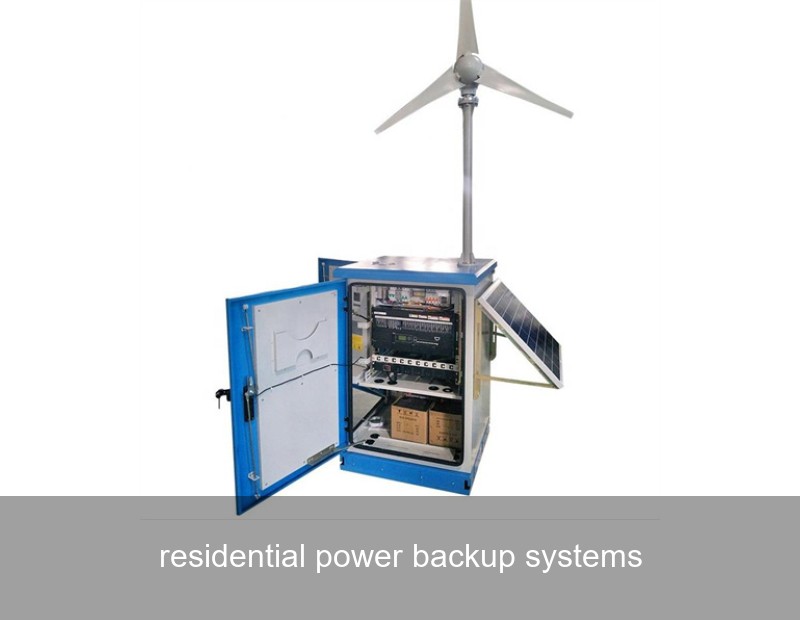
Imagine this: a severe storm rolls through your neighborhood. The lights flicker and go out. But in your home, the refrigerator hums steadily, the Wi-Fi stays on, and your family's routine remains undisturbed. This isn't just wishful thinking; it's the modern reality made possible by advanced residential power backup systems. For homeowners in Europe and the US, power interruptions are moving from a major inconvenience to a manageable event, thanks to intelligent energy storage solutions. This guide will explore why these systems are becoming a household essential, how they work, and what you should consider for your own energy resilience.
Table of Contents
- The New Normal: Why Backup Power is No Longer a Luxury
- Beyond the Generator: How Modern Residential Power Backup Systems Work
- Key Components of a Smart Home Battery System
- A Real-World Case: Resilience in California's Fire Season
- Choosing the Right System for Your Home
- Highjoule's Approach to Home Energy Security
- The Future of Home Energy is Interactive
The New Normal: Why Backup Power is No Longer a Luxury
The phenomenon is clear. Climate change is contributing to more frequent and intense weather events. From winter storms in Texas to heatwaves and wildfires in California and Southern Europe, the electrical grid is under unprecedented stress. The data is telling: the U.S. Energy Information Administration (EIA) notes that the average U.S. customer experienced just over seven hours of power interruptions in 2021, with major events being a significant driver. In Europe, concerns about energy security and price volatility add another layer of urgency.
This isn't just about comfort; it's about safety, preserving food and medicine, and maintaining the ability to work and learn from home. The old solution—a loud, fossil-fuel-powered generator—is increasingly seen as a stopgap. It requires manual operation, emits fumes, and depends on a supply of fuel that may be scarce during a crisis. The modern homeowner seeks a seamless, clean, and automatic solution.

Image: A modern home integrating solar panels and a wall-mounted battery storage unit for energy independence. Source: Unsplash
Beyond the Generator: How Modern Residential Power Backup Systems Work
Today's residential power backup systems are intelligent ecosystems. At their heart is a high-capacity lithium-ion battery, similar to the technology in your electric car but engineered for daily cycling and long-term home use. This battery system is connected to your home's main electrical panel through a critical component called an inverter or a multi-mode inverter.
Here's the magic: when grid power fails, an automatic transfer switch (often built into the inverter) isolates your home from the grid in milliseconds—a process called "islanding." It then instantly draws power from the battery to keep your essential circuits running. You likely won't even notice the transition. When paired with solar panels, the system becomes even more powerful, capable of recharging the batteries with sunlight during an outage, creating a true off-grid microgrid for your home.
Key Components of a Smart Home Battery System
- Battery Modules: The energy reservoir. Lithium Iron Phosphate (LFP) chemistry is now the industry benchmark for safety and longevity.
- Hybrid Inverter/Charger: The brain and the muscle. It converts DC battery power to AC for your home, manages charging from the grid or solar, and controls the switchover during outages.
- Energy Management System (EMS): The intelligence. This software learns your usage patterns, optimizes when to store or use energy, and can be controlled via a smartphone app.
- Solar PV Integration (Optional but Recommended): Solar panels transform your system from a backup into a 24/7 energy management tool, reducing bills and carbon footprint.
A Real-World Case: Resilience in California's Fire Season
Let's look at a concrete example from a high-risk area. In 2022, a family in Sonoma County, California, installed a 15 kWh residential power backup system integrated with their existing 8 kW solar array. Their primary driver was the Public Safety Power Shutoffs (PSPS) implemented by utilities to prevent wildfires.
The Data & Outcome: In the following 12 months, the local utility enacted 5 PSPS events, totaling 132 hours (over 5 days) of grid outage. The family's battery backup system:
- Automatically activated within 0.2 seconds of each outage.
- Powered essential loads (refrigeration, lighting, networking, and a well pump) for the entire duration.
- Was recharged daily by their solar panels, allowing them to maintain near-normal operation indefinitely.
- Provided an estimated 85% reduction in their electricity bill during normal operation by using stored solar energy during peak evening hours.
This case illustrates the dual benefit: resilience during emergencies and daily financial savings. The system paid for itself not just in peace of mind, but in hard economics within the estimated timeframe, especially when considering available state and federal incentives.
Choosing the Right System for Your Home
Selecting a residential power backup system isn't one-size-fits-all. Key considerations include:
| Consideration | Questions to Ask |
|---|---|
| Backup Goals | Do you want to power essential circuits (lights, fridge, modem) or your entire home (including AC/heat)? |
| Battery Capacity (kWh) | How much energy storage do you need based on your essential load usage and desired backup duration? |
| Power Rating (kW) | Can the system deliver enough instantaneous power to start motor-driven appliances like pumps or air conditioners? |
| Scalability | Can you add more battery modules later if your needs change? |
| Integration | Does it seamlessly integrate with new or existing solar panels? Is the software user-friendly? |
| Warranty & Cycle Life | What is the guaranteed lifespan (years and cycles) of the battery? |
Highjoule's Approach to Home Energy Security
At Highjoule, with nearly two decades of experience in advanced energy storage, we've engineered our HomeHub ESS series specifically to meet these complex demands. Our systems are designed for the discerning homeowner who values reliability, intelligence, and aesthetics.
The Highjoule HomeHub ESS features modular LFP battery packs that can be configured from 10 kWh to 30+ kWh, ensuring you get the right size. Its integrated hybrid inverter is UL-certified for safety and boasts peak efficiency of 98%. What truly sets it apart is the Highjoule EnergyOS platform. This AI-driven software doesn't just react to outages; it proactively manages your home's energy flow. It can:
- Optimize for time-of-use rates, automatically using stored power during expensive peak periods.
- Enable virtual power plant (VPP) participation, allowing you to contribute grid stability and earn rewards (where available).
- Provide detailed, real-time insights into your energy production, consumption, and storage via an intuitive mobile app.
Our certified installers across Europe and North America ensure a seamless transition to energy independence, from initial home assessment to grid interconnection and commissioning.

Image: Monitoring and controlling a home energy storage system via a smartphone application. Source: Unsplash
The Future of Home Energy is Interactive
The evolution of residential power backup systems is moving towards two-way interaction with the smart grid. Systems like Highjoule's are paving the way for homes to become active nodes in the energy network, supporting renewable integration and community resilience. The question is no longer just "How long can I power my home during an outage?" but "How can my home's energy system work smarter for my wallet and my community's sustainability goals?"
Given the increasing pace of both climate impacts and technological advancement, what is the one critical energy need for your household that would make you consider a permanent backup solution today?
 Inquiry
 Online Chat