


What is a SafePower Inverter Battery and Why is it the Heart of Your Energy System?
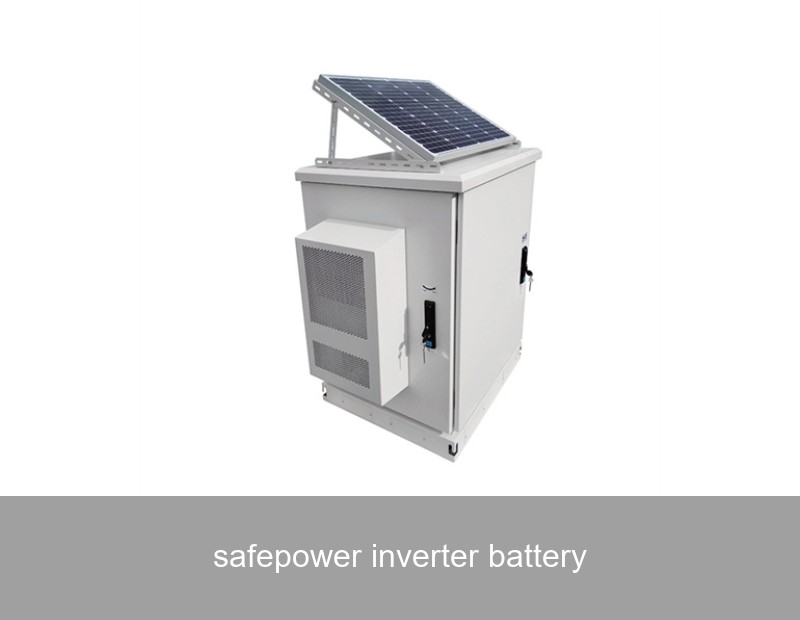
Imagine a stormy night. The grid goes down, but your home remains warm, the lights stay on, and your critical appliances hum along undisturbed. This peace of mind isn't just about having backup power; it's about having safe, reliable, and intelligent backup power. At the core of this modern energy resilience lies a critical component: the SafePower inverter battery. More than just a simple battery, it's an integrated system designed to safely store and convert energy for your home or business. Let's explore why choosing the right inverter battery system is the most crucial decision for your energy independence.
Table of Contents
What is a SafePower Inverter Battery System?
In simple terms, an inverter battery system is the brain and brawn behind solar energy storage and backup power. The battery (typically lithium-ion) stores excess energy generated from your solar panels or from the grid during off-peak hours. The inverter is the intelligent converter that transforms the stored direct current (DC) electricity into the alternating current (AC) that powers your home. A SafePower system integrates these components with advanced safety mechanisms, software intelligence, and robust design to ensure the entire process is not only efficient but fundamentally secure from risks like thermal runaway, electrical faults, or performance degradation.

Image Source: Unsplash - A professionally installed home energy storage unit.
Why "SafePower" is Non-Negotiabl
You wouldn't compromise on the structural safety of your house. Why compromise on the safety of the system that powers it? News of battery-related incidents, though rare, highlight the importance of integrated safety. According to a 2023 report by the National Fire Protection Association (NFPA), fire departments in the U.S. respond to an estimated average of 900 fires per year involving energy storage or battery systems. This underscores that safety must be engineered from the cell level up.
A true SafePower inverter battery addresses multiple layers of risk:
- Cell-Level Safety: Using premium, automotive-grade lithium iron phosphate (LiFePO4) cells which are inherently more stable and less prone to thermal issues than other chemistries.
- System-Level Protection: Advanced Battery Management Systems (BMS) that continuously monitor voltage, temperature, and current for every cell block, taking corrective action milliseconds before an issue arises.
- Physical & Environmental Design: Robust, self-contained enclosures with proper ventilation, fire retardant materials, and ingress protection (IP) ratings suitable for garage or outdoor installation.
Key Features of a Modern Safe Inverter Battery
When evaluating systems, look for these hallmarks of a high-integrity SafePower solution:
| Feature | What It Means | Why It Matters |
|---|---|---|
| LiFePO4 Chemistry | Lithium Iron Phosphate battery cells. | Superior thermal and chemical stability, longer lifecycle (6000+ cycles), and non-toxic materials. |
| Integrated AI-Powered BMS | Battery Management System with self-learning algorithms. | Predicts performance, optimizes charging/discharging for longevity, and prevents unsafe operating conditions. |
| Seamless UPS Functionality | Uninterruptible Power Supply switching (< 20ms). | Critical loads never experience a blink during a grid outage, protecting sensitive electronics. |
| Smart Grid & Rate Optimization | Software that integrates with time-of-use utility rates. | Automatically charges when electricity is cheap and discharges when it's expensive, maximizing savings. |
This is precisely the philosophy behind Highjoule's Horizon Series residential storage systems. We don't just sell components; we engineer integrated SafePower inverter battery solutions. Our systems feature proprietary Sentinel BMS technology, UL 9540A certified safety testing, and an intuitive app that gives homeowners complete control and visibility over their energy security and savings. For commercial and microgrid applications, our modular Atlas Platform allows for scalable, safe, and grid-supportive storage.
Real-World Impact: A Case Study from Bavaria
Let’s move from theory to practice. Consider the Müller family in southern Germany, a region known for both its sunny days and sudden severe storms. Their primary concerns were energy security for their home office and reducing reliance on volatile energy prices.
In early 2023, they installed a 15 kW solar array paired with a Highjoule Horizon 20 inverter battery system (20 kWh usable capacity). Here’s what the data showed after one full year of operation:
- Self-Consumption Rate: Increased from 35% (solar only) to over 85% (solar + battery), meaning they use almost all the energy they produce.
- Grid Independence During Outages: The system provided seamless backup power during 4 grid outages totaling 22 hours. The longest event was 9 hours during a winter storm.
- Financial ROI: Combined savings from reduced grid purchases and earnings from feed-in tariffs led to an estimated payback period of under 8 years, accelerated by the 2022-2023 energy price spikes in Europe.
"The peace of mind is priceless," Mr. Müller noted. "Knowing that our heating and internet stay on automatically, and that the system manages itself safely, allows us to focus on our lives, not our fuse box."

Image Source: Unsplash - A home equipped with rooftop solar panels.
Choosing Your System: Beyond Basic Specs
When you're ready to invest, look beyond just kilowatt-hours and warranty length. Engage with providers who can demonstrate a deep commitment to safety engineering and system intelligence. Ask pointed questions:
- Can you show me the specific safety certifications (UL 9540, IEC 62619) for the complete system, not just the components?
- How does the BMS actively prevent catastrophic failure, not just monitor it?
- What is the real-world round-trip efficiency, and how does software optimize it over time?
- Is the system designed for future software upgrades and potential V2G (Vehicle-to-Grid) compatibility?
As a global leader founded in 2005, Highjoule's technical consultants are trained to answer these questions and more. We believe in empowering customers with the knowledge to choose a system that will be a safe, productive asset for decades.
The Future of Home Energy is Safe and Smart
The evolution of the SafePower inverter battery is moving towards becoming an active node in a smarter, more resilient energy grid. Imagine your system not only protecting your home but also supporting community resilience by providing virtual power plant services or stabilizing the local grid during peak demand—all managed autonomously with safety as the uncompromising foundation.
The technology is here today. The question is, how will you define your energy resilience? Will it be built on the cornerstone of integrated safety and intelligence, or on fragmented, cost-driven components?
What is the one critical load in your home or business that you absolutely cannot afford to lose power to, and how would a truly safe, intelligent energy system change your approach to that risk?
 Inquiry
 Online Chat