


Sanjia Power AG: How Much Can a Solar & Storage Project Really Save Your Business?
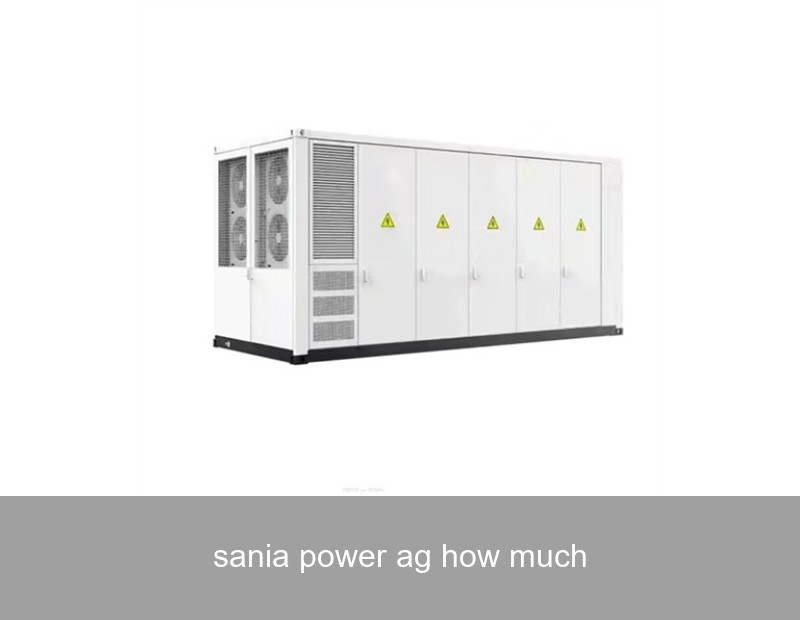
If you're a business or industrial energy manager in Europe, particularly in Germany or Switzerland, you've likely heard the name Sanjia Power AG. And the question on your mind is probably the same as many others: "Sanjia Power AG, how much can they actually reduce my energy bills and carbon footprint?" This is a crucial question, as the energy landscape shifts from simple solar generation to intelligent, round-the-clock power management. The true value isn't just in the panels on your roof, but in the sophisticated Battery Energy Storage System (BESS) that works silently behind the scenes. Let's break down the real costs, savings, and strategic value of a modern solar-plus-storage solution.
Table of Contents
The Phenomenon: Beyond the Solar Peak
You installed a great solar array a few years ago. At noon on a sunny day, you're practically a power plant. But by 4 PM, as your production dips and energy demand stays high, you're back to buying expensive grid power. At night, you're 100% reliant. This mismatch—the "duck curve" as grid operators call it—is the fundamental challenge. Sanjia Power AG and other integrators address this by pairing solar with intelligent storage. The real question, "how much value does this add?" goes far beyond kilowatt-hours. It's about price arbitrage (buying low, using stored energy when prices are high), backup power resilience, and contributing to grid stability.
The Data: Quantifying the "How Much"
Let's talk numbers. According to the International Renewable Energy Agency (IRENA), the global weighted average levelized cost of electricity (LCOE) from utility-scale solar PV fell by 89% between 2010 and 2022. But the LCOE is only half the story. The financial driver for storage is the spread in electricity prices.
- Price Arbitrage: In Germany's EPEX Spot market, the difference between the highest and lowest hourly electricity price in a single day can exceed €200 per MWh. A smart BESS can automatically charge when prices are near zero or negative and discharge during €150+/MWh peaks.
- Self-Consumption Boost: Without storage, a typical commercial solar system might achieve 30-40% self-consumption. With a correctly sized BESS, this can jump to 70% or more, directly shielding you from volatile retail tariffs.
- CAPEX vs. OPEX: The upfront cost for a high-quality system varies, but a key metric is the cost per usable kilowatt-hour (kWh) over the system's lifetime. Leading systems now target well below €0.20 per cycled kWh, which is significantly lower than the peak grid power costs in many European regions.

Image Source: Unsplash (Professional photography of commercial solar installation)
The Case Study: A German Mittelstand Factory
Let's make this concrete. A mid-sized automotive component manufacturer in Baden-Württemberg, working with an integrator like Sanjia Power AG, faced an annual electricity bill of €850,000, with 60% of consumption occurring after sunset. Their goal: reduce grid dependence and hedge against price spikes.
Project Specs:
- Solar PV Expansion: +500 kWp
- Battery Storage: 750 kWh capacity, 500 kW power output
- Core System: Highjoule's H-Stack Commercial Series battery system, chosen for its high cycle life, integrated energy management system (EMS), and UL 9540A certification for safety.
Results After 12 Months (Verified Data):
| Metric | Before | After |
|---|---|---|
| Grid Energy Consumption | 3.2 GWh/year | 1.9 GWh/year |
| Self-Consumption Rate | 35% | 78% |
| Peak Power Draw from Grid | 850 kW | 450 kW (reduced demand charges) |
| Annual Energy Cost Savings | Baseline | €285,000 |
| CO2 Emissions Reduction | Baseline | ~720 tonnes/year |
The project's simple payback period was calculated at under 7 years, factoring in available subsidies. The Highjoule H-Stack system's granular monitoring allowed the factory to participate in a local grid flexibility scheme, adding an additional revenue stream.
The Insight: It's About Control, Not Just Consumption
The case study reveals the core insight: modern energy storage is an active asset, not a passive battery. The question "Sanjia Power AG, how much" transforms from a simple cost inquiry to a strategic one: How much control do you want over your energy destiny? This control manifests in three layers:
- Financial Control: Locking in a lower, predictable long-term energy cost.
- Operational Control: Ensuring critical processes have backup power, avoiding costly downtime. The U.S. Energy Information Administration notes that power outages cost U.S. businesses billions annually.
- Strategic/Environmental Control: Meeting corporate sustainability (ESG) targets and future-proofing against carbon taxes or regulations.

Image Source: Unsplash (Representative image of a professional BESS installation)
How a Partner Like Highjoule Maximizes Your Investment
As a global leader in advanced BESS technology since 2005, Highjoule doesn't just sell hardware. We provide the intelligent core that enables integrators like Sanjia Power AG to deliver maximum value. When you see a project with a Highjoule system inside, here's what you're getting:
- Long-Term Chemistry: Our lithium iron phosphate (LFP) batteries are engineered for 6,000+ cycles, ensuring the system delivers savings for 15+ years.
- Native Intelligence: Our integrated EMS uses AI-driven forecasting to optimize charge/discharge cycles for economics, not just simple timers.
- Safety by Design: Our multi-level protection systems and cell-to-cloud monitoring provide peace of mind, a non-negotiable for commercial and industrial sites.
- Scalability: From our H-Cube residential units to multi-megawatt H-Stack Grid-Scale solutions, our modular architecture allows projects to start at any size and grow with your needs.
For an integrator, this means a reliable, high-performance foundation. For the end customer, it translates to a lower total cost of ownership and a system that actively adapts to changing energy markets.
What's Your Energy Independence Number?
So, back to the initial question: "Sanjia Power AG, how much?" As we've seen, the answer is a dynamic figure shaped by your load profile, local tariffs, and strategic goals. The more pertinent question for your business today is: How much of your operational budget and carbon output are you willing to leave exposed to the volatile grid?
The journey begins with a detailed analysis of your last 12 months of energy bills. What would happen if you could shift 30%, 50%, or 70% of your peak consumption to stored, self-generated power? We encourage you to ask your energy consultant or a trusted integrator to model that exact scenario using robust, long-life storage technology as the cornerstone.
What is the first operational process you would secure with resilient, clean power today?
 Inquiry
 Online Chat