


Shanghai Solar: How Much Does It Really Cost to Power Your Home or Business?
If you're a homeowner or business operator in Shanghai researching renewable energy, your first question is almost always practical: "Shanghai solar, how much?" It's a smart question. While the vision of energy independence and a lower carbon footprint is compelling, the initial investment needs to make financial sense. The answer, however, isn't a single number. It's a calculation that blends technology, your property's unique characteristics, and the long-term value of a reliable, intelligent system. In this guide, we'll move beyond simple price-per-watt quotes to explore the true cost structure of a solar installation in a megacity like Shanghai and how modern energy storage is transforming its value proposition.
The Phenomenon: A City's Solar Ambition Meets Practical Reality
Shanghai, a global economic powerhouse, is on a determined path towards peak carbon and carbon neutrality. The city's government has been actively promoting distributed solar photovoltaic (PV) systems on residential, commercial, and industrial rooftops. You can see this shift—solar panels are increasingly appearing on villa complexes, factory buildings, and even historical shikumen renovations. The driver is twofold: a strong policy push and the simple economic reality of rising electricity costs and increasing grid instability during peak demand periods. The initial curiosity about "how much" is often followed by a deeper inquiry: "How much can I save?" and "How can I ensure this power is available when I need it most?"
Breaking Down the Costs: More Than Just Panels on the Roof
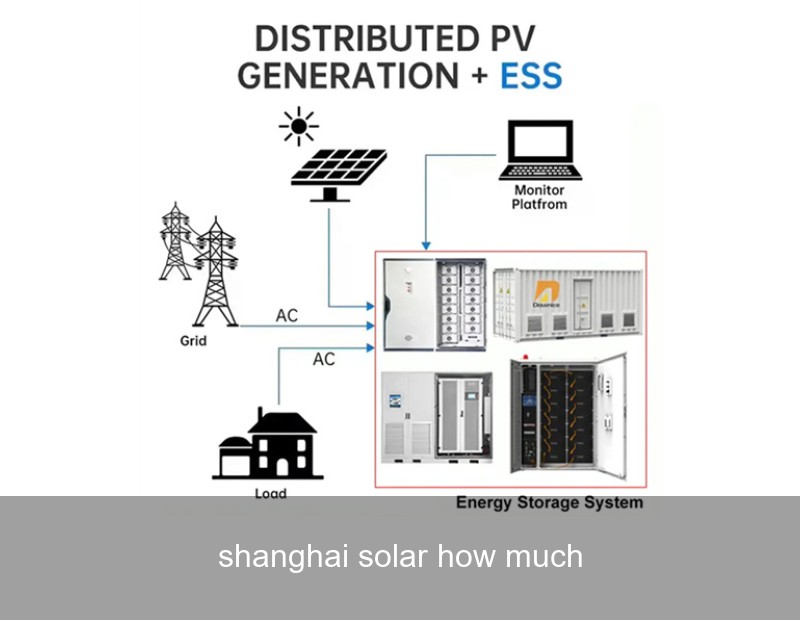
To understand "how much," we must dissect a solar PV system. It's no longer just about panels and an inverter. Today, a truly valuable system is integrated, featuring generation, storage, and smart management.
System Components & Their Price Tags
A modern solar setup typically includes:
- Solar Panels (PV Modules): The most visible component. Prices vary by efficiency and brand (monocrystalline panels are typically more efficient and costly than polycrystalline).
- Inverter(s): The brain that converts DC solar power to usable AC power. You may need a string inverter or microinverters, with the latter offering better performance for shaded roofs at a higher cost.
- Mounting System & Balance of System (BOS): Racks, wiring, connectors, and safety equipment. Quality here is crucial for longevity, especially in Shanghai's humid, typhoon-prone climate.
- The Game Changer: The Battery Energy Storage System (BESS): This is where the equation evolves. A battery, like those from Highjoule, stores excess solar energy for use at night, during blackouts, or during peak tariff hours. It adds to the upfront cost but dramatically increases self-consumption and ROI.
- Smart Energy Management System (EMS): Software that optimizes when to use solar power directly, charge the battery, or draw from the grid, based on weather forecasts and your usage patterns.
- Installation & Permitting: Labor costs and the administrative process of grid connection approval.

Image Source: Unsplash (Representative image of a residential solar installation)
Key Factors Influencing Your Final Quote in Shanghai
| Factor | Impact on Cost | Consideration for Shanghai |
|---|---|---|
| System Size (kW) | Primary cost driver. Larger systems cost more but have lower cost per watt. | Limited by available, unshaded roof space in dense urban environments. |
| Energy Storage Capacity (kWh) | Adds significant cost but also major value and resilience. | Critical for backup during grid outages and for maximizing use of solar power after sunset. |
| Equipment Quality & Brand | High-efficiency panels and reputable battery brands (e.g., Highjoule) command a premium. | Investing in quality ensures better performance in Shanghai's humid climate and longer system life. |
| Installation Complexity | Steep, multi-angle, or difficult-to-access roofs increase labor costs. | Common with Shanghai's varied architecture, from high-rise penthouses to low-rise villas. |
| Grid Connection & Policy | Permitting fees and required equipment (like specific meters). | Shanghai has standardized processes, but working with an experienced installer is key. |
Real Numbers: A Residential Case Study in Shanghai's Qingpu District
Let's move from theory to practice. In 2023, a family in a Qingpu district villa installed a system designed for high self-sufficiency. Their goal was to reduce electricity bills and ensure power during occasional grid maintenance outages.
- System Configuration: 12kW solar array + 25kWh Highjoule Harmony Home battery system + smart inverter.
- Total Installed Cost: Approximately ¥150,000 (before any applicable local subsidies).
- Financial & Performance Outcome: The system covers over 90% of their annual electricity needs. They shifted nearly all consumption to off-peak solar or battery power, slashing their bill from an average of ¥1,800/month to under ¥200/month. During a planned 8-hour grid outage, the home operated seamlessly on battery power. Their simple payback period is calculated at 6-7 years, after which they will have nearly free electricity for the system's remaining 15+ year lifespan.
This case highlights that the relevant question shifts from "What is the cheapest system?" to "What is the value of uninterrupted, low-cost power?" The International Energy Agency notes the continued long-term cost decline of solar PV, making the initial investment increasingly attractive.
Thinking Beyond the Initial Cost: The Value of a Complete System
Focusing solely on the upfront "Shanghai solar how much" quote can be misleading. A system with storage, like the one in our case study, provides layered value:
- Bill Savings: Maximizes self-consumption of solar energy, reducing reliance on the grid, especially during expensive peak rates.
- Energy Resilience: Provides backup power—a growing concern for businesses and households alike.
- Grid Support & Future-Proofing: Advanced systems can participate in demand response or virtual power plants, potentially creating revenue streams.
- Increased Property Value: Studies, including those from the U.S. Department of Energy, show solar and storage can increase property value.

Image Source: Unsplash (Representative image of a home battery installation)
The Highjoule Solution: Intelligent Energy Storage for Shanghai's Unique Needs
This is where Highjoule's expertise becomes critical. As a global leader in advanced energy storage systems since 2005, we understand that the battery is the centerpiece of a modern energy solution. For Shanghai residents and businesses, our Harmony Home and IntelliGrid Commercial series offer:
- Climate-Adapted Design: Our battery cabinets are built to handle Shanghai's high humidity and temperature fluctuations, ensuring safety and longevity.
- High Efficiency & Scalability: With industry-leading round-trip efficiency, you get more usable power from every bit of sunlight. Systems can be scaled by adding more battery modules as your needs grow.
- Intelligent Software: Our AI-driven energy management platform learns your consumption patterns and automatically optimizes for cost savings and resilience, whether you're connected to the grid or operating independently.
- Safety First: Built with lithium iron phosphate (LFP) chemistry, known for its thermal stability and long cycle life, coupled with multi-layer protection systems.
Integrating a Highjoule system transforms a simple solar array into a true personal power station, directly addressing the deeper need behind "how much"—which is ultimately about value, control, and sustainability.
The Future Outlook for Solar in Shanghai
The trajectory is clear. With solar technology costs continuing to fall globally (IRENA) and Shanghai's policy environment favoring distributed generation, the economic case will only strengthen. The integration of electric vehicles (EVs) will add another layer, where your solar-charged battery can also power your car, creating a fully integrated, clean energy ecosystem at home.
So, the next step in your journey isn't just to ask for a price. It's to ask: "What is the optimal solar and storage configuration for my specific energy usage, roof, and resilience goals in Shanghai?" What would you power first if the grid went down, and how can we design a system to make sure that's never a concern?
 Inquiry
 Online Chat