


The Quiet Revolution in Your Rooftop: How a Modern Silicon Solar Cell Company Powers More Than Just Panels
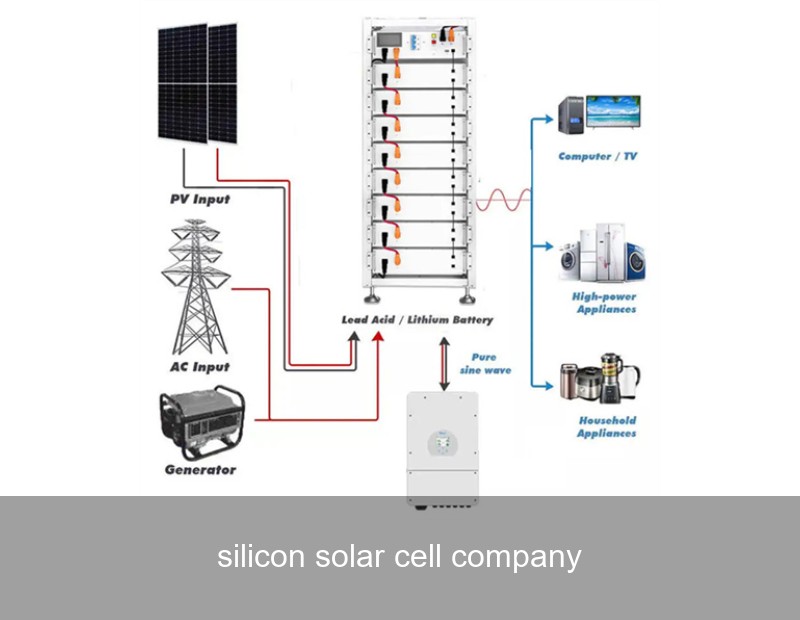
Look at any residential rooftop, commercial building, or solar farm, and you'll likely see the shimmering blue-black surface of silicon solar panels. For decades, the story of solar power has been, at its heart, the story of silicon. But in today's rapidly evolving energy landscape, a leading silicon solar cell company does much more than manufacture photovoltaic (PV) modules. The true value now lies not just in capturing sunlight, but in intelligently managing, storing, and utilizing that energy to create resilient and cost-effective power systems. This is where the journey from a simple panel to a comprehensive energy solution begins.
What is a Silicon Solar Cell Company, Really?
Traditionally, a silicon solar cell company focuses on the research, development, and production of the photovoltaic cells that convert sunlight into electricity. These cells, primarily made from crystalline silicon (either monocrystalline or polycrystalline), are the fundamental building blocks of solar panels. However, the modern definition has expanded significantly.
Today's frontrunners are not just component manufacturers; they are energy solution providers. They understand that the panel is only the first step. The real challenge—and opportunity—lies in integrating that solar generation with advanced battery storage, smart energy management software, and system design that maximizes return on investment for homeowners, businesses, and communities. This holistic approach is what transforms intermittent solar power into a reliable, 24/7 energy asset.

Image: The heart of the system - silicon solar cells. (Source: Unsplash)
The Power Behind the Panel: Why Silicon Reigns Supreme
Why has silicon remained the dominant material for over 90% of the global solar market? The reasons are a powerful mix of physics, economics, and proven performance:
- Abundance & Stability: Silicon is the second most abundant element in the Earth's crust, derived from sand. This abundance provides supply chain stability and mitigates raw material scarcity risks.
- Proven Efficiency & Durability: Decades of R&D have pushed commercial monocrystalline silicon cell efficiencies consistently above 22%, with laboratory cells reaching much higher. Silicon panels come with performance warranties of 25-30 years, a track record newer technologies are still building.
- Continuous Innovation: The industry isn't stagnant. Innovations like PERC (Passivated Emitter and Rear Cell), bifacial designs (capturing light from both sides), and half-cut cells are continually improving the power output and reliability of silicon-based modules.
According to the International Energy Agency (IEA), solar PV is on track to become the largest source of installed power capacity globally. This growth is fundamentally built on the backbone of reliable silicon technology.
From Sunlight to Socket: The Critical Role of Storage
Here's a pivotal insight: solar generation peaks during the day, but energy demand often peaks in the early morning and evening. This creates a mismatch. A sophisticated silicon solar cell company partner like Highjoule addresses this directly. We see the solar panel as the generator, but the brain of the operation is the integrated Battery Energy Storage System (BESS).
Highjoule's smart storage solutions, such as our GridSynergy series for commercial/industrial applications and HomePower+ for residences, store excess solar energy produced at midday. This stored energy can then be used during peak tariff periods, after sunset, or as backup power during grid outages. This capability doesn't just increase self-consumption; it transforms a solar installation from a cost-saver into a strategic energy asset that provides grid services and enhances resilience.
Beyond the Factory Gates: The Complete Energy Ecosystem
Partnering with a provider that thinks in systems, not just components, is crucial. At Highjoule, founded in 2005, our expertise bridges the gap between high-quality silicon solar generation and advanced storage. Our services encompass:
- Custom System Design & Engineering: We analyze your energy load profile, site conditions, and financial goals to design an optimized PV + storage system.
- Intelligent Energy Management Systems (EMS): Our proprietary software acts as the brain, deciding in real-time whether to use solar power directly, store it, or draw from the grid, based on weather forecasts, usage patterns, and electricity rates.
- Microgrid Solutions: For communities, campuses, or industrial sites, we integrate solar, storage, and sometimes other distributed generation into a controllable, independent microgrid.
| Component | Traditional Role | Highjoule Integrated Value |
|---|---|---|
| Silicon Solar Panels | Generate DC electricity during daylight. | High-efficiency foundation paired with optimal inverter technology. |
| Battery Storage (BESS) | Simple backup power. | Intelligent energy shifting, peak shaving, grid services, and enhanced backup. |
| Management Software | Basic monitoring. | AI-driven optimization for maximum self-consumption and ROI. |
| Overall System | Capital expense with simple payback. | Revenue-generating, resilient energy asset with multiple value streams. |
Case Study: A Berlin Industrial Park's Journey to Energy Independence
Let's look at a real-world example from our European operations. A mid-sized manufacturing park in Berlin, Germany, faced two major challenges: volatile and rising electricity costs (partly due to the Energiewende grid fee structure) and a need for uninterrupted power for sensitive machinery.
Phenomenon: High grid dependence led to unpredictable operational costs and vulnerability to outages.
Data & Solution: Highjoule designed and deployed a 550 kW rooftop solar array (using premium monocrystalline silicon panels) coupled with a 1 MWh GridSynergy battery storage system. The system was integrated with our EMS for intelligent control.
Results (12-month period):
- 74% reduction in electricity drawn from the grid during peak price hours.
- 40% overall reduction in annual energy costs.
- Seamless backup power during two brief grid disturbances, preventing an estimated €120,000 in production downtime.
- Participation in a local grid flexibility program, generating additional revenue.
This case illustrates that the value of partnering with an expert like Highjoule goes far beyond the silicon. It's about creating a customized, intelligent system that delivers tangible financial and operational resilience.

Image: Commercial-scale solar installation, a key part of modern industrial energy strategy. (Source: Unsplash)
Choosing the Right Silicon Solar Cell Company Partner
When evaluating a silicon solar cell company or solution provider, consider these key questions:
- Do you offer true system integration? Do the storage, inverters, and software seamlessly communicate with the solar array?
- What is your track record in my region? Do you understand local regulations, incentives, and grid requirements (like in California or the EU)?
- Can you provide a clear analysis of financial returns, including savings, backup value, and potential revenue streams?
- What does long-term support and performance monitoring look like?
The Future of Solar is Intelligent and Integrated
The next frontier for solar isn't just incremental efficiency gains in the silicon cell (though that will continue). It's in the deep integration of Internet of Things (IoT), artificial intelligence, and decentralized energy networks. Imagine a system where your solar-plus-storage installation automatically responds to real-time grid signals, trades energy with your neighbors in a virtual power plant, and proactively manages your home's energy use based on your lifestyle.
This is the future Highjoule is building today. We view the silicon solar panel as the essential, high-quality starting point—the "fuel source" for a much smarter, more responsive, and sustainable energy ecosystem.

Image: The integrated future: solar, storage, and electric transport. (Source: Unsplash)
Is your current solar strategy simply about installing panels, or is it about building a comprehensive, future-ready energy asset that controls costs and provides resilience? What would energy independence look like for your home or business?
 Inquiry
 Online Chat