


Unlock Your Solar Potential: A Guide to Using a Photovoltaic Panel Simulator
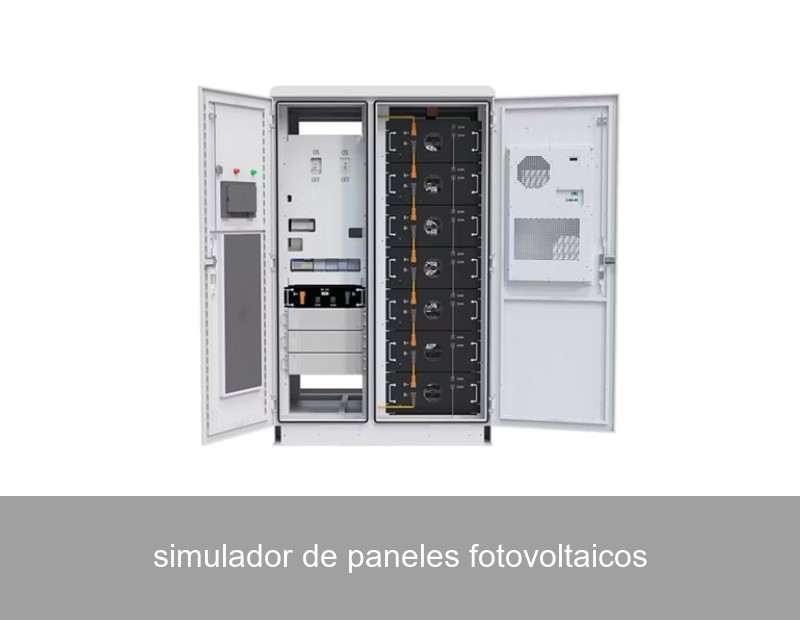
So, you're thinking about installing solar panels. It's an exciting decision, promising energy independence and lower bills. But right after the initial enthusiasm, a very practical question arises: "How many panels do I actually need, and what will my true savings be?" For years, answering this meant relying on rough estimates and generic rules of thumb. Today, the game has changed entirely, thanks to sophisticated photovoltaic panel simulators. These powerful digital tools are the secret weapon for homeowners and businesses across Europe and the US to make confident, data-driven decisions about their solar investment. Let's explore how they work and why they're indispensable.
What is a Photovoltaic Panel Simulator?
At its core, a photovoltaic panel simulator is a sophisticated software application that models the performance of a potential solar energy system. Think of it as a virtual testing ground. Instead of installing physical panels and hoping for the best, you input specific data about your location, roof, and energy habits. The simulator then uses complex algorithms and decades of historical weather data to predict how much electricity your system will produce, month by month, for the next 25+ years.
Image Source: Unsplash - Representative image of solar design software.
For companies like Highjoule, which provides end-to-end intelligent energy solutions, these simulators are the first critical step in our consultation process. They allow our experts to move beyond sales pitches and provide clients with transparent, personalized projections. Our simulations integrate not just panel output, but also the performance of our integrated battery storage systems, giving a complete picture of energy self-consumption and financial return.
Why Simulation Matters: From Guesswork to Precision
The shift from estimation to simulation is profound. Consider the common "phenomenon" of solar disappointment: a homeowner installs a system based on a neighbor's setup or a simple roof-size calculation, only to find their energy bills haven't dropped as expected. The culprit is often a lack of granular analysis.
Here's the data that highlights the problem: According to the National Renewable Energy Laboratory (NREL), solar system performance can vary by over 30% based on factors like local microclimates, shading, panel orientation, and inverter efficiency. A simulator accounts for these variables. For instance, a roof in Hamburg, Germany, with partial afternoon shading, will have a drastically different output profile than an unshaded roof in Phoenix, Arizona, even with the same number of panels.
The case for simulation is clear in commercial applications. A factory manager cannot afford surprises. An accurate simulation is needed to secure financing, forecast operational savings, and ensure the system size meets a specific percentage of their load. Highjoule's simulation tools are built for this complexity, modeling time-of-use energy rates, demand charges, and the strategic dispatch of stored energy from our Highjoule H-Series commercial battery systems to maximize savings.
Key Inputs for an Accurate Solar Simulation
To generate a reliable report, a quality simulator requires several key pieces of information:
- Location & Solar Resource: This is the foundation. The tool cross-references your address with satellite databases containing historical solar irradiance (sunshine) and temperature data.
- Roof Details: You'll input roof pitch (tilt), azimuth (orientation: south, east, west), and dimensions. Advanced simulators use LIDAR data from satellites to create a 3D model of your home and identify shading from trees, chimneys, or neighboring buildings.
- Energy Consumption: The most accurate simulations use at least 12 months of your utility bills. This "load profile" shows your usage patterns, allowing the system to size a solar array that matches your consumption, not just your roof space.
- System Components: You can select panel types (efficiency ratings), inverter models, and crucially, battery storage specifications. Simulating with storage changes the entire equation, shifting the goal from offsetting bills to achieving true energy resilience.
Highjoule's proprietary simulation platform, Highjoule Energy Planner, guides users through this process seamlessly. It automatically recommends configurations of our high-efficiency panels and adaptive battery systems to optimize for goals like "maximize self-consumption" or "ensure backup power during outages."
Beyond Panels: The Critical Role of Storage Simulation
A modern photovoltaic panel simulator is incomplete without integrated storage modeling. Panels generate power when the sun shines, but you consume it around the clock. Without a battery, excess solar energy is often sold back to the grid at a low rate, while you buy power back at night at a high rate.
Simulating with a battery system like the Highjoule HomePower solution shows a dramatically different financial and operational outcome. The simulator can calculate:
| Scenario | Without Battery | With Highjoule HomePower |
|---|---|---|
| Self-Consumption Rate | ~30-50% | 70-90%+ |
| Grid Independence During Outage | None | Essential Circuits or Whole Home |
| Impact of Time-of-Use Rates | High Grid Cost at Night | Minimized by Using Stored Energy |
This capability transforms the simulator from a simple production estimator into a comprehensive home energy management planner.
Real-World Impact: A Case Study from Spain
Let's look at a concrete case study from Málaga, Spain, a region with excellent solar resources but also significant grid price volatility. A medium-sized winery with high refrigeration loads and daytime operations was considering solar.
Initial Plan: A 50kW solar-only system was proposed based on available roof space. A basic simulator predicted 75,000 kWh annual production, covering ~65% of their load.
Highjoule Analysis: Using detailed simulation that included their hourly load data from smart meters and Spain's complex electricity market prices, Highjoule engineers modeled a hybrid solution: a 40kW solar array paired with a 60kWh Highjoule H2 Commercial Battery.
The Data-Driven Result: The simulation revealed that while the hybrid system produced slightly less solar energy (72,000 kWh), it increased on-site consumption to over 90%. By storing cheap midday solar and discharging during expensive evening peak periods, the simulator projected a 28% higher annual savings and a payback period shortened by 1.5 years compared to the solar-only option. The battery also provided critical backup for refrigeration during brief grid outages, protecting inventory. This data gave the winery the confidence to invest in the more resilient, more profitable system. Data from IRENA consistently shows that system design tailored to local consumption patterns yields the highest returns.

Image Source: Unsplash - Example of commercial solar installation in agriculture.
Choosing the Right Simulator for Your Project
Not all simulators are created equal. When evaluating tools, look for:
- Transparency: Does it show the underlying assumptions and data sources?
- Storage Integration: Can it model battery charge/discharge cycles realistically?
- Financial Modeling: Does it incorporate local incentives, net metering rules, and your actual utility rate structure?
- Provider Expertise: Is it backed by a company with real-world installation experience?
This last point is key. A simulator is only as good as the team interpreting its results and implementing the system. Highjoule's global experience in deploying thousands of systems across Europe and North America informs the algorithms within our Energy Planner, ensuring recommendations are not just theoretically sound but practically proven.
The Future of Solar Design is Simulated
The evolution of photovoltaic panel simulators is moving towards AI-driven, real-time optimization. Imagine a system that continuously learns your consumption patterns, integrates live weather forecasts, and automatically adjusts the operation of your solar and storage to maximize economics and comfort. This is the direction of intelligent energy management, and it starts with the foundational accuracy of the initial simulation.
The journey to energy independence is a significant one. Why start it with a guess? A detailed simulation provides the map, showing you every turn and milestone before you commit. It demystifies solar and turns an abstract concept into a clear, predictable project with measurable outcomes.
What's the first question you will ask when you see the personalized solar production and savings forecast for your own home or business?
 Inquiry
 Online Chat