


Your Complete Guide to a Reliable Sistema Autonomo de Paneles Solares
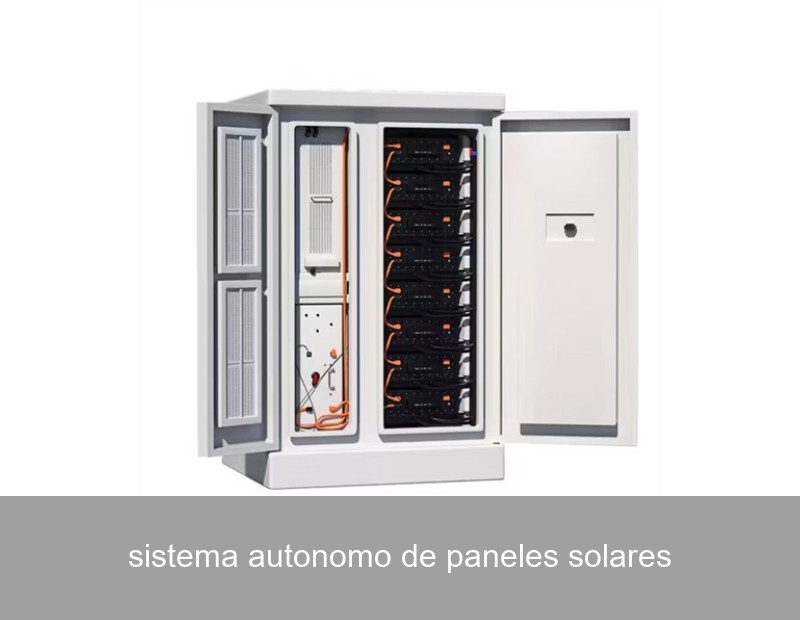
Imagine a power system that not only cuts your electricity bills but also keeps your lights on during a grid blackout, all while reducing your carbon footprint. This isn't a future fantasy; it's the reality offered by a sistema autonomo de paneles solares—an autonomous solar panel system. For homeowners and businesses in Europe and the US, these systems are moving from a niche alternative to a mainstream solution for energy independence, resilience, and sustainability. But what exactly makes a system "autonomous," and how can you ensure it's reliable year-round? Let's explore the technology that powers true energy freedom.
Table of Contents
- What is an Autonomous Solar Panel System?
- Key Components: More Than Just Panels
- Case Study: Off-Grid Living in Northern Europe
- Highjoule's Role in Building Your Energy Independence
- Critical Design Considerations for Reliability
- The Future of Autonomous Energy
What is an Autonomous Solar Panel System?
Unlike standard grid-tied solar setups that shut down during outages, a true sistema autonomo de paneles solares operates independently. It generates, stores, and manages its own electricity without relying on the public utility grid. Think of it as your personal, localized power station. The core principle is self-consumption: the solar panels produce DC electricity, which is converted to AC for your home's use. Any excess energy is not sent to the grid but is stored in a battery bank for use when the sun isn't shining—at night, during storms, or in low-light winter months.
Image: A modern home equipped with an autonomous solar and battery system. Credit: Unsplash.
Key Components: More Than Just Panels
Building a robust autonomous system requires a symphony of components working in harmony:
- Solar Panels (PV Modules): The primary energy harvesters.
- Solar Charge Controller: Regulates voltage from panels to safely charge batteries.
- Battery Energy Storage System (BESS): The heart of autonomy. High-capacity batteries store solar energy for later use.
- Inverter/Charger: A multi-function device that converts DC battery power to AC for appliances, and can also manage battery charging from backup sources if needed.
- Energy Management System (EMS): The "brain" that optimizes energy flow, prioritizing solar usage and protecting battery health.
It's the integration and intelligence of these parts, especially the BESS and EMS, that separates a basic setup from a truly resilient power solution.
The Battery: Your Energy Insurance Policy
Not all batteries are created equal. For an autonomous system, you need deep-cycle batteries designed for daily charging and discharging. While lead-acid was once standard, Lithium Iron Phosphate (LiFePO4) batteries are now the preferred choice for their longer lifespan (often 10+ years), higher depth of discharge, safety, and compact size. This is where specialized providers add immense value. For instance, at Highjoule, our EverSafe LiFePO4 battery series is engineered specifically for the demanding cycles of off-grid and backup applications, featuring integrated battery management systems (BMS) for safety and longevity.
Why Go Autonomous Now? The Data Speaks
The trend is clear. The International Energy Agency (IEA) reports that global renewable capacity is set to grow by 2,400 GW between 2022-2027, with solar PV accounting for over 60%. But the more telling shift is in storage. In the US, residential battery storage installations saw a 20% year-over-year increase in 2023, driven by desires for backup power and maximizing solar self-consumption. In Europe, energy security concerns and volatile electricity prices have accelerated adoption. The phenomenon is simple: people seek control. The data shows a move from just saving money to securing a permanent, predictable energy supply.
Case Study: Off-Grid Mountain Retreat, Norwegian Highlands
Let's look at a real-world example. A family built a year-round home in a remote area of Norway, far from the utility grid. Their challenges were significant: extreme winter darkness, heavy snowfall, and temperatures dropping below -20°C.
| Challenge | Solution | Outcome (Data after 2 years) |
|---|---|---|
| No grid connection; high winter energy demand for heating. | A 15 kW solar array paired with a 40 kWh Highjoule EverSafe battery bank and a smart hybrid inverter. | System achieved 98% energy autonomy. Grid generator used only 7 days per year during deepest winter. |
| Managing energy flow with heat pumps and appliances. | Highjoule's iSync Energy Management System dynamically prioritizes loads and protects battery state of charge. | Reduced unnecessary generator runtime by 65%, saving an estimated €1,200 annually in fuel costs. |
This case highlights that with proper sizing, quality components, and intelligent management, a sistema autonomo de paneles solares can deliver reliability even in the most demanding climates.
Highjoule's Role in Building Your Energy Independence
Since 2005, Highjoule has been at the forefront of advanced energy storage. We understand that an autonomous system is a critical investment. Our approach goes beyond selling components—we provide integrated, intelligent solutions. For the residential and commercial sectors, our PowerHub Autonomous Series is a pre-engineered package that combines our high-density LiFePO4 batteries, efficient hybrid inverters, and our proprietary iSync EMS software. This integrated design simplifies installation and ensures all components communicate flawlessly for optimal performance and durability. For larger-scale needs like microgrids for communities or industrial sites, our engineering team designs custom solutions that can scale to multi-megawatt hours of storage, always with the same focus on intelligence and reliability.

Image: A large-scale battery energy storage system for a microgrid application. Credit: Unsplash.
Critical Design Considerations for Reliability
Designing a system that won't let you down requires careful planning:
- Accurate Load Assessment: You must calculate your daily and seasonal kWh consumption, not just peak power.
- Solar Array Sizing: Your panels must generate enough energy in your worst solar month (e.g., December) to recharge the batteries while covering daily use.
- Battery Capacity: Storage must cover multiple days of "autonomy"—periods with little sun. In cloudy regions, 3-5 days of storage is common.
- Professional Integration: The installation and programming of the EMS are crucial. A system from a provider like Highjoule comes with design support and commissioning protocols to ensure it meets your specific site conditions.
Remember, an undersized battery or an inefficient inverter can turn a promising investment into a frustrating experience. Consulting with experts who understand both the technology and your local climate is key.
The Future of Autonomous Energy
The evolution of the sistema autonomo de paneles solares is moving towards even greater intelligence and grid interaction. We're seeing the rise of "grid-hybrid" systems that are primarily autonomous but can interact with the grid strategically—selling excess power during high-price periods or drawing a minimal amount to preserve battery life, all managed automatically by AI-driven software. This creates not just independence, but an optimized energy asset. The National Renewable Energy Lab (NREL) is actively researching these advanced controls to enhance grid stability.
A Question for Your Consideration
As you think about your own energy needs, what holds more value for you: the immediate savings on your utility bill, or the long-term security and control of knowing your essential power supply is in your own hands, resilient to external price shocks and outages?
 Inquiry
 Online Chat