


Smart Grid Integration of Renewable Energy: The Key to a Stable, Sustainable Future
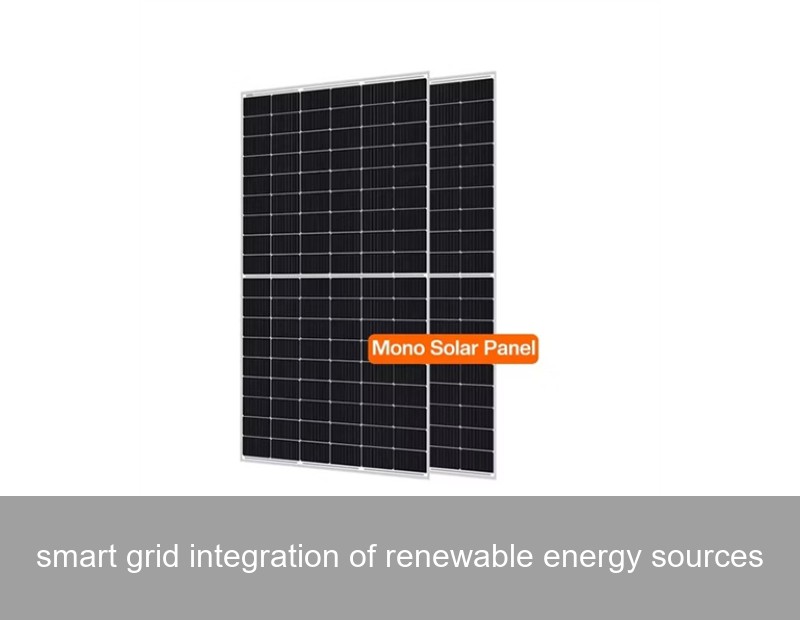
You've likely seen the headlines: "Solar and Wind Power Break Records!" It's an exciting trend, but for energy grid operators, this surge in variable renewable energy presents a fascinating puzzle. How do we keep the lights on when the sun sets or the wind stops blowing? The answer lies in the smart grid integration of renewable energy sources. This isn't just about adding more solar panels; it's about creating an intelligent, responsive energy network that can balance supply and demand in real-time. For businesses, communities, and homeowners, this evolution unlocks unprecedented control over energy costs and carbon footprints. Let's explore how this intelligent integration works and why it's critical for our energy future.
Table of Contents
- The Challenge: Intermittency Meets Inflexibility
- The Smart Solution: More Than Just Wires and Meters
- The Heart of the Matter: The Battery Energy Storage System (BESS)
- In Action: A European Case Study in Grid Stability
- Highjoule's Role: Enabling Intelligent Integration
- The Future Horizon: Your Role in the Energy Transition
The Challenge: Intermittency Meets Inflexibility
Traditional power grids were designed for a one-way street: electricity flowed from large, centralized coal, gas, or nuclear plants to consumers. These "baseload" plants provided a steady, predictable stream of power. Renewables like solar PV and wind turn this model on its head. Their output is inherently variable—dependent on the weather and time of day.
This creates a mismatch. Demand for electricity follows its own patterns (peaking in the morning and evening), often out of sync with renewable generation. Without intervention, this can lead to:
- Grid Instability: Frequency and voltage fluctuations that can damage equipment and cause blackouts.
- Curtailment: Grid operators are forced to pay renewable generators to switch OFF during times of excess production—a wasted clean energy opportunity.
- Reliance on Fossil Fuels: Fast-reacting (and often carbon-intensive) gas "peaker" plants are kept on standby to fill sudden gaps, undermining decarbonization goals.
The data underscores the urgency. The International Energy Agency (IEA) reports that renewables are set to contribute 80% of new power capacity to 2030. Integrating this volume requires a smarter approach.
The Smart Solution: More Than Just Wires and Meters
A smart grid is a digital upgrade of the traditional grid. It uses sensors, communication networks, and advanced software to create a two-way dialogue between energy producers, consumers, and the grid itself. For renewable integration, this intelligence is deployed in several key ways:
- Advanced Forecasting: Using AI and weather data to predict solar and wind output hours or days ahead, allowing for better grid planning.
- Demand Response: Incentivizing large industrial users or aggregated home appliances to temporarily reduce consumption during peak stress, acting as a "virtual power plant."
- Advanced Inverter Functions: Modern solar inverters don't just convert DC to AC; they can help stabilize grid voltage and frequency.
- Distributed Energy Resources (DERs) Management: Orchestrating millions of rooftop solar systems, home batteries, and electric vehicles as a unified grid resource.

Image Source: Unsplash (Representative image of a grid control center)
The Heart of the Matter: The Battery Energy Storage System (BESS)
While software provides the brains, energy storage provides the muscle. The Battery Energy Storage System (BESS) is the cornerstone technology for smoothing out renewable intermittency. Think of it as a shock absorber and a time-machine for electrons.
| Grid Service | How BESS Helps Renewable Integration |
|---|---|
| Frequency Regulation | Responds in milliseconds to inject or absorb power to keep grid frequency stable, compensating for sudden drops in wind or surges in solar. |
| Energy Arbitrage (Time-Shifting) | Stores excess solar energy at midday and discharges it during the expensive evening peak, maximizing renewable utilization. |
| Ramping Support | Instantly covers the gap when a cloud passes over a large solar farm, preventing the need to fire up a gas plant. |
| Black Start Capability | Can help restart parts of the grid after an outage, even without sunshine or wind—a critical reliability feature. |
In Action: A European Case Study in Grid Stability
Let's look at a real-world example from the UK, a leader in offshore wind. The country has ambitious targets but faces the classic intermittency challenge. National Grid ESO, the system operator, has pioneered the use of grid-scale battery storage for frequency response services.
In one notable instance, a large-scale battery storage facility—similar in function to Highjoule's GridMax Utility BESS—provided a dramatic demonstration of value. During a significant frequency drop caused by the unexpected loss of a large generation unit, multiple battery storage sites responded within 0.2 seconds, injecting over 700 MW of power to stabilize the grid before traditional generators could even spin up. This event, analyzed in a report by National Grid ESO, proved that batteries are not just a future technology but a present-day critical asset for securing a renewables-heavy grid.

Image Source: Unsplash (Representative image of a utility-scale BESS installation)
Highjoule's Role: Enabling Intelligent Integration
At Highjoule, we don't just manufacture battery storage systems; we provide the intelligence that makes them a seamless part of the smart grid. Our solutions are designed from the ground up for the demands of high-renewable penetration.
For our commercial and industrial (C&I) clients, our EnergySynch Platform is a game-changer. It doesn't just manage a single site's battery; it can aggregate multiple distributed Highjoule systems to participate in grid service markets, creating a new revenue stream for businesses while supporting overall grid stability. A factory with a Highjoule PowerStack C&I BESS can automatically shift its energy usage, store onsite solar, and sell flexibility back to the grid—all without interrupting operations.
For microgrids and community energy projects, our integrated systems combine solar PV, storage, and advanced controls to create self-sufficient energy islands. These microgrids can "island" from the main grid during outages or price spikes, then seamlessly reconnect and support the broader network when needed. This resilience is becoming increasingly valuable for municipalities, universities, and industrial campuses, particularly in regions prone to extreme weather events.
The Technology Behind Our Solutions
Highjoule systems are built with utility-grade components and our proprietary Adaptive Control Engine (ACE). ACE continuously analyzes grid conditions, weather forecasts, energy prices, and onsite load to make split-second decisions on when to charge, discharge, or hold. This maximizes financial return for the owner and provides the most valuable support to the grid. Our systems are also inherently scalable, allowing capacity to be added as needs grow.
The Future Horizon: Your Role in the Energy Transition
The smart grid integration of renewable energy is not a distant utopia; it's happening now. It transforms every solar panel, every wind turbine, and every battery from a standalone asset into a node in a vast, intelligent network. This transition reduces carbon emissions, enhances energy security, and democratizes power.
Whether you're a facility manager looking to cut energy costs and ensure operational resilience, a developer building the next community solar project, or a utility planner tasked with maintaining reliability, the question is no longer *if* you should participate, but *how*.
What specific grid challenge or energy goal is your organization facing, and how could an intelligent, storage-enabled approach create value for your operations and the wider community?
 Inquiry
 Online Chat