


Sodium Ion Battery Storage: The Sustainable and Scalable Future of Energy Resilience
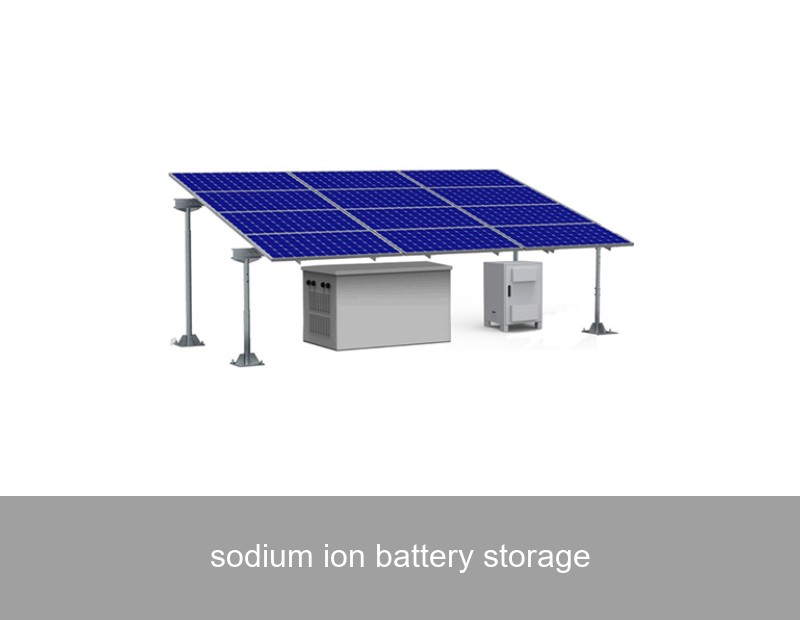
your business or community is powered reliably by renewable energy, even when the sun isn't shining or the wind isn't blowing. The key to this resilience lies in advanced energy storage. For years, lithium-ion technology has been the dominant player. But a powerful, promising alternative is rapidly moving from research labs to commercial reality: sodium-ion battery storage. As a global leader in intelligent storage solutions, Highjoule is at the forefront of evaluating and integrating these next-generation technologies to provide our clients with sustainable, secure, and cost-effective power. Let's explore why sodium-ion batteries are causing such a stir and how they could shape our energy future.
What Are Sodium-Ion Batteries? A Friendly Chemistry Lesson
At their core, sodium-ion batteries (SIBs) operate on a principle similar to their lithium-ion cousins. They store and release energy by moving ions between two electrodes. The crucial difference is in the chemistry. Instead of relying on lithium, they use sodium—an element that's about 1,200 times more abundant in the Earth's crust. Think of it like this: if lithium is a specialized, high-performance ingredient, sodium is a common, versatile workhorse found everywhere, even in your table salt. This fundamental shift in chemistry unlocks a cascade of benefits that address some of the most pressing challenges in today's energy storage market.
Why Sodium-Ion Battery Storage is Turning Heads: Key Advantages
The growing interest in sodium ion battery storage isn't just hype. It's driven by tangible advantages that align perfectly with the needs of modern grid stability, commercial energy management, and sustainable development.
Cost & Supply Chain Security
Lithium, cobalt, and nickel prices have been volatile, driven by surging demand and concentrated geopolitics. Sodium, by contrast, is ubiquitous and inexpensive. This translates to:
- Lower Material Costs: Significant potential for reduced battery pack costs at scale.
- Supply Chain Resilience: Manufacturing isn't tied to a limited number of mineral-rich regions. This is a crucial consideration for energy security in Europe and the U.S.
- Compatibility: SIBs can often be produced on existing lithium-ion manufacturing lines, enabling faster scaling.
Inherent Safety & Performance
Safety is non-negotiable for any energy asset. Sodium-ion batteries exhibit superior thermal stability, meaning they are far less prone to the thermal runaway events that can cause fires in other battery types. They also perform well in a wider temperature range, maintaining efficiency in both cold and hot climates—a vital trait for diverse geographical applications. Furthermore, they can be discharged to 0V for safe transport and maintenance, a significant operational advantage.

Image Source: Unsplash - Representative image of advanced battery storage systems.
Sustainability & Environmental Impact
The sustainability case is compelling. With abundant sodium and the potential to use aluminum for the current collectors (instead of copper), SIBs have a lower environmental footprint from mining and processing. They are also easier to recycle. For businesses and communities committed to robust ESG (Environmental, Social, and Governance) goals, integrating sodium ion battery storage represents a meaningful step toward a truly circular and low-impact energy economy.
From Lab to Grid: A Real-World Case Study in Europe
The theory is strong, but what about practice? Let's look at a concrete example. In 2023, a pilot project in Northern Germany deployed a 100 kWh sodium-ion battery system to provide frequency regulation services to the local grid and store surplus wind energy. The system, operating in a coastal environment with fluctuating temperatures, reported key data over a 12-month period:
| Metric | Performance Data | Implication |
|---|---|---|
| Round-Trip Efficiency | 92-95% | Comparable to incumbent technologies, ensuring minimal energy loss. |
| Capacity Retention | >97% after 3,000 cycles | Demonstrates excellent longevity and cycle life for daily use. |
| Operating Temperature Range | -20°C to 60°C | Proven reliability without costly climate control systems. |
| Safety Incidents | 0 | Validated the inherent safety profile in a real-grid application. |
This pilot, documented by researchers at the Fraunhofer Institute for Solar Energy Systems ISE, provides crucial, real-world validation. It shows that sodium-ion technology is not just a lab curiosity but a viable asset for grid services and renewable integration today.
Highjoule's Vision: Integrating Innovation into Reliable Systems
At Highjoule, our mission is to deliver intelligent, future-proof storage solutions. We view emerging technologies like sodium ion battery storage through the lens of practical, client-centric value. While we continue to offer and optimize our proven lithium-ion based Highjoule H-Series for applications requiring the highest energy density, we are actively developing and testing sodium-ion solutions for specific use cases.
Our Intelligent Energy Platform (IEP) is designed to be chemistry-agnostic. This means whether a client's system uses lithium-ion, sodium-ion, or future flow batteries, our advanced software can optimize its performance, lifespan, and economic return. We see sodium-ion batteries as a perfect fit for:
- Commercial & Industrial (C&I) Peak Shaving: Where daily cycling, safety, and lifetime cost are paramount.
- Microgrids & Remote Communities: Leveraging their temperature resilience and supply chain independence.
- Large-Sale Renewable Smoothing: Providing bulk storage for solar and wind farms at a competitive levelized cost of storage (LCOS).

Image Source: Unsplash - Solar farm with integrated storage, a key application for new battery tech.
By taking a system-level approach, Highjoule ensures that when sodium-ion technology is the right tool for the job, it is seamlessly integrated, intelligently managed, and fully supported over its entire lifecycle.
The Future Outlook for Sodium-Ion Battery Storage
The trajectory is promising. Major manufacturers are announcing gigawatt-hour scale production facilities. According to the International Energy Agency (IEA), innovation in battery chemistries is critical to meeting global net-zero targets, and sodium-ion is highlighted as a key technology for stationary storage. The U.S. Department of Energy's research arms are also funding significant projects to advance the technology. While energy density (weight/volume) is currently lower than top-tier lithium-ion, it is already sufficient—and improving—for the vast majority of stationary storage applications where space is less constrained than in an electric vehicle.
Your Next Step in the Energy Transition
The energy landscape is diversifying. Sodium ion battery storage represents more than just a new product; it symbolizes a shift towards more democratic, sustainable, and resilient energy systems. It asks us to think differently about the resources we build our clean energy future upon.
Is your organization evaluating long-term energy storage strategies to mitigate price volatility, enhance sustainability, and ensure operational resilience? How might a chemistry-independent, intelligent storage platform future-proof your energy investments?
We invite you to connect with Highjoule's expert team to discuss your specific needs and explore how cutting-edge solutions, including the evolving potential of sodium-ion, can be tailored to power your success.
 Inquiry
 Online Chat