


Harnessing Solar PV Renewable Energy: A Practical Guide for a Sustainable Future
You've likely seen them gleaming on rooftops and sprawling across fields: solar panels. More than just a symbol of green energy, solar PV renewable energy is fundamentally reshaping how we generate and consume power. But the sun doesn't always shine when we need electricity the most. This intermittent nature is the central challenge—and opportunity—for modern energy systems. This article delves into the practical realities of solar power and explores the critical technologies, like advanced energy storage, that are unlocking its full potential for homes, businesses, and communities across Europe and the U.S.
Table of Contents
- The Phenomenon: Solar's Rise and Its Inherent Challenge
- The Data: Quantifying the Solar Surge and the Duck Curve
- The Solution: Intelligent Storage – The Brain Behind the Brawn
- Case Study: A U.S. Manufacturing Plant's Journey to Energy Independence
- Expert Insights: Future-Proofing Your Energy Strategy
- What's Your Energy Resilience Goal?
The Phenomenon: Solar's Rise and Its Inherent Challenge
The global shift towards solar PV renewable energy is undeniable. Driven by falling costs, supportive policies, and a collective drive for sustainability, photovoltaic technology has moved from niche to mainstream. However, anyone with a solar installation, or their utility grid operator, can tell you the obvious: energy production peaks in the middle of the day, while demand often peaks in the early evening. This creates a mismatch. Without a way to capture the midday abundance, valuable clean energy is wasted, and reliance on traditional fossil-fuel peaker plants remains necessary.

Image Source: Unsplash - A typical solar PV farm. The key question is: how do we use all this power when the sun goes down?
The Data: Quantifying the Solar Surge and the Duck Curve
Let's look at the numbers. According to the International Energy Agency (IEA), solar PV is set to become the largest source of installed power capacity globally by 2027. In the U.S., the Solar Energy Industries Association (SEIA) reports that solar now powers over 20 million homes. In the EU, solar generation saw a staggering increase in 2022, helping to bolster energy security.
This success, however, visually manifests in what grid operators call the "duck curve"—a graph showing the deepening dip in net demand during sunny days and a steep ramp-up as the sun sets. This curve stresses the grid and highlights a multi-billion dollar opportunity: storing solar energy for when it's truly needed.
| Region | Solar Capacity Growth (2020-2023) | Key Challenge Highlighted |
|---|---|---|
| California, USA | ~40% increase | Pronounced duck curve requiring massive evening ramp-up from other sources. |
| Germany, EU | ~25% increase | Grid congestion and need for decentralized energy management. |
The Solution: Intelligent Storage – The Brain Behind the Brawn
This is where the story evolves from simple generation to intelligent energy management. A solar PV system paired with a sophisticated Battery Energy Storage System (BESS) transforms from a one-trick generator into a 24/7 power asset. Think of it this way: solar panels are the muscles, producing raw power. The battery system is the heart, storing and releasing energy. But the true intelligence comes from the energy management system (EMS)—the brain that decides when to store, when to use, and when to potentially sell back to the grid based on weather forecasts, usage patterns, and electricity rates.
This is precisely where Highjoule excels. Since 2005, we've moved beyond just providing batteries. We deliver integrated, smart storage solutions. Our H-Series commercial & industrial storage systems are engineered for durability and peak performance, while our HomePower line offers seamless integration for residential users. The real magic lies in our AegisAI™ software platform, which optimizes every kilowatt-hour, ensuring our clients maximize self-consumption, reduce demand charges, and gain unparalleled resilience against outages.
- For Homeowners: Use more of your own solar power at night, drastically reducing your electricity bill and securing backup power.
- For Businesses: Cap peak demand charges, which can constitute up to 70% of a commercial electricity bill, and ensure operational continuity.
- For Utilities & Microgrids: Stabilize the grid, defer costly infrastructure upgrades, and integrate more renewable sources reliably.
Case Study: A U.S. Manufacturing Plant's Journey to Energy Independence
Let's make this concrete with a real-world example from the American Midwest. A medium-sized automotive parts manufacturer was facing two major problems: volatile and rising energy costs, and an unreliable grid that threatened costly production halts. They had a 500 kW rooftop solar PV array, but it only offset daytime base load, leaving them exposed to high evening demand charges and grid outages.
The Solution & Implementation: Highjoule deployed a turnkey 1 MWh H-Series BESS, integrated with their existing solar and controlled by our AegisAI™ platform. The system was programmed for multiple value streams: peak shaving, solar self-consumption optimization, and backup power for critical assembly lines.
The Results (18-month period):
- Demand Charge Reduction: Slashed peak demand charges by 28%, resulting in annual savings of over $85,000.
- Solar Utilization: Increased consumption of on-site solar power from 35% to over 80%.
- ROI & Resilience: Achieved a projected return on investment in under 5 years. The system has already provided seamless backup during two grid disturbances, preventing an estimated $250,000 in production losses.

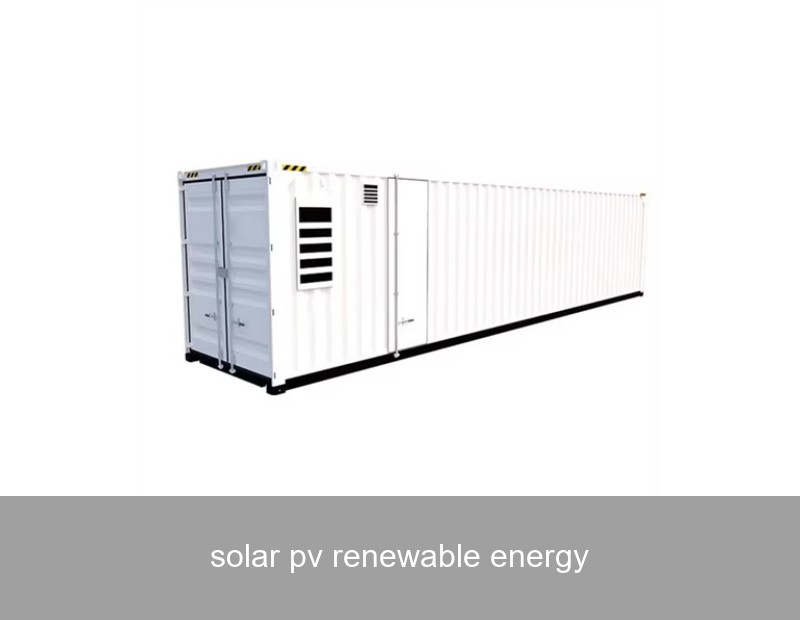
Image Source: Unsplash - Representative image of a modern industrial BESS installation.
Expert Insights: Future-Proofing Your Energy Strategy
As a technology leader, we see three critical trends shaping the solar PV renewable energy landscape:
- Software is King: The hardware (batteries, inverters) is becoming increasingly standardized. The differentiating factor is the intelligence of the control software. Systems that can adapt, learn, and respond to real-time grid signals will deliver the highest value. Learn more about grid flexibility from the National Renewable Energy Laboratory (NREL).
- Behind-the-Meter is Booming: For businesses and homeowners, the economic case for "behind-the-meter" storage (systems installed on the customer's side of the utility meter) is now overwhelmingly strong, driven by electricity rate structures and a desire for control.
- Second-Life Batteries: Sustainability doesn't end at production. We are actively involved in R&D for integrating second-life EV batteries into stationary storage applications, creating a circular economy and further reducing environmental impact.
Choosing a storage partner isn't just about buying a battery cabinet. It's about selecting a provider with deep domain expertise, proven grid-interactive software, and a commitment to long-term system health and performance—a philosophy Highjoule has championed for nearly two decades.
What's Your Energy Resilience Goal?
The journey to a sustainable, cost-effective energy future is unique for every home, business, and community. Whether your primary driver is financial savings, achieving net-zero carbon goals, or simply ensuring the lights never go out, the integration of solar PV renewable energy with intelligent storage is the definitive path forward. The technology is proven, the economics are clear, and the environmental imperative is urgent.
So, we leave you with this question to ponder: What single energy challenge—be it a monthly bill, a reliability concern, or a sustainability target—would you solve first if you had the perfect storage solution? The answer to that question is the perfect starting point for a conversation about your energy future.
 Inquiry
 Online Chat