


Your Solar Battery Home Assistant: The Smart Brain Behind Your Energy Independence
Imagine this: your rooftop solar panels are soaking up the midday sun, but you're at work. Traditionally, that excess energy would zip back to the grid for a modest credit. But what if, instead, a smart "assistant" could decide to store that power for you, knowing you'll run the dishwasher, charge the EV, and crank the AC later that evening? This isn't futuristic thinking—it's the reality enabled by today's intelligent solar battery home assistant systems. They're not just batteries; they're the central intelligence that optimizes every kilowatt-hour for your comfort, wallet, and resilience.
Table of Contents
- The Phenomenon: From Passive Storage to Active Management
- The Data: Why Smart Management is Non-Negotiable
- A Real-World Case: The Smith Family's Journey in California
- The Core Insight: It's All About Predictive Intelligence
- How Highjoule Integrates This Intelligence
- Your Home as a Virtual Power Plant
The Phenomenon: From Passive Storage to Active Management
Early solar-plus-storage systems were relatively simple: charge when the sun shines, discharge when it sets. The problem? This static operation ignores a dynamic world of fluctuating energy prices, changing weather patterns, and your unique household habits. The modern solar battery home assistant solves this by being a proactive energy manager. It continuously analyzes data streams—from your home's consumption patterns and local weather forecasts to real-time grid electricity rates—and makes split-second decisions to maximize your system's value.

Image: The modern energy-smart home, managed by an intelligent assistant. Source: Unsplash
The Data: Why Smart Management is Non-Negotiable
Let's talk numbers. According to the U.S. Department of Energy, a typical home solar system without smart storage only utilizes 20-40% of its generation for direct self-consumption. The rest is exported. With a basic, non-managed battery, you might increase self-consumption to 60-70%. However, studies from leading research institutes show that systems with AI-driven management—a true solar battery home assistant—can achieve over 90% self-consumption and reduce grid electricity purchases by up to 80%.
The financial impact is stark. In regions with Time-of-Use (TOU) rates, like many in Europe and California, the price difference between peak and off-peak electricity can exceed 300%. A dumb battery might discharge during a mild afternoon. A smart assistant will hold that charge, predicting and waiting for the expensive peak period from 4-9 PM, effectively turning your stored sunlight into high-value currency.
Key Functions of a Solar Battery Home Assistant:
- Predictive Charging/Discharging: Uses weather and usage forecasts to optimize the battery's state of charge.
- Tariff Optimization: Automatically aligns energy flow with the most favorable utility rate schedules.
- Peak Shaving: Protects you from demand charges (critical for businesses) by preventing high grid draw during peak times.
- Grid Services Mode: In some markets, can participate in grid-balancing programs for additional revenue.
- Resilience Monitoring: Constantly checks grid health and can island your home in milliseconds during an outage.
A Real-World Case: The Smith Family's Journey in California
Let's ground this with a real example. The Smiths, a family of four in Sacramento, California, installed a 10kW solar array in 2022. Initially, they added a generic battery. Their savings were decent but not stellar. In 2023, they upgraded to a system centered around an intelligent energy management platform—a dedicated solar battery home assistant.
| Metric | With Generic Battery (2022) | With Intelligent Home Assistant (2023) | Change |
|---|---|---|---|
| Annual Grid Electricity Purchases | 2,800 kWh | 620 kWh | -78% |
| Self-Consumption of Solar | 68% | 94% | +26% |
| Bill Savings vs. Pre-Solar | $1,850/yr | $2,900/yr | +$1,050/yr |
| Grid Independence During Outages | ~8 hours (basic backup) | ~24 hours (managed loads) | 3x longer |
The assistant learned their patterns: it pre-cooled the house before peak rates, scheduled EV charging for super-off-peak hours, and even conserved energy during a predicted cloudy spell. The Smiths didn't change their behavior; the assistant optimized around them. This is the power of context-aware management.
The Core Insight: It's All About Predictive Intelligence
The leap from storage to "assistant" is defined by one capability: predictive intelligence. A battery is a vessel; the assistant is the captain navigating the complex seas of energy economics. It answers questions like: Will tomorrow be sunny enough to charge the battery after a discharge tonight? Is a heatwave coming that will spike AC use and grid prices? By leveraging machine learning, these systems get smarter over time, fine-tuning their algorithms to your home's specific "energy fingerprint."
This is where expertise in system integration matters profoundly. The hardware—solar panels, inverters, batteries—must communicate seamlessly with the software brain. A disconnect here means lost savings and potential. As a global leader founded in 2005, Highjoule has spent nearly two decades perfecting this integration. Our Highjoule Home Energy Intelligence Platform is the embodiment of this principle, designed to act as the ultimate solar battery home assistant for discerning homeowners in Europe and North America.

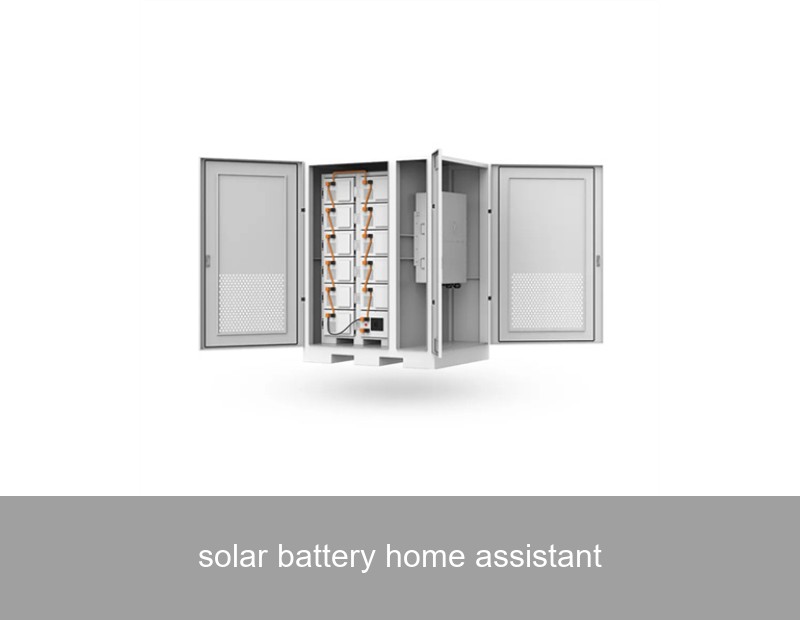
Image: A modern, integrated home battery system with intelligent controls. Source: Unsplash
How Highjoule Integrates This Intelligence Seamlessly
At Highjoule, we view the battery as one component of a holistic energy ecosystem. Our approach centers on our proprietary Helios OS, which powers every Highjoule residential and commercial system. Think of Helios OS as the operating system for your personal energy network. It doesn't just react; it anticipates.
For homeowners, this translates to the Highjoule Home App, your dashboard and command center. Here, you see in clear terms:
- Real-time and forecasted energy production & consumption.
- Financial impact, showing savings in currency, not just kilowatt-hours.
- System health and diagnostics.
- Customizable modes: "Max Savings," "Max Resilience," or "Grid Support."
Our hardware, from the compact Highjoule H-Cell 10 for residential use to scalable commercial solutions, is engineered from the ground up with this digital intelligence in mind. This ensures flawless communication, safety, and longevity. We provide a complete, integrated solution—design, certified hardware, intelligent software, and ongoing support—taking the complexity off your shoulders and delivering a system that truly works as your automated energy partner.
What Sets a Highjoule System Apart?
- Adaptive Learning Algorithms: Helios OS refines its predictions based on months of your home's data.
- Open Ecosystem Compatibility: Designed to work with leading solar inverters and smart home devices (like EV chargers and thermostats) for unified control.
- Cybersecurity First: We prioritize the security of your energy data and system controls, a critical but often overlooked aspect.
- Global Support Network: With teams in Europe and the US, we offer localized service and understand regional market nuances.
Your Home as a Virtual Power Plant: The Next Frontier
The evolution of the solar battery home assistant points toward an exciting future: the Virtual Power Plant (VPP). In a VPP, thousands of distributed home systems like yours are aggregated and coordinated by a central platform to act as a single, large power plant. During times of extreme grid demand, your assistant might receive a secure signal to dispatch a small amount of stored energy to help stabilize the community grid—and you get paid for it.
This transforms your home from an energy consumer into a proactive grid citizen. Companies like Highjoule are already piloting these programs in select markets, as noted in reports by the International Energy Agency. The intelligence built into your home assistant today is the foundational step for participating in this energy democracy tomorrow.
So, the question isn't just "Do I need a solar battery?" The more pertinent question is: Is your energy system smart enough to navigate the future of electricity, or is it just a passive container? The right assistant doesn't just store power; it stores value, resilience, and opportunity.
What's the first energy-consuming habit in your home you'd like an intelligent assistant to optimize for you?
 Inquiry
 Online Chat