


Understanding Solar BESS On-Grid Price: A Smart Investment for Energy Independence
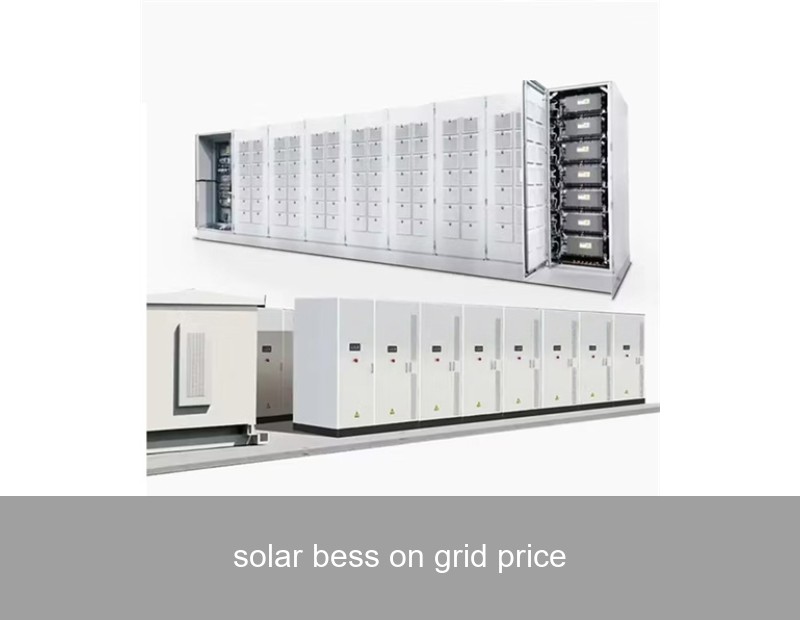
Have you ever looked at your electricity bill and wondered, "There must be a better way"? For homeowners and businesses across Europe and the US, the dream of energy independence is increasingly powered by a key technology: the solar Battery Energy Storage System (BESS) connected to the grid. But a major question holds many back: the solar BESS on-grid price. Is it a worthwhile investment, or just a costly green luxury? Let's move beyond the sticker shock. The true story isn't just about upfront cost; it's about long-term value, resilience, and taking control of your energy future. As a leader in advanced energy storage since 2005, Highjoule is here to demystify the economics and show you how a smart solar BESS transforms your relationship with the grid.
Table of Contents
The Price Puzzle: More Than Just Hardware
When you ask about solar BESS on-grid price, you're really asking about the cost of a complete energy ecosystem. It's like asking for the price of a "car"—the answer depends on the model, features, and financing. A grid-tied solar BESS includes solar panels, the battery storage unit itself, a hybrid inverter, smart energy management software, and professional installation. According to the U.S. Department of Energy, while hardware costs have fallen dramatically, the "soft costs" like permitting, installation, and customer acquisition remain a significant portion. In Europe, factors like local regulations, grid connection fees, and available subsidies create further price variation. The key is to see this not as a single expense, but as a dynamic investment with multiple revenue streams and savings channels.

Image Source: Unsplash - A typical residential solar and storage installation.
Breaking Down the Costs: A Transparent Look
Let's dissect a typical solar BESS on-grid price for a medium-sized family home. The following table provides a simplified cost breakdown, though prices can vary by region and specific needs.
| Cost Component | Description | Approx. Share of Total |
|---|---|---|
| Solar PV Array | The panels that capture sunlight. | 40-50% |
| Battery Storage Unit | The heart of the BESS (e.g., lithium-ion). | 25-35% |
| Power Conversion System (Inverter) | Converts DC from panels/battery to AC for home/grid. | 10-15% |
| Balance of System & Installation | Wiring, mounting, labor, permitting, grid connection. | 15-25% |
Notice the significant portion for installation and balance of system. This is where choosing an experienced provider like Highjoule makes a tangible difference. Our streamlined design and installation processes, backed by nearly two decades of global project experience, help optimize these "soft costs," ensuring you get a reliable system at a competitive solar BESS on-grid price.
The Value Equation: Where Your Investment Pays Back
Focusing solely on the initial solar BESS on-grid price misses the bigger financial picture. The real metric is Levelized Cost of Storage (LCOS) and the total value accrued over the system's 15-20 year lifespan. Here’s how a smart BESS creates value:
- Maximized Self-Consumption: Store excess solar power from the afternoon to use at night, slashing your grid purchases by up to 80%.
- Time-of-Use (TOU) Arbitrage: In regions with TOU pricing (common in California, Italy, Spain), charge your battery with cheap off-peak or solar power, and discharge during expensive peak hours.
- Enhanced Resilience: While a pure on-grid system shuts off during a blackout for safety, a sophisticated BESS like Highjoule's GridShield series can provide backup power to critical loads, keeping lights and refrigerators on.
- Grid Services (Future-Proofing): In some markets, you can earn credits or payments by allowing your utility to use your aggregated battery for grid stability—a concept known as Virtual Power Plants (VPPs).
A Real-World Case: The German Bakery Story
Consider "Bäckerei Schmidt," a mid-sized bakery in Bavaria, Germany. Facing high electricity costs and a desire to green its operations, it installed a 50 kW solar array with a 100 kWh Highjoule IndustrialPro BESS in 2022.
- Challenge: High energy demand for ovens and cooling, with most solar production mid-day not matching morning/evening peaks.
- Solution: The IndustrialPro system stores midday solar surplus, releasing it during the early morning baking rush and evening hours.
- Result (Data after 12 months): Grid electricity consumption reduced by 68%. The system achieved a simple payback period of under 7 years, factoring in the German EEG subsidy. The bakery also gained invaluable protection against short power dips that previously ruined batches of dough.
This case, drawn from Highjoule's project portfolio, illustrates that the solar BESS on-grid price is an entry ticket to sustained operational savings and business continuity.

Image Source: Unsplash - Representative image of a commercial battery energy storage system installation.
The Highjoule Solution: Smart Tech for Optimal ROI
At Highjoule, we engineer our systems to deliver superior lifetime value, making the initial solar BESS on-grid price a smarter investment. Our products, like the HomeVault for residences and the GridShield for commercial sites, are built with:
- Long-Life Lithium Iron Phosphate (LFP) Chemistry: Safer, more stable, and longer-lasting than older battery types, ensuring your system delivers for decades. You can learn more about LFP advantages from this NREL report.
- AI-Powered Energy Management: Our NeuronOS software doesn't just store and release energy. It learns your consumption patterns, forecasts weather, and integrates real-time electricity prices to autonomously optimize every charge-discharge cycle for maximum savings.
- Scalable and Modular Design: Start with what you need and expand capacity as your needs grow, protecting your investment.
By prioritizing system intelligence and durability, we ensure that the long-term savings and reliability far outweigh the initial capital outlay.
The Future of Solar BESS On-Grid Price
The trend is clear: hardware costs continue to fall, while software intelligence and grid service opportunities rise. The International Energy Agency (IEA) notes that global battery costs have dropped over 90% in the last 15 years, a trend expected to continue. However, the future value of a BESS will hinge less on the solar BESS on-grid price per kWh and more on its ability to act as a grid-connected asset. Systems that can seamlessly participate in demand response or VPP programs will unlock new revenue, accelerating payback.
Your Energy, Your Decision
The conversation about solar BESS on-grid price is ultimately a conversation about control. Do you see electricity as a mere monthly bill, or as a dynamic resource you can produce, store, and manage? With the right technology partner, the initial investment paves the way for decades of lower costs, greater resilience, and a tangible contribution to a sustainable grid.
Is your home or business ready to move from being a passive consumer to an active energy manager? What would you do with the savings and security a smart solar BESS could provide?
 Inquiry
 Online Chat