


Why the Steel Electrical Cabinet is the Unsung Hero of Modern Energy Storage
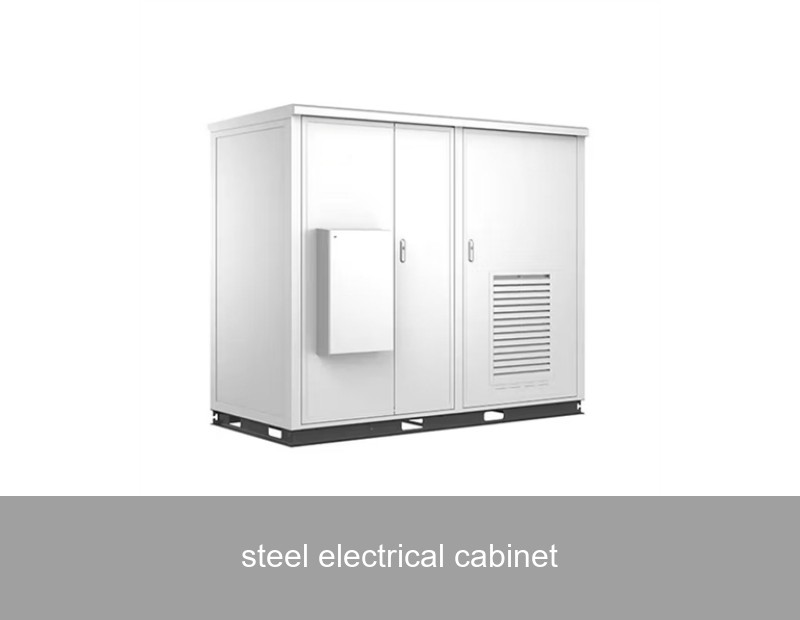
When you think about a cutting-edge battery energy storage system (BESS), your mind likely jumps to the latest lithium-ion chemistry, sophisticated inverters, or intelligent energy management software. But there's a critical, often overlooked component standing guard, ensuring all that innovation operates safely and reliably for decades: the steel electrical cabinet. This robust enclosure is far more than a simple metal box; it's the foundational shield protecting your energy investment from physical, environmental, and electrical threats. For businesses and communities in Europe and the US looking to harness renewable energy and achieve energy independence, understanding the role of this crucial hardware is the first step toward a resilient power solution.
Table of Contents
- The Silent Guardian: More Than Just a Metal Box
- PAS Framework: The Critical Role of Steel Cabinets in BESS
- A Case Study in Resilience: Steel Cabinets in a Nordic Microgrid
- Highjoule's Engineering Philosophy: Where Steel Meets Smart
- Choosing Your Shield: Key Specifications for Your Project
- The Future Enclosure: What's Next for BESS Infrastructure?
The Silent Guardian: More Than Just a Metal Box
Let's be honest, a steel cabinet doesn't sound like the most exciting part of a high-tech energy system. Yet, ask any engineer, and they'll tell you it's a component where compromise is not an option. Why? Because the internal environment of a battery storage system is incredibly demanding. We're talking about housing high-voltage components, sensitive battery management systems (BMS), and power conversion equipment that generates heat. The steel electrical cabinet's job is to provide a secure, stable, and protected habitat for all these elements.
Its primary functions are multifaceted:
- Physical Security & Safety: It acts as a robust barrier against unauthorized access, vandalism, and accidental contact with live parts, which is a fundamental requirement for UL and IEC certifications in the US and Europe.
- Environmental Protection: A high-quality cabinet with proper ingress protection (IP rating) seals out dust, moisture, salt spray (crucial for coastal areas), and pests that could cause short circuits or corrosion.
- Thermal Management: Steel's properties are integral to thermal design. It acts as a heat sink and provides the structural framework for integrated cooling systems, which is vital for maintaining optimal battery temperature and lifespan.
- EMI/RFI Shielding: The steel construction inherently provides electromagnetic and radio frequency interference shielding, protecting sensitive control electronics from external noise and preventing the system itself from emitting interference.

Image: A robust steel electrical cabinet forms the backbone of a professional energy storage installation. Source: Unsplash
PAS Framework: The Critical Role of Steel Cabinets in BESS
Problem
The transition to renewables like solar and wind creates grid volatility. Energy storage smooths this out, but these systems are deployed in diverse, often harsh environments—from industrial warehouses to remote field sites. A standard enclosure simply won't suffice. Failure points like corrosion, poor thermal management, or structural weakness can lead to system downtime, safety hazards, and significant financial loss.
Agitation
Consider the data: A DNV GL report on system failures often points to "ancillary components" like enclosures and cooling as contributing factors in premature system degradation. Corrosion, for instance, can compromise electrical safety and is a major concern in areas with high humidity or industrial pollution. Furthermore, an inefficient thermal design inside the cabinet can cause battery cells to operate outside their ideal temperature range. Studies show that operating at just 10°C above recommended limits can halve the expected cycle life of a lithium-ion battery, drastically impacting the return on investment.
Solution
The solution is a purpose-engineered steel electrical cabinet, designed from the ground up for the specific rigors of energy storage. This isn't an off-the-shelf industrial box. It's a custom-engineered ecosystem that integrates:
- High-Grade, Corrosion-Resistant Steel: Often using galvanized or powder-coated steel with high-quality finishes to withstand decades of environmental stress.
- Integrated Thermal Management: Designed with strategic airflow channels, mounts for HVAC systems, and thermal interface materials to work in harmony with the BESS's own cooling strategy.
- Modular & Service-Friendly Design: Featuring removable panels, standardized mounting racks, and ample service loops for cables, allowing for easy maintenance and future upgrades without compromising structural integrity.
A Case Study in Resilience: Steel Cabinets in a Nordic Microgrid
Let's look at a real-world application. A remote community in northern Norway sought to reduce its reliance on diesel generators by integrating a solar-plus-storage microgrid. The challenge? Extreme weather: temperatures plunging to -30°C, heavy snow loads, and salt-laden air from the nearby fjord.
The project specified a BESS with enclosures built to exceptional standards. The steel electrical cabinets used were:
- Constructed from cold-rolled steel with a multi-layer corrosion protection finish (C5-M per ISO 12944 standard for very high corrosivity).
- Rated IP54 for dust and water ingress protection.
- Equipped with integrated, thermostatically controlled heating pads to keep electronic components within operating temperature during the long, cold winters.
The result? After three full years of operation, the system has maintained 99.8% availability. Inspection of the cabinets shows zero signs of corrosion or weather-related wear. The robust enclosure ensured the sophisticated technology inside could perform flawlessly, enabling the community to achieve over 70% diesel displacement annually. This case underscores that the right cabinet isn't a cost; it's an insurance policy for the entire capital investment.
Highjoule's Engineering Philosophy: Where Steel Meets Smart
At Highjoule, with nearly two decades of experience powering commercial, industrial, and microgrid projects globally, we view the enclosure as a core component of system intelligence. Our IntelliRack Series of battery cabinets and our PowerHub power conversion and control cabinets are engineered with this holistic philosophy.
We don't just source steel boxes; we co-design them with our electrical and thermal engineers. For instance, our IntelliRack cabinets feature:
- Patented Airflow Architecture: The steel structure is designed to create a uniform air curtain across every battery module, eliminating hot spots and ensuring consistent cell aging.
- Built-in Sensor Ready Design: Conduits and mounting points for environmental sensors (humidity, temperature, gas detection) are pre-integrated into the cabinet frame, simplifying installation and future monitoring.
- Seismic Reinforcement: For projects in seismic zones like California or parts of Southern Europe, our cabinets can be built with reinforced internal structures that meet IBC and Eurocode seismic requirements, protecting the asset from geological events.
This integrated approach ensures that from the steel shell to the software, every part of a Highjoule system is optimized for safety, longevity, and peak performance.
Image: Interior view of a modern energy storage cabinet showing organized components and thermal management ducts. Source: Unsplash (Representative Image)
Choosing Your Shield: Key Specifications for Your Project
When evaluating a BESS, here is a practical checklist for the steel electrical cabinet specifications you should discuss with your provider:
| Specification | What to Look For | Why It Matters |
|---|---|---|
| Material & Finish | Galvanized steel, powder-coated per ISO 12944 for your specific environment (e.g., C4 for industrial, C5 for coastal). | Determines corrosion resistance and product lifetime in your specific location. |
| Ingress Protection (IP) Rating | At least IP54 for outdoor applications; IP55 or higher for harsh conditions. | Guarantees protection against dust and water, critical for operational safety. |
| Thermal Management Integration | Pre-designed ducts, plenums, and mounts for fans, air conditioners, or liquid cooling plates. | Ensures the manufacturer has proactively designed for heat, the #1 enemy of batteries. |
| Safety & Compliance | Design compliant with UL 9540 (US) and IEC 61439 (EU) for assembly standards. | Non-negotiable for insurance, permitting, and ensuring fundamental electrical safety. |
| Serviceability | Removable side/top panels, front/rear access, clear labeling, and cable management. | Reduces maintenance time and cost over the 15+ year life of the system. |
The Future Enclosure: What's Next for BESS Infrastructure?
The humble steel cabinet is also evolving. We're seeing trends toward multi-functional enclosures that house batteries, inverters, and transformers in a single, compact "power block" to reduce footprint. Materials science is bringing lighter, even more corrosion-resistant alloys into play. Furthermore, the cabinet itself is becoming a data node, with embedded sensors feeding real-time information on corrosion potential, structural stress, and internal climate back to the central AI-driven management platform.
This evolution promises even greater resilience and lower lifetime costs. But the core principle remains: the strength, design, and integrity of the physical enclosure are inseparable from the performance of the energy storage system it contains.
Ready to Spec the Foundation of Your Energy Resilience?
As you plan your solar-plus-storage project or grid-independent microgrid, what questions will you ask your vendor about the physical infrastructure that will protect your critical power assets for the next two decades? At Highjoule, we believe these details are what separate a good energy storage system from a truly great one. We invite you to challenge us on them.
 Inquiry
 Online Chat