


Beyond the Grid: The Rise of the Smart Solar Generator in China
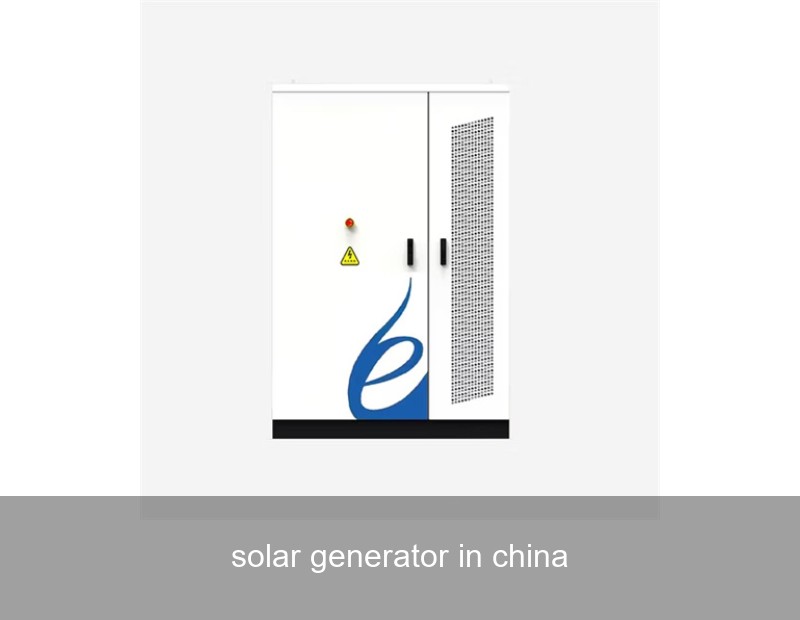
When you hear "solar generator in China," what comes to mind? Perhaps a portable power station for camping or a small backup unit. But in today's energy landscape, that term has evolved dramatically. In China, a global leader in renewable technology, the concept of a "solar generator" has matured into sophisticated, integrated energy systems that are reshaping how power is generated, stored, and managed. This isn't just about having a backup; it's about achieving true energy independence and intelligent power optimization. Let's explore this fascinating evolution and what it means for the future of energy, both in China and globally.
Table of Contents
- The Phenomenon: From Simple Backup to Intelligent Energy Hub
- The Data: China's Commanding Lead in Solar and Storage
- The Case Study: Powering a Remote Eco-Tourism Resort
- The Insights: Key Components of a Modern Solar Generator System
- The Global Perspective: Lessons from China's Market
- Highjoule's Role: Bringing Advanced Energy Intelligence Worldwide
The Phenomenon: From Simple Backup to Intelligent Energy Hub
The traditional "generator" implies combustion, noise, and ongoing fuel costs. The modern solar generator in China shatters this image. It's a silent, clean, and smart system comprising high-efficiency photovoltaic (PV) panels, a sophisticated battery energy storage system (BESS), and intelligent energy management software. The driving force behind this shift isn't just environmental concern; it's a powerful combination of economic pragmatism and technological innovation. As grid demands fluctuate and energy security becomes a priority for businesses and communities alike, these integrated systems offer a compelling solution. They capture free solar energy, store it for use anytime—day or night—and manage its flow with precision that a traditional grid or generator simply cannot match.
The Data: China's Commanding Lead in Solar and Storage
The numbers behind China's solar and storage boom are staggering. According to the International Energy Agency (IEA), China is on track to account for nearly 60% of new renewable capacity globally in 2024. In 2023 alone, it installed more solar PV capacity than the entire United States has cumulatively. But the real story is in the integration. The China Energy Storage Alliance (CNESA) reported that the country's new grid-connected energy storage capacity surged by over 260% year-on-year in 2023, with electrochemical storage (primarily batteries) dominating new deployments. This massive scale of manufacturing and deployment drives down costs and accelerates innovation, making advanced solar generator technology more accessible and efficient than ever before.
The Case Study: Powering a Remote Eco-Tourism Resort
Let's look at a real-world application. A luxury eco-resort in Yunnan Province, China, faced a critical challenge: it was located in an area of breathtaking natural beauty but with an unstable and limited grid connection. Relying on diesel generators was antithetical to its "eco" brand, noisy for guests, and financially draining due to high fuel transportation costs.
The solution was a custom-designed, containerized solar generator system. The installation included:
- 450 kW of Solar PV Arrays: Installed on rooftops and unused land.
- 1.2 MWh Lithium-Ion Battery Storage: Providing overnight power and grid stabilization.
- Intelligent Energy Management System (EMS): Prioritizing solar consumption, managing battery charge/discharge cycles, and seamlessly switching between solar, battery, and grid power.
The results were transformative. The system now provides over 85% of the resort's annual electricity needs. It eliminated the need for diesel generators, saving an estimated $95,000 USD annually in fuel and maintenance costs. Most importantly, it guaranteed guests a quiet, uninterrupted, and truly sustainable experience, strengthening the resort's market position. This case exemplifies the modern solar generator in China: a tailored, turnkey solution for commercial energy independence.

Image Source: Unsplash - Example of commercial-scale solar integration.
The Insights: Key Components of a Modern Solar Generator System
Understanding the anatomy of these systems reveals why they're so effective. It's a synergy of components, each playing a critical role.
| Component | Role | Key Consideration |
|---|---|---|
| Solar PV Panels | The primary fuel source, converting sunlight into DC electricity. | Efficiency rating, degradation rate, and performance in low-light conditions. |
| Battery Storage (BESS) | The heart of the "generator," storing excess solar energy for later use. | Chemistry (LiFePO4 for safety & longevity), cycle life, depth of discharge, and scalability. |
| Hybrid Inverter/Charger | The system's brain, converting DC to AC power and managing energy flow between all sources. | Efficiency, power rating, number of MPPT trackers for solar, and grid-interactive capabilities. |
| Energy Management System | The intelligence, optimizing self-consumption, scheduling, and providing user insights. | Software sophistication, predictive capabilities, and user interface accessibility. |
Highjoule's Role: Bringing Advanced Energy Intelligence Worldwide
For nearly two decades, Highjoule has been at the forefront of translating these technological advancements into reliable, user-centric solutions. While we observe and learn from rapid innovation markets like China, our focus is on delivering robust, safe, and intelligent systems tailored to the specific grid codes and needs of Europe and North America.
Our HPS Series for commercial and industrial applications embodies the modern solar generator concept. It integrates high-density, UL-certified battery storage with our proprietary Adaptive Energy OS. This platform doesn't just store energy; it learns energy usage patterns, predicts solar production using weather data, and automatically chooses the most economical and efficient power source—maximizing ROI and minimizing carbon footprint. For residential and smaller commercial clients, our Home+ Energy Hub offers similar intelligence in a scalable, modular format, making advanced energy independence accessible.

Image Source: Unsplash - Representative image of a commercial battery energy storage system installation.
The Global Perspective: Lessons from China's Market
The evolution of the solar generator in China offers crucial lessons for global markets. First, scale drives affordability and innovation. Second, the future is in integration, not just installation. The highest value comes from seamlessly combining generation, storage, and software. Finally, these systems solve real business problems: energy cost volatility, grid reliability concerns, and sustainability goals.
For businesses in Europe and the U.S., this means the technology for achieving significant energy autonomy is not a distant future concept—it's available today. The question is no longer "if" but "how" to design the optimal system for a specific load profile, location, and financial objective. Resources like the U.S. Department of Energy's Solar Energy Technologies Office provide valuable foundational information for this planning phase.
Looking Ahead: What's Next for Intelligent Solar Power?
As artificial intelligence and machine learning become more embedded in energy management, the next generation of solar generators will be predictive and fully autonomous. They will not only react to current conditions but forecast energy needs, participate actively in virtual power plants (VPPs), and create new revenue streams for their owners. The journey of the solar generator, from a simple battery box to a grid-forming asset, is a powerful indicator of our energy future.
Is your business or community merely reacting to energy bills and grid outages, or are you ready to proactively design your own intelligent, resilient, and cost-effective power ecosystem? What would energy certainty unlock for your operations?
 Inquiry
 Online Chat