


Solar Generator Power Bank: Your Ultimate Guide to Portable, Renewable Energy
you're halfway through a critical work project on your laptop in a remote cabin, or your phone is at 2% during a crucial camping trip. Now, imagine a quiet, compact box that harnesses the sun to keep everything running. This isn't science fiction; it's the reality of the modern solar generator power bank. More than just a gadget, this technology represents a fundamental shift in how we access and think about personal power. It's portable energy independence, combining a solar panel's renewable harvest with a battery's reliable storage. For homeowners, adventurers, and even professionals seeking backup, understanding this technology is key to unlocking true energy resilience.
What is a Solar Generator Power Bank?
Let's clear up the name first. While "generator" evokes images of loud, gas-guzzling machines, a solar generator power bank is silent and fuel-free. Think of it as a sophisticated, all-in-one power station. At its heart, it's a portable battery system (the "power bank") charged primarily by portable solar panels (the "solar generator" part). Unlike a simple phone power bank, these units are powerful enough to run small appliances, tools, and electronics via standard AC outlets, DC ports, and USB connections.
For those looking to scale this concept for their home or business, companies like Highjoule specialize in integrating this principle into larger, more permanent solutions. While a portable power bank keeps your devices alive, Highjoule's advanced residential and commercial battery energy storage systems (BESS) do the same for your entire property, storing energy from rooftop solar for use anytime, day or night.

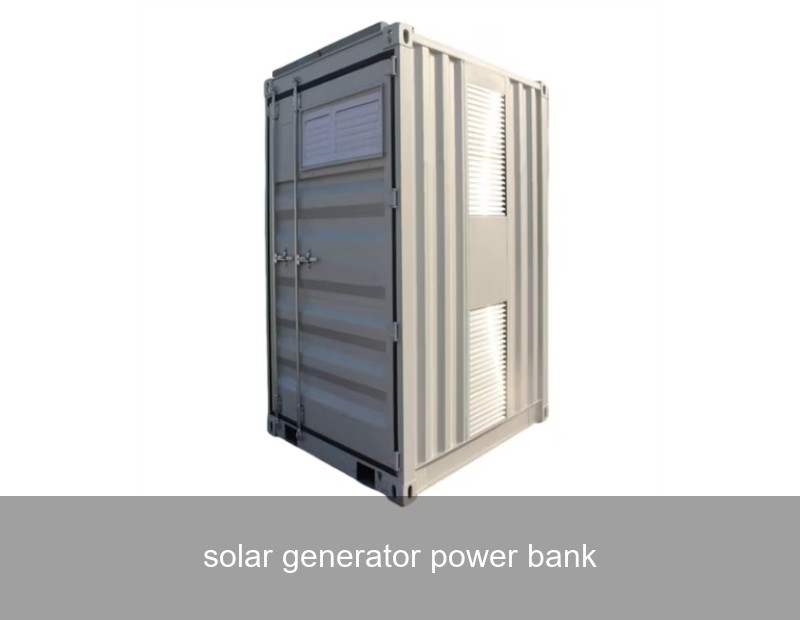
Image Source: Unsplash - Portable solar generator in use outdoors.
Beyond the Basics: Key Components Explained
To choose the right system, you need to speak the language. Here’s what makes a quality solar generator power bank tick:
- The Battery: The Heart - This is your energy reservoir. Lithium-ion (LiFePO4) is now the gold standard for portable units due to its safety, longevity (3,000+ cycles), and stability. Capacity is measured in Watt-hours (Wh). 300Wh can charge a laptop 4-5 times; 1000Wh can run a mini-fridge for hours.
- The Solar Panel: The Engine - This captures sunlight. Panel wattage (e.g., 100W) determines charging speed. A higher wattage panel paired with an efficient charge controller will refill your battery bank faster.
- The Inverter: The Translator - Batteries store DC power; your devices need AC. The inverter converts it. A pure sine wave inverter is essential for sensitive electronics like laptops and medical devices, providing clean, grid-like power.
- Charge Controller & Management System: The Brain - This crucial component regulates solar charging to protect the battery and optimizes energy flow. In advanced systems like those from Highjoule, this evolves into a full smart energy management system, learning usage patterns and optimizing self-consumption of solar energy for homes and businesses.
The Power Shift: Why Solar Generator Power Banks Are Exploding in Popularity
The surge isn't accidental. It's a direct response to several converging trends:
Phenomenon: The Demand for Energy Resilience
From unpredictable weather events in the US to energy price volatility in Europe, individuals and businesses are no longer content being at the mercy of the grid. The desire for personal control over power is stronger than ever.
Data: The Numbers Behind the Growth
The global portable power station market is projected to grow from $4.5 billion in 2023 to over $6.5 billion by 2030, driven largely by solar integration. In the US, the DOE's Solar Futures Study highlights the critical role of storage in decarbonization, a trickle-down effect boosting consumer awareness.
Case Evolution: From Niche to Necessity
What started as gear for hardcore campers has become a household item. Remote workers use them for "workations." Families keep them for emergency preparedness. This evolution mirrors the larger energy transition, where companies like Highjoule are enabling a similar shift for buildings—turning passive consumers into proactive "prosumers" who generate, store, and manage their own energy.
Real-World Power: A Case Study from California
Let's look at a concrete example. Sarah, a freelance graphic designer in Northern California, faced repeated Public Safety Power Shutoffs (PSPS) due to wildfire risk. Losing power meant losing income.
- Problem: Unreliable grid threatened her home-office operation.
- Solution: She invested in a 1500Wh solar generator power bank and two 200W folding solar panels.
- Implementation: During outages, she powered her laptop, monitor, and WiFi router for 8+ hours. On sunny days, the solar panels fully recharged the unit in 4-5 hours, creating a sustainable off-grid work loop.
- Data & Outcome: Over one fire season, Sarah experienced 7 outages totaling 12 days. Her system provided 100% productivity continuity, saving an estimated $8,000 in lost income and client retention. The system's ROI was achieved in a single season. For homeowners wanting to protect their entire household, this is where scalable solutions like Highjoule's H-Joule HomeStack come in—a modular battery system that integrates with existing solar to keep the lights, fridge, and security systems on during prolonged outages.
Choosing Your Solar Generator Power Bank: A Practical Guide
Ready to invest in your energy independence? Ask these questions:
| Consideration | Question to Ask | Pro Tip |
|---|---|---|
| Capacity (Wh) | What devices do I need to run, and for how long? | Sum the wattage of your essential devices and multiply by desired hours of runtime. Add 20% buffer. |
| Power Output (W) | What is the highest-wattage device I'll run? (e.g., coffee maker, electric kettle) | Ensure the unit's continuous AC output rating exceeds this. Surge power is for motor startups. |
| Portability | Will I move it frequently? Is it for emergency home use or active adventure? | Units over 50lbs (23kg) often have wheels. Consider weight and handle design. |
| Solar Charging | How fast do I need a full recharge from solar? | Match panel wattage to the battery's input limit. A 200W panel will charge a 1000Wh bank faster than a 100W panel. |
| Expandability | Might my needs grow? Can I add extra batteries? | Some systems allow daisy-chaining batteries. This modularity is a core principle of Highjoule's commercial MicroGrid Solutions, allowing businesses to scale storage as needs evolve. |
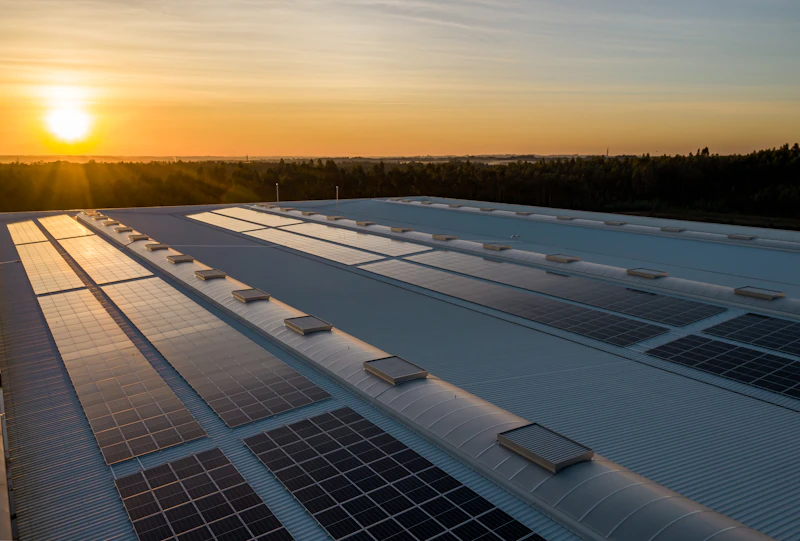
Image Source: Unsplash - Variety of portable power station sizes.
The Future is Integrated: From Portable Power to Whole-Home Resilience
The solar generator power bank is a gateway technology. It teaches us the value of on-demand, clean energy. The logical next step for permanent residences and businesses is a fully integrated solar-plus-storage system. This is where Highjoule's expertise shines. Our smart energy storage systems take the core concept—harvest, store, use intelligently—and scale it to provide whole-property energy security, maximize solar self-consumption, and even enable participation in grid-balancing programs.
Imagine your portable power bank for your adventures, and a Highjoule system silently managing your home's energy, reducing your carbon footprint and bills. That's the complete picture of modern energy resilience.
 Inquiry
 Online Chat