


Unlocking Grid Resilience: The Power of the Steel Energy Storage Cabinet
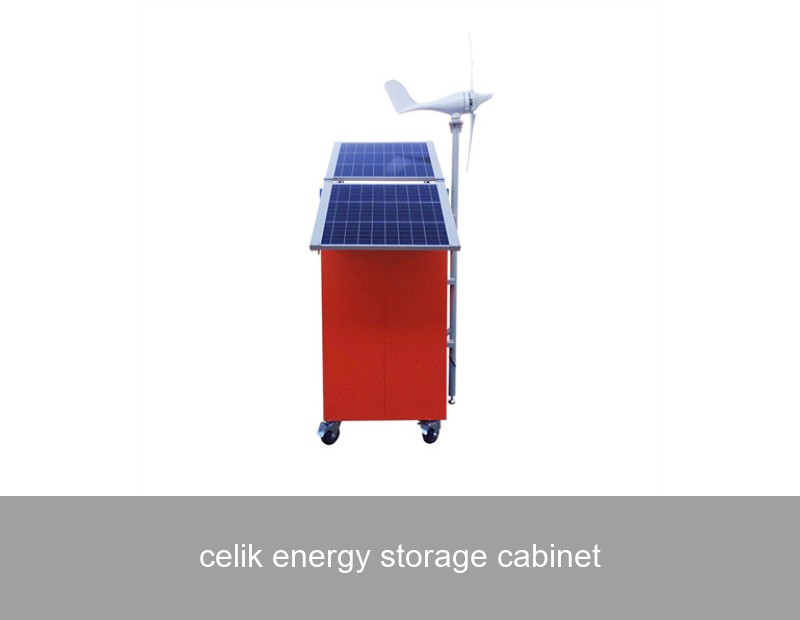
Imagine a world where every surge of wind and ray of sunshine could be captured, stored, and used precisely when needed. This isn't a distant dream; it's the reality being built today with advanced battery energy storage systems (BESS). At the heart of many of these robust, industrial-scale solutions lies a critical component: the steel energy storage cabinet. More than just a metal box, this cabinet is the fortress that safeguards the technology powering our clean energy transition. For businesses, utilities, and communities, understanding this key piece of infrastructure is the first step toward energy independence and sustainability.
Table of Contents
- The Challenge: Intermittency in a Renewable World
- The Steel Cabinet: More Than Just a Shell
- A Real-World Case: Stabilizing the Grid in Texas
- The Highjoule Approach: Engineered for Performance and Safety
- The Future Outlook for Energy Storage
The Challenge: Intermittency in a Renewable World
Let's face it: the sun doesn't always shine, and the wind doesn't always blow. This inherent intermittency of solar and wind power is the central puzzle of the renewable energy era. While we're adding clean generation capacity at a record pace, the grid needs a reliable buffer—a way to time-shift energy from periods of abundance to periods of high demand.
This is where utility-scale battery storage comes in. According to the U.S. Energy Information Administration (EIA), the United States alone is projected to add 30 gigawatts of battery storage capacity from 2023 to 2025. But these aren't small units; they are massive arrays of battery racks, power conversion systems, and climate controls, all needing robust, secure, and durable housing. That’s the fundamental role of the steel energy storage cabinet.
The Steel Cabinet: More Than Just a Shell
So, why steel? When you're housing millions of dollars worth of sensitive lithium-ion or alternative chemistry battery cells, the enclosure is your first line of defense. A high-quality steel energy storage cabinet is engineered to provide:
- Superior Protection: It shields against physical impact, environmental debris, and unauthorized access.
- Thermal Management: Integrated cooling systems are crucial. Batteries perform best within a specific temperature range, and steel cabinets are designed to support advanced liquid or air-cooling loops to maintain optimal conditions.
- Safety Containment: In the rare event of a thermal event, a properly designed steel cabinet can contain and vent gases safely, preventing cascading failures.
- Structural Integrity: It provides the framework to securely hold heavy battery modules and electrical components, often in stacked configurations.

Think of it as the difference between storing valuable heirlooms in a flimsy cardboard box versus a fire-rated safe. The steel cabinet is that safe for your energy assets.
A Real-World Case: Stabilizing the Grid in Texas
Let's look at a concrete example. The ERCOT grid in Texas is known for its high penetration of wind power and its susceptibility to extreme weather events. In 2023, a major utility-scale storage project in West Texas played a pivotal role in grid stabilization during a period of low wind generation and high demand.
The project, which utilizes over 200 individual steel energy storage cabinets, provided 100 MW / 200 MWh of instantaneous power to the grid. Over a critical 4-hour period, it discharged over 180 MWh of electricity, effectively preventing potential rolling blackouts and stabilizing frequency. The project manager noted that the durability and integrated safety systems of the steel enclosures were vital for the site's operation in the harsh, dusty Texan environment. This case underscores how the physical infrastructure is just as critical as the batteries inside.
The Highjoule Approach: Engineered for Performance and Safety
At Highjoule, with nearly two decades of experience since 2005, we view the steel cabinet not as an off-the-shelf container, but as the core chassis of an intelligent energy system. Our H-Cube Industrial BESS platform is built around a proprietary, modular steel cabinet design that embodies this philosophy.
What makes our approach different?
- Modular & Scalable Design: Each H-Cube cabinet is a self-contained unit with battery management, thermal control, and fire suppression. You can start with a few units and scale to megawatt-hours seamlessly, much like adding building blocks.
- Proactive Thermal Runaway Management: Our cabinets feature a multi-stage safety system that includes early gas detection, passive fire retardants, and an active isolation and venting mechanism, going far beyond basic standards.
- Smart Grid Integration: The cabinet is designed to house our advanced power conversion and control systems, enabling the entire unit to provide grid services like frequency regulation, voltage support, and peak shaving without additional external equipment.
| Feature | Standard Cabinet | Highjoule H-Cube Cabinet |
|---|---|---|
| Core Material | Galvanized Steel | Marine-Grade, Corrosion-Resistant Steel |
| Cooling System | Basic Air Cooling | AI-Optimized Liquid Cooling Loop |
| Safety Standard | Meets Local Code | Exceeds UL 9540A & NFPA 855 with Integrated Detection |
| Grid Intelligence | External Inverter Required | Built-in Bi-Directional Inverter & Grid Controller |
For commercial and industrial clients, this translates to a lower total cost of ownership. The robustness reduces maintenance, the safety features lower insurance premiums, and the intelligence allows you to generate revenue by participating in demand response programs.

The Future Outlook for Energy Storage
The technology within the steel cabinet is evolving rapidly. We're seeing a shift towards longer-duration storage chemistries like iron-air and sodium-ion, which promise lower costs and greater material abundance. The role of the steel cabinet will adapt to house these new chemistries, potentially requiring different thermal management profiles. Furthermore, the integration of artificial intelligence for predictive maintenance and energy arbitrage is turning the storage cabinet from a passive container into an active, grid-optimizing asset.
As the International Energy Agency (IEA) highlights, energy storage is the linchpin for secure, clean energy transitions worldwide. The humble steel cabinet is, and will remain, the workhorse making this possible on the ground.
Ready to Fortify Your Energy Strategy?
The journey to energy resilience begins with the right foundation. Whether you're a factory manager looking to cap energy costs, a solar farm developer needing to firm your output, or a municipality building a community microgrid, the choice of your storage system's physical backbone is a decision that will echo for decades. What specific energy challenge—be it unpredictable demand charges, grid instability, or a sustainability target—could a robust, steel-clad storage solution solve for you today?
 Inquiry
 Online Chat