


Solar On-Grid and Off-Grid Systems: Choosing Your Path to Energy Independence
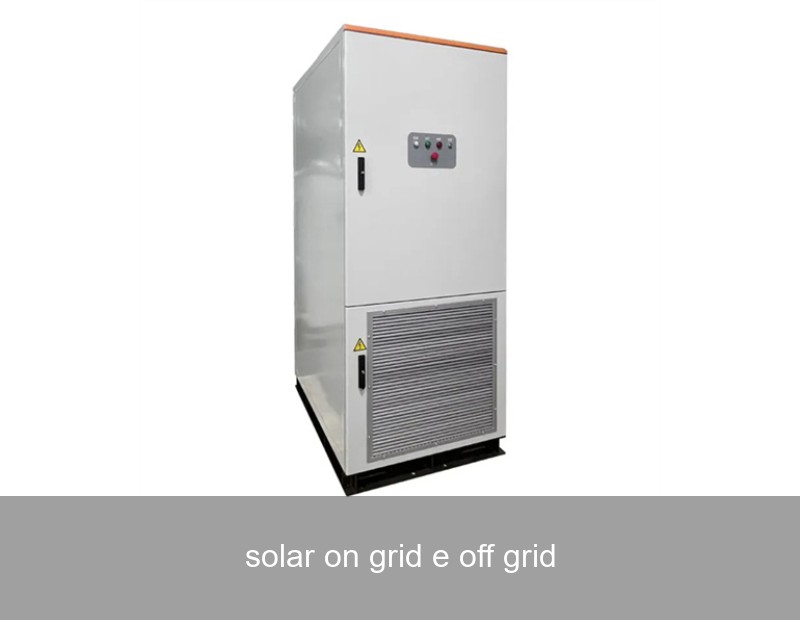
You've decided to harness the sun's power. The panels are a clear image of sustainability and savings. But here's where many homeowners and business leaders pause: should your solar system be tied to the utility grid, or should it break free entirely? The choice between solar on-grid and off-grid systems is more than technical jargon; it's a fundamental decision that shapes your energy security, financial return, and environmental impact. As grid instability and energy prices make headlines, understanding this choice has never been more critical. Let's demystify these two paths, using real-world data and clear examples, to help you find the optimal setup for your needs.
Table of Contents
- What Are On-Grid and Off-Grid Solar Systems?
- The On-Grid System: Your Collaborative Energy Partner
- The Off-Grid System: Your Sovereign Energy Island
- The Best of Both Worlds: The Hybrid Solar+Storage System
- Real-World Insights: A German Agricultural Case Study
- How to Choose: Key Questions to Guide Your Decision
What Are On-Grid and Off-Grid Solar Systems?
At its core, the distinction is about connection. An on-grid (or grid-tied) system operates in constant dialogue with the public electricity grid. It sends excess power you generate to the grid and draws from it when your solar panels aren't producing enough. An off-grid system is a self-contained unit. It has no physical connection to the utility grid and must generate and store all the electricity it needs, 24/7, typically using a significant battery bank.
Think of it like water supply. An on-grid system is like having a private well connected to the municipal water main—you use your well first, but you can always get more from the city. An off-grid system is like a remote cabin with only a well and a large water tank; you must collect and conserve enough to last through dry spells.
The On-Grid System: Your Collaborative Energy Partner
This is the most common configuration for urban and suburban homes and businesses. It's popular for its efficiency and cost-effectiveness.
- How It Works: Solar panels generate DC electricity, which an inverter converts to AC for your home. This power is used first to meet your immediate needs. Any surplus is fed back into the utility grid. At night or on cloudy days, you seamlessly draw power from the grid.
- The Role of Net Metering: This policy is the financial engine of on-grid solar. Your utility meter "spins backwards" when you export power, giving you credits. In many regions in the US and Europe, these credits offset the cost of power you later import. According to the Solar Energy Industries Association (SEIA), net metering has been a primary driver of solar adoption nationwide.
- Key Advantage: Lower upfront cost since it requires minimal or no battery storage. It maximizes the use of every kilowatt-hour you produce, either by using it instantly or exchanging it for grid credit.
- Key Limitation: No power during grid outages. For safety reasons, grid-tied inverters automatically shut down when the grid fails, leaving you in the dark even on a sunny day.
This is where modern technology offers a brilliant upgrade. Companies like Highjoule have evolved the traditional on-grid system into intelligent, resilient energy hubs. Our Highjoule Grid-Tied Intelligent ESS integrates seamlessly with your solar array and the grid but includes a modular battery buffer. This system operates primarily as an efficient on-grid setup, but its smart inverter can detect a grid failure in milliseconds and island your critical loads, keeping your lights and fridge running from the battery—all while maintaining the cost benefits of net metering.
The Off-Grid System: Your Sovereign Energy Island
Off-grid systems are the ultimate expression of energy independence, essential for remote homes, rural agricultural operations, or specialized backup sites.
- How It Works: Solar panels charge a large-scale battery bank via a charge controller. An inverter draws from the batteries to power your AC appliances. A backup generator (often diesel or propane) is usually part of the design to cover extended periods of poor weather.
- The Critical Component: Sizing. Designing an off-grid system is a precise science. You must calculate your worst-case energy consumption (e.g., a winter week with low sun) and size the solar array and battery bank accordingly. Undersizing leads to blackouts; oversizing is cost-prohibitive.
- Key Advantage: Complete independence from utility rates and outages. Your energy cost is fixed after the initial investment.
- Key Limitation: High upfront cost due to the large battery and often backup generator required. It also demands more mindful energy consumption and active system management.
For reliable off-grid power, the battery technology is paramount. Highjoule's Fortis Series Off-Grid BESS is engineered for this demanding role. Using robust, cycle-life-optimized lithium iron phosphate (LFP) cells, these systems are built to withstand daily deep cycling for decades. Their integrated energy management system (EMS) intelligently dispatches solar power, manages generator auto-start, and prioritizes loads, ensuring not just power, but predictable and reliable power in the most isolated locations.
The Best of Both Worlds: The Hybrid Solar+Storage System
The line between on-grid and off-grid is blurring, thanks to the hybrid system. It's connected to the grid but has substantial integrated battery storage. This is rapidly becoming the new standard for forward-thinking energy users.
| Feature | Traditional On-Grid | Hybrid System | Traditional Off-Grid |
|---|---|---|---|
| Grid Connection | Yes | Yes | No |
| Battery Storage | Minimal/None | Significant | Very Large |
| Works in Grid Outage | No | Yes | Yes |
| Uses Net Metering | Yes | Yes (Optimally) | No |
| Primary Goal | Reduce Bills | Resilience + Bill Management | Total Independence |
Why is hybrid gaining traction? It lets you time-shift energy. You store cheap solar power or low overnight grid rates in your battery and use it during expensive peak evening hours—a practice known as peak shaving. In markets like California with time-of-use rates or in parts of Europe with volatile spot prices, this can dramatically increase savings beyond simple net metering. The U.S. Department of Energy highlights storage as key to grid flexibility and maximizing solar value.

Highjoule's solutions, like the Harmony Hybrid ESS, are designed for this intelligent energy arbitrage. Their AI-driven software learns your consumption patterns and local utility rates, automatically choosing the most economical source of power—whether it's from your panels, your batteries, or the grid—to ensure resilience and the lowest possible operating cost.
Real-World Insights: A German Agricultural Case Study
Let's ground this discussion in data. Consider a mid-sized dairy farm in Bavaria, Germany. The farm had high, consistent energy needs for cooling, ventilation, and milking equipment. Grid power was reliable but expensive.
- Challenge: Reduce operating costs and ensure backup power for critical refrigeration.
- Original Plan: A standard 50 kW on-grid solar system.
- Highjoule Proposal: A 50 kW solar array coupled with a 80 kWh Harmony Hybrid battery system.
- Outcome (Year 1 Data):
- Self-Consumption Rate: Increased from ~35% (on-grid only) to over 80% with storage.
- Grid Import Reduction: Reduced by 72%, shielding the farm from peak电价.
- ROI Impact: While the initial investment was 40% higher, the payback period was shortened from 8 to an estimated 6.5 years due to higher savings and eligibility for a German storage subsidy.
- Resilience: The system seamlessly provided backup power during two planned grid maintenance outages, preventing potential spoilage.
This case, documented in a Fraunhofer ISE report on photovoltaic trends, illustrates the economic and operational logic behind the shift to smart, storage-integrated systems, even in grid-connected scenarios.
How to Choose: Key Questions to Guide Your Decision
So, which path is right for you? Ask yourself these questions:
- What is your primary motivation? Is it purely financial savings (leaning on-grid), unwavering backup power (leaning hybrid), or total location independence (requiring off-grid)?
- What is the reliability and cost of your grid? Frequent outages or extremely high/time-variable rates make storage (hybrid) more valuable.
- What is your budget? Off-grid systems have the highest capital cost, while traditional on-grid has the lowest.
- Is net metering or other feed-in tariffs available in your area? Strong net metering policies favor on-grid systems, while weakening tariffs increase the value of storage for self-consumption.
The landscape of solar energy is no longer a binary choice. It's a spectrum of connectivity and intelligence. At Highjoule, with nearly two decades of experience, we don't just sell solar on-grid or off-grid systems; we engineer tailored energy resilience solutions. Whether it's a grid-tied home in Texas seeking backup, an off-grid research station in Scandinavia, or an industrial plant in Italy aiming for peak shaving, our intelligent BESS platforms are designed to adapt.
Given your unique energy profile and goals, which energy challenge—cost, resilience, or independence—keeps you up at night, and what would solving it empower you to do?
 Inquiry
 Online Chat