


Choosing the Right Solar Panel 240V Inverter: A Guide to Maximizing Your Solar Investment
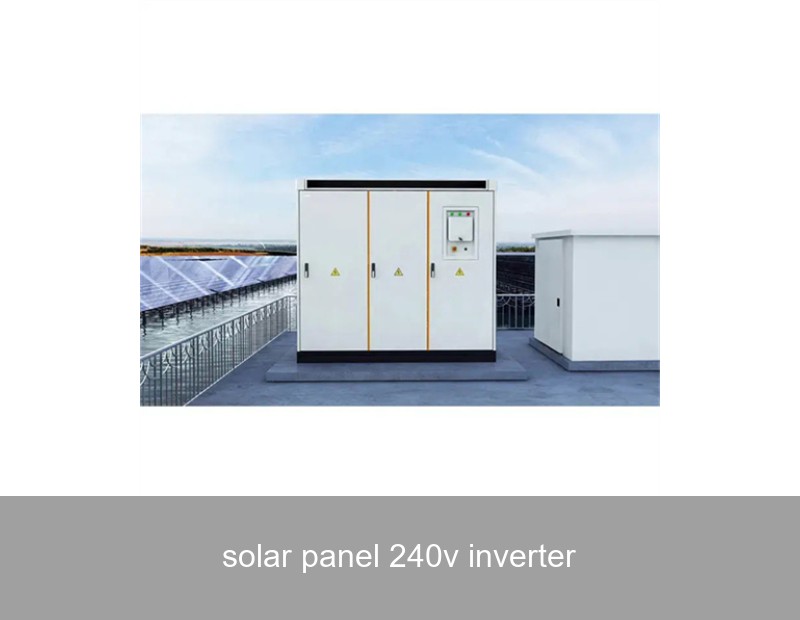
So, you've decided to harness the sun's power. Your solar panels are picked out, and you're ready to slash your electricity bills and reduce your carbon footprint. But here's a crucial piece of the puzzle many overlook: the solar panel 240V inverter. This isn't just a box on your wall; it's the intelligent brain of your entire solar energy system, responsible for converting the DC power from your panels into the usable 240V AC power that runs your home or business. Choosing the wrong one can mean leaving significant savings and performance on the table. Let's demystify this critical component and explore how to ensure it works in perfect harmony with your panels for decades to come.
Table of Contents
What is a 240V Solar Inverter and Why is it Non-Negotiable?
Think of your solar panels as a water source—they produce a flow of direct current (DC) electricity. Your home appliances, however, speak a different language: alternating current (AC) at 120V or 240V. The solar panel 240V inverter is the indispensable translator and voltage booster. It performs two vital functions: first, it converts the DC electricity into AC; second, it synchronizes this AC power perfectly with the grid's frequency and voltage (240V for larger appliances in regions like Europe, Australia, and for split-phase systems in North America). Without a high-quality inverter, the energy your panels produce simply cannot power your life. Its efficiency, reliability, and intelligence directly determine the financial return of your solar investment.
Beyond Basic Conversion: Types of 240V Inverters
Not all inverters are created equal. The right choice depends on your roof's conditions, your energy goals, and your budget.
- String Inverters: The traditional, cost-effective workhorse. All panels are connected in a series "string," feeding into one central inverter. They work brilliantly on unshaded, uniformly oriented roofs.
- Microinverters: These are small units attached to each individual solar panel. They optimize each panel's output independently, making them ideal for roofs with partial shading or multiple angles. If one panel underperforms, the rest aren't dragged down.
- Power Optimizer Systems (DC-DC): A hybrid approach. A power optimizer at each panel conditions the DC electricity, which is then sent to a central string inverter. This offers panel-level monitoring and optimization without as many AC conversion points as microinverters.
The choice hinges on a simple question: do you want your system's performance limited by its weakest panel (string), or do you want every panel to perform at its individual best (micro/optimizers)?

Image Source: Unsplash - A modern inverter is the command center of a solar system.
Key Factors in Selecting Your Inverter
When evaluating a solar panel 240V inverter, look beyond just the price tag. These technical specifications are your guide to long-term value:
| Factor | What It Means | Why It Matters |
|---|---|---|
| Efficiency Rating | The percentage of DC power converted to usable AC power. | A 98% vs. 95% efficiency inverter can translate to hundreds of extra kilowatt-hours generated over a year, directly boosting savings. |
| Peak Power & Voltage Range | The inverter's capacity (e.g., 6kW, 10kW) and the DC voltage window it accepts. | It must match your solar array's total potential output and operating voltage. An undersized inverter will "clip" and waste energy during peak sun. |
| Warranty & Lifespan | Typically 10-12 years standard, with extensions available. | Inverters often need replacement before the 25+ year lifespan of panels. A longer warranty signals confidence and reduces future costs. |
| Monitoring & Smart Features | Real-time energy production and consumption tracking via an app. | This is your window into system health. Advanced systems can identify underperforming panels and optimize self-consumption. |
A Real-World Case: The 240V Inverter in Action
Let's look at a tangible example from a commercial application. A medium-sized dairy farm in Bavaria, Germany, was struggling with high operational costs, particularly from refrigeration and milking equipment running on 240V three-phase power. They installed a 100 kWp solar array on their barn roofs.
The Challenge: The roofs had varying orientations and occasional shading from nearby trees. A traditional string inverter solution was projected to lose over 15% of potential yield due to these mismatches.
The Solution: The system integrator chose a solution powered by advanced solar panel 240V inverters with integrated DC optimizers. This allowed each roof section to operate independently, mitigating the shading and orientation losses.
The Data-Driven Outcome: Post-installation monitoring over 12 months showed:
- System Efficiency: The inverter system maintained a weighted efficiency of 98.2%.
- Energy Yield: The farm generated 102,500 kWh in the first year, exceeding initial estimates by 8% due to the optimizer technology.
- Financial Impact: This covered approximately 65% of the farm's total energy demand, reducing grid electricity purchases and generating feed-in tariff revenue, leading to a projected payback period of under 7 years.
This case underscores that the right inverter technology isn't just about conversion; it's about maximizing generation in real-world, imperfect conditions. For more on commercial solar performance metrics, see this report by the International Renewable Energy Agency (IRENA).
Future-Proofing with Smart 240V Inverter Systems
The modern solar panel 240V inverter is evolving from a simple converter into an energy management hub. With the rise of electric vehicles and home batteries, your inverter needs to be ready to communicate and coordinate with these devices. Look for inverters labeled as "storage-ready" or "hybrid." These can seamlessly integrate a battery like Highjoule's H-Joule HomeStack, creating a true personal energy ecosystem. During the day, excess solar charges the battery; at night or during a power outage, the battery discharges through the same inverter to power your critical loads. This capability transforms a solar system from a bill-reducer into a resilience asset. The U.S. Department of Energy highlights the importance of such smart grid technologies.

Image Source: Unsplash - The future home integrates solar, storage, and EVs via a smart inverter.
How Highjoule Elevates the 240V Inverter Experience
At Highjoule, with nearly two decades of expertise in advanced energy storage, we view the inverter as the critical nexus of a smarter energy system. Our approach goes beyond merely supplying a component. We provide integrated solutions where our H-Joule PowerCore battery storage systems are paired with meticulously selected, high-efficiency 240V hybrid inverters. This synergy is managed by our proprietary Adaptive Energy OS, an intelligent platform that continuously learns your energy patterns.
For our commercial and industrial clients, this means our systems don't just convert power; they actively perform peak shaving—automatically using stored solar energy during high tariff periods to dramatically reduce demand charges. For residential customers, it means seamless backup power during outages and maximizing self-consumption of solar energy. We ensure the inverter technology is not the weak link but the empowering brain, turning your solar array into a reliable, money-saving, and future-ready power plant. Curious about how battery storage economics work? The National Renewable Energy Laboratory (NREL) provides excellent technical resources.
Your Next Step: From Consideration to Conversation
Selecting your solar panel 240V inverter is a decision that will resonate for the life of your system. It's the difference between a good solar investment and a great one. The most insightful question to ask your installer is no longer just about price per watt, but: "How will the inverter technology you're recommending specifically address the unique shading, orientation, and future energy needs of my property to guarantee the highest possible yield and flexibility?" What's the one energy goal for your home or business that the perfect inverter could help you unlock?
 Inquiry
 Online Chat