


Your Complete Guide to a Smart Solar Panel and Battery Set Up
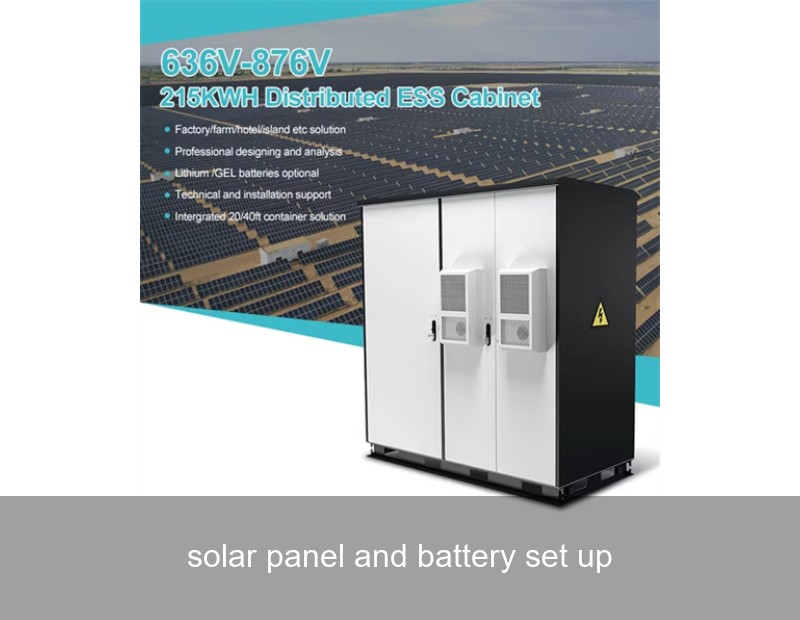
So, you've decided to harness the sun's power. That's fantastic! A solar panel and battery set up is more than just an eco-friendly choice; it's a step towards energy independence and financial predictability. But between the technical jargon and the myriad of options, it can feel overwhelming. Don't worry. Think of this as your friendly, expert-led walkthrough. We'll break down the why, the how, and what makes a modern system truly intelligent, ensuring you have the knowledge to make an empowered decision for your home or business.
Table of Contents
- The New Reality: Sun Sets, Bills Don't
- Breaking Down the Solar Panel and Battery System
- Why a Battery is Your System's Game-Changer
- From Theory to Reality: A California Case Study
- Choosing the Right Components: It's About Harmony
- Where Highjoule Fits In: Beyond Just Hardware
- Future-Proofing Your Energy Investment
The New Reality: Sun Sets, Bills Don't
Here's the common scenario for solar owners without storage: your panels work brilliantly during the day, often exporting excess power to the grid. But come evening, when energy demand peaks, you're drawing power back from the utility at high rates. This mismatch is the fundamental limitation of solar-only systems. According to the U.S. Department of Energy, effective energy management is key to maximizing solar's value, especially as grid demands evolve.
The phenomenon is clear. The data tells a compelling story: Time-of-Use (TOU) electricity rates, now common across Europe and the US, can make evening power 2-3 times more expensive than midday power. Your solar overproduction earns you less, and your consumption costs you more. This price arbitrage is the primary economic driver for adding a battery.
Breaking Down the Solar Panel and Battery System
Let's demystify the core components. A modern setup isn't just panels on a roof and a box in the garage. It's an integrated ecosystem.
- Solar Photovoltaic (PV) Panels: These are your energy harvesters, converting sunlight into direct current (DC) electricity.
- Inverter(s): This is the system's brain and translator. It converts the DC electricity from your panels into the alternating current (AC) that powers your home. In battery systems, you often have a hybrid inverter or a separate battery inverter.
- Battery Storage System (BESS): The heart of your energy independence. It stores excess solar energy for use when you need it most.
- Energy Management System (EMS): The intelligent nervous system. This software optimizes energy flow—deciding when to charge the battery, power the home, or export to the grid—based on weather, usage patterns, and tariff rates.

Image Source: Unsplash - A modern home solar and battery installation.
Why a Battery is Your System's Game-Changer
Adding a battery transforms your system from a passive generator into an active energy asset. The benefits cascade:
| Benefit | Impact |
|---|---|
| Energy Self-Consumption | Use your own solar power at night, increasing independence from the grid. |
| Bill Savings & Arbitrage | Avoid peak-time tariffs by discharging stored solar energy. |
| Backup Power | Keep essential loads running during grid outages (a critical feature in areas prone to wildfires or storms). |
| Grid Support | Advanced systems can provide grid services, potentially creating revenue streams. |
From Theory to Reality: A California Case Study
Let's look at real data. A 2023 analysis of a residential solar panel and battery set up in Sacramento, California, is telling. The home had a 8.5 kW solar array and a 13.5 kWh lithium iron phosphate (LFP) battery.
- Context: The homeowner was on a steep TOU rate plan with peak charges from 4-9 PM.
- Pre-Battery: Only 35% of solar generation was directly self-consumed. The rest was exported at a low feed-in tariff.
- Post-Battery Installation: Self-consumption jumped to over 80%. The system was programmed to reserve battery capacity for the peak window.
- Result: The battery reduced grid electricity purchases during peak hours by nearly 95%. Combined with solar, the homeowner's annual electricity bill was reduced by approximately 92%, achieving what's known as "near-zero billing." The system also provided peace of mind during Public Safety Power Shutoff (PSPS) events.
This mirrors findings from the National Renewable Energy Laboratory (NREL), which notes that pairing storage with solar maximizes both economic value and resilience.
Choosing the Right Components: It's About Harmony
Not all components are created equal, and compatibility is king. Your inverter and battery must communicate seamlessly. Here, chemistry and software are crucial.
Battery Chemistry Matters: While lithium-ion is standard, Lithium Iron Phosphate (LFP) is becoming the preferred choice for stationary storage due to its longer lifespan, superior thermal stability, and excellent cycle life—perfect for daily charge/discharge cycles.
The Intelligence Factor: The real magic lies in the software. A basic system will just store and discharge. A smart system, like those we design at Highjoule, learns your habits, forecasts weather, integrates with grid signals, and optimizes for your specific financial and resilience goals.
Where Highjoule Fits In: Beyond Just Hardware
Since 2005, Highjoule has evolved from a component provider to a full-scale solutions architect. We understand that a successful solar panel and battery set up is defined by its long-term performance and reliability.
For residential and commercial clients across Europe and the US, we provide:
- Highjoule HPS Series: Our integrated residential energy storage system combines a high-voltage LFP battery, a hybrid inverter, and our proprietary NeuroGrid EMS in one sleek, wall-mounted unit. It's designed for easy installation and intelligent operation right out of the box.
- Highjoule C&I PowerPack: For commercial and industrial applications, this scalable, containerized solution offers megawatt-hour scale storage. It manages demand charges, provides backup for critical operations, and can participate in grid-balancing programs.
- Continuous System Health Monitoring & Support: Our service doesn't end at installation. We offer 24/7 remote monitoring and proactive maintenance alerts through our platform, ensuring your system delivers optimal returns for decades.

Image Source: Unsplash - Monitoring a commercial battery storage system.
Future-Proofing Your Energy Investment
The energy landscape is shifting from a one-way grid to a dynamic, two-way network. Your solar panel and battery set up should be ready. This means choosing a system with software-upgradable capabilities, like our NeuroGrid platform, which can adapt to new utility programs, like virtual power plants (VPPs).
Imagine your system not just saving you money, but also earning revenue by providing stability to the community grid during times of stress—all automatically. That's the future of proactive energy management.
The Final Piece: Professional Design & Installation
Even the best components underperform if poorly sized or installed. A qualified installer will conduct a detailed site assessment, analyze your energy consumption history, model future production, and design a system that meets your specific objectives, whether that's full backup, maximum bill savings, or a balance of both.
Ready to see what a truly intelligent solar and battery system could do for your energy profile? What's the biggest challenge holding you back from making the leap to a fully integrated home energy system?
 Inquiry
 Online Chat