


Understanding Solar Panel and BESS Price Trends: Your Guide to Smart Energy Investment
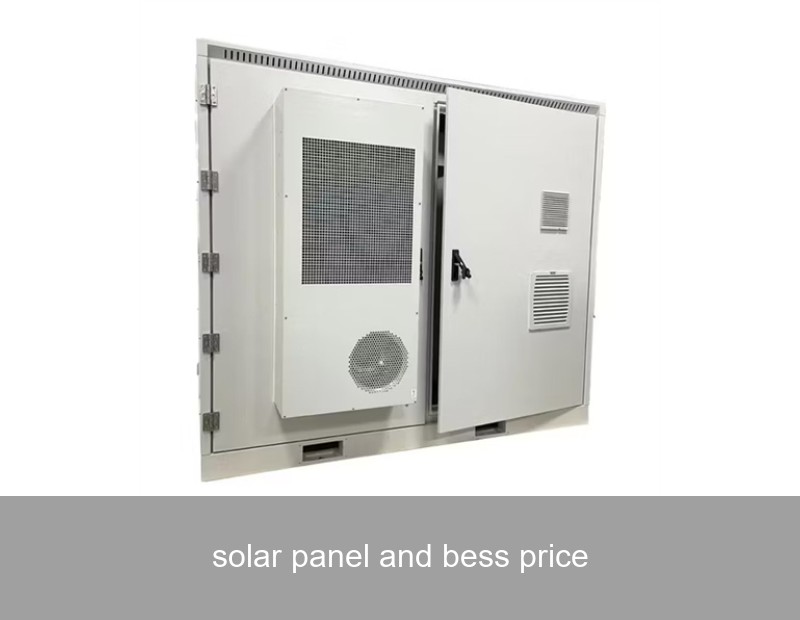
If you're considering solar power for your home or business, you've likely encountered two big numbers: the cost of the solar panels themselves and the price of the battery energy storage system (BESS) that often completes the setup. The conversation around solar panel and BESS price is more dynamic than ever. While headlines scream about falling costs, the real story is about value—how today's investment delivers unprecedented energy independence and financial returns. Let's demystify the pricing landscape and explore what your money actually buys in today's market.
The Price Plunge: More Than Just a Trend
Over the past decade, the decline in solar photovoltaic (PV) module prices has been nothing short of revolutionary. According to the International Renewable Energy Agency (IRENA), the global weighted average cost of electricity from utility-scale solar PV fell by 89% between 2010 and 2022. This isn't just about cheaper hardware; it's about massive advancements in panel efficiency. Today, a premium 400-watt panel occupies the same space as a 250-watt panel from ten years ago, meaning you generate more power from the same rooftop, effectively reducing the solar panel and BESS price per kilowatt-hour produced over the system's life.
Breaking Down BESS Cost Components
While solar panels capture the spotlight, the battery system is the brain and brawn that unlocks true energy freedom. The price of a BESS is a sum of several key parts:
- Battery Cells (Lithium-ion): The core chemistry, where costs have steadily dropped but are influenced by raw material markets.
- Battery Management System (BMS): The essential "brain" that ensures safety, longevity, and performance.
- Power Conversion System (PCS)/Inverter: The component that manages AC/DC conversion and grid interaction.
- Thermal Management & Enclosure: Crucial for safety and maintaining optimal performance in all climates.
- Integration, Software & Smart Controls: This is where companies like Highjoule add immense value. Our AI-driven Highjoule EnergyOS platform doesn't just store energy; it intelligently decides when to charge, discharge, or hold based on weather forecasts, tariff structures, and your consumption patterns.
Therefore, comparing solar panel and BESS price on a simple dollar-per-kilowatt-hour (kWh) of storage basis can be misleading. A cheaper system with poor thermal management or rudimentary software may degrade faster or miss financial optimization opportunities, costing you more in the long run.
Calculating Total System Value, Not Just Price
Shifting the focus from upfront cost to lifetime value is crucial. A premium, integrated solar-plus-storage system delivers a compelling return on investment (ROI) through multiple revenue and savings streams:
| Value Stream | How It Works | Impact on ROI |
|---|---|---|
| Bill Savings (Self-Consumption) | Using your solar energy at night, avoiding high retail rates. | Direct reduction in monthly utility bills. |
| Peak Shaving | Using stored energy during periods of high grid demand and highest prices. | Protects against demand charges for businesses; maximizes savings. |
| Backup Power | Providing electricity during grid outages. | Value of resilience, avoiding business interruption or home discomfort. |
| Grid Services (VPP) | Aggregated systems supporting grid stability (in some markets). | Potential for direct revenue from utility or grid operator programs. |
For instance, Highjoule's HES (Highjoule Energy Stack) for commercial & industrial applications is designed specifically to maximize these value streams. Its modular design allows for scalable power and energy capacity, ensuring you pay for what you need while having a clear path for future expansion.
Case Study: A Texas Business Beats the Heat and High Bills
Let's look at real data. A medium-sized cold storage facility in Dallas, Texas, faced crippling demand charges and volatile energy prices, especially during the summer. Their peak load could reach 500 kW.
Solution: In 2023, they installed a 300 kW solar PV array coupled with a 750 kWh Highjoule HES battery system.
- Demand Charge Reduction: Reduced peak grid draw by over 60%, slashing a significant portion of their utility bill.
- Energy Bill Savings: Achieved 78% self-consumption of solar energy, up from an estimated 35% without storage.
- Payback Period: The calculated simple payback period for the integrated system is under 7 years, thanks to Texas's high energy costs and favorable market structures. The facility now has predictable energy costs and reliable backup for its critical refrigeration units.

Image Source: Unsplash (Professional solar installation)
This case highlights that the combined solar panel and BESS price was an investment that generated a reliable, quantifiable financial return, not just an expense.
Highjoule Solutions: Engineered for Performance and Lifetime Value
At Highjoule, we approach solar panel and BESS price from the perspective of lifetime levelized cost of energy (LCOE). Our products are built to last and perform optimally for decades. For residential clients, our HomePower Stack features a compact, UL-certified design with integrated high-efficiency hybrid inverters and the intuitive Highjoule Home App. This allows homeowners to easily monitor production, consumption, and savings, and customize backup priorities.
For larger-scale needs, our Industrial Energy Platform (IEP) is a containerized, utility-grade solution. It uses lithium iron phosphate (LFP) battery chemistry, renowned for its safety, long cycle life (>6000 cycles), and stability. This directly translates to a lower total cost of ownership. Our global service network and predictive maintenance alerts, powered by EnergyOS, ensure the system operates at peak efficiency, protecting your capital investment.

Image Source: Unsplash (LFP battery modules in a rack)
The Future Outlook for Solar and Storage Pricing
While supply chain factors cause occasional fluctuations, the long-term trend for both solar and storage costs is downward. The U.S. Department of Energy's Solar Futures Study projects continued cost reductions through 2035, driven by technology gains and scale. More importantly, policy frameworks like the U.S. Inflation Reduction Act (IRA) and various European Green Deal initiatives provide tax credits and incentives that significantly reduce the net solar panel and BESS price for end-users.
The key insight? Waiting for a lower price tag might mean missing out on years of substantial savings and increased property value. The optimal time to invest is when your financial analysis, considering local incentives and your current energy costs, shows a strong ROI.
Your Next Step Towards Energy Independence
The dialogue around solar panel and BESS price has matured. It's no longer just about the lowest upfront cost per watt or per kilowatt-hour. It's about partnering with a technology provider who delivers a high-performance, intelligent system that maximizes your financial and operational resilience for the next 20+ years. Highjoule's engineered solutions are designed with this exact principle in mind.
What specific energy challenge—be it unpredictable bills, demand charge spikes, or the need for reliable backup—is driving you to look into solar and storage today, and how can we help you build a business case that goes beyond the initial price quote?
 Inquiry
 Online Chat