


Understanding 3 Phase Hybrid BESS Price: A Smart Investment for Modern Energy Needs
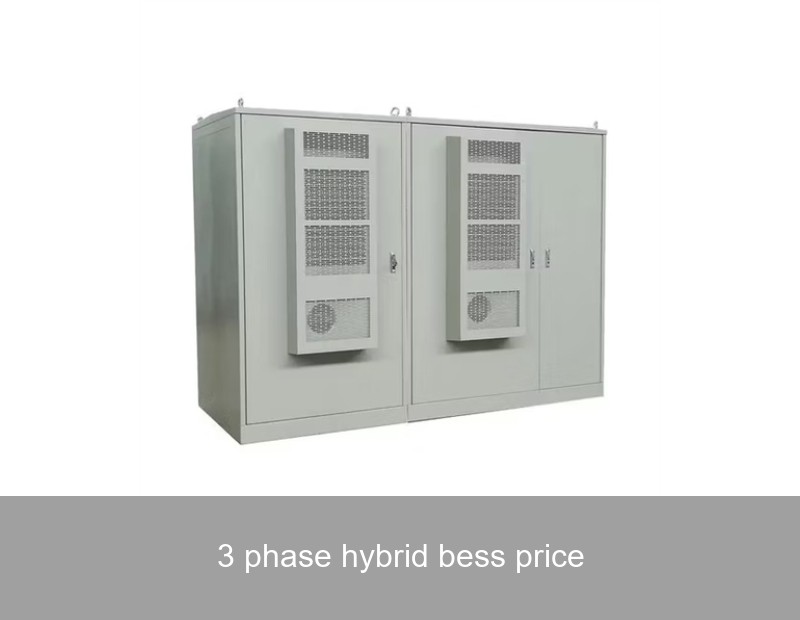
If you're managing a business, factory, or even a large residential property, you've likely felt the pinch of rising electricity costs and grid instability. The solution many are turning to is a 3 phase hybrid Battery Energy Storage System (BESS). But when you start your research, the first question that pops up is: "What determines the 3 phase hybrid BESS price?" It's not just about the sticker cost; it's about understanding the value, technology, and long-term savings behind it. This article will demystify the pricing factors and show you why a system from an experienced provider like Highjoule is an investment in resilience and efficiency.
Table of Contents
- The Phenomenon: Why 3-Phase Hybrid Systems Are in Demand
- Breaking Down the 3 Phase Hybrid BESS Price
- Data Matters: The ROI Behind the Investment
- Real-World Case Study: A German Manufacturing Plant
- The Highjoule Advantage: Engineering Value into Every System
- Making the Right Decision for Your Energy Future
The Phenomenon: Why 3-Phase Hybrid Systems Are in Demand
Unlike single-phase systems common in homes, three-phase power is the backbone of commercial, industrial, and large-scale operations. It's more efficient for running heavy machinery, large HVAC systems, and data centers. A 3 phase hybrid BESS integrates seamlessly with this existing electrical infrastructure, combining battery storage with on-site generation (like solar PV) and the grid. The "hybrid" intelligence allows it to dynamically choose the most economical and reliable power source at any moment. The growing demand is driven by a clear phenomenon: businesses need to control energy costs, ensure operational continuity during outages, and meet sustainability goals—all at once.

Image Source: Unsplash - A modern industrial facility utilizing renewable energy, a prime candidate for a 3-phase hybrid BESS.
Breaking Down the 3 Phase Hybrid BESS Price
The total price of a system is not a single number but a sum of its sophisticated parts. Let's unpack the key components:
- Battery Cells & Chemistry: This is often the largest cost block. Lithium Iron Phosphate (LFP) is a popular choice for commercial use due to its long lifespan, safety, and stability, though it may have a higher upfront cost than some alternatives. The total capacity (measured in kWh) directly scales the price.
- 3-Phase Hybrid Inverter: The brain of the operation. This sophisticated piece of tech must manage AC/DC conversion, grid synchronization, and power flow between solar, battery, and load. Its power rating (in kW) and features like advanced grid-support functions impact cost.
- System Integration & Balance of Plant (BOP): This includes switchgear, transformers, cooling systems, safety disconnects, and the physical enclosure. For industrial settings, this must be robust and compliant with strict electrical codes.
- Energy Management Software (EMS): The intelligence layer. A good EMS, like Highjoule's HIQ Energy Platform, uses AI and weather data to optimize charge/discharge cycles for maximum savings. This software is a critical value-adder, not just a line item.
- Installation & Grid Interconnection: Labor, permitting, and engineering studies vary significantly by region (e.g., specific regulations in Germany vs. California). This can be 20-30% of the total project cost.
As a rule of thumb, a commercial-scale system's price is measured in $/kWh for the storage component and $/kW for the power component. According to industry reports, total installed costs can range widely, but understanding this breakdown helps you compare quotes meaningfully.
Data Matters: The ROI Behind the Investment
Focusing solely on the upfront 3 phase hybrid BESS price misses the bigger financial picture. The true metric is Levelized Cost of Storage (LCOS) and the payback period. Here’s how the savings materialize:
| Savings Mechanism | How It Works | Financial Impact |
|---|---|---|
| Peak Shaving / Demand Charge Reduction | The BESS discharges during short periods of highest grid demand, flattening your peak power draw. | Can reduce commercial electricity bills by 20-40% by cutting demand charges, which are a major cost for businesses. |
| Arbitrage | Store cheap energy (from solar or off-peak grid rates) and use it during expensive peak hours. | Leverages time-of-use (TOU) rate differentials; ROI accelerates in regions with high price volatility. |
| Backup Power & Resilience | Provides seamless power during grid outages, preventing costly downtime. | Protects revenue streams. For a factory, minutes of downtime can cost thousands. |
| Grid Services & Incentives | In some markets, systems can participate in frequency regulation or capacity markets. | Generates additional revenue streams, improving payback time. |
A study by the National Renewable Energy Laboratory (NREL) highlights how stacking these value streams is crucial for project economics.
Real-World Case Study: A German Manufacturing Plant
Let's look at a concrete example from our target market. A mid-sized automotive parts manufacturer in Bavaria, Germany, faced high Strompreise (electricity prices) and sought to secure its operations against grid fluctuations.
- Challenge: High peak demand charges, volatile energy prices, and a need for uninterrupted production.
- Solution: Highjoule deployed a 500 kWh / 250 kW 3 phase hybrid BESS, integrated with their existing 300 kW rooftop solar array. The system was powered by Highjoule's proprietary LFP battery packs and controlled by the HIQ platform.
- Outcome & Data:
- Demand Charge Reduction: Peak power draw from the grid was reduced by 35%, saving over €18,000 annually.
- Solar Self-Consumption: Increased from 55% to over 90%, maximizing their solar investment.
- Payback Period: With the combination of German subsidy programs (BMWK funding) and operational savings, the calculated payback time is under 7 years on a system with a 15-year design life.
This case shows that the 3 phase hybrid BESS price is an entry ticket to a multi-faceted financial return, not just an expense.
The Highjoule Advantage: Engineering Value into Every System
Since 2005, Highjoule has been at the forefront of advanced energy storage. When you evaluate a 3 phase hybrid BESS price from us, you're investing in engineered reliability and intelligent software, not just hardware.
Our HIQ Energy Platform is what sets us apart. It doesn't just react; it predicts. By analyzing weather forecasts, electricity price curves, and your unique consumption patterns, HIQ makes proactive decisions to optimize your savings every single day. Furthermore, our systems are built with a modular design, allowing for easier future expansion as your needs grow.
For commercial and industrial clients, we offer the Highjoule C&I Series—robust, containerized or skid-mounted solutions that are pre-engineered for rapid deployment and seamless integration with both new and existing solar installations. We handle the entire process: design, permitting, installation, and ongoing performance monitoring, providing you with a single point of accountability.

Image Source: Unsplash - Professional monitoring a sophisticated energy management system.
Making the Right Decision for Your Energy Future
So, how should you approach the decision? Don't start by asking "What's the price?" Start by asking:
- What are my specific energy pain points (demand charges, outages, low solar self-consumption)?
- What is my site's electrical profile (load curve, solar generation)?
- What are the local incentives and regulatory frameworks?
A reputable provider like Highjoule will begin with a detailed energy analysis to size and configure a system that delivers the fastest return on your investment, ensuring the 3 phase hybrid BESS price you pay is aligned with the value you'll receive for decades.
Your Next Step
The energy landscape is shifting from a simple utility bill to a complex matrix of costs and opportunities. A 3 phase hybrid BESS is the key to navigating it successfully. What would a 30% reduction in your peak demand charges do for your operational budget this year?
 Inquiry
 Online Chat