


Solar Panel Companies in Saudi Arabia: Powering a Sustainable Future
When you think of Saudi Arabia, vast deserts and rich oil reserves likely come to mind. But a remarkable transformation is underway. The Kingdom is now harnessing a different, even more abundant resource: the sun. This shift has created a dynamic landscape for solar panel companies in Saudi Arabia, driving innovation and massive infrastructure projects. For businesses and communities in Europe and the US watching this energy transition, understanding Saudi Arabia's solar boom offers valuable insights into the future of global renewables and the advanced technologies making it possible.
Table of Contents
The Vision Behind the Surge
Saudi Arabia's pivot to solar isn't just an environmental choice; it's a strategic economic vision formalized under Vision 2030. The plan aims to diversify the economy away from oil dependency. A cornerstone of this vision is the Saudi Green Initiative, targeting 50% of electricity generation from renewables by 2030. This ambitious goal has turned the nation into one of the world's most attractive markets for solar panel companies in Saudi Arabia, attracting global developers, EPC contractors, and technology providers.
The numbers are staggering. The Kingdom boasts some of the highest solar irradiance levels on the planet, with vast, unused land perfect for utility-scale installations. The government, through the Ministry of Energy and the Public Investment Fund, has launched a pipeline of projects that are setting new records for scale and cost-competitiveness.
Key Players and Project Landscape
The market comprises international giants and emerging local champions. Companies like ACWA Power, a Saudi-based developer, are leading the charge on monumental projects. They are often in partnership with global firms from China, Europe, and the US, bringing in cutting-edge photovoltaic (PV) technology.
Major projects defining this landscape include:
- Al Shuaibah Solar PV Project: Aiming to be one of the largest in the region with a capacity of 2,060 MW.
- Sudair Solar PV Project: A 1,500 MW plant that highlights the rapidly decreasing cost of solar energy production in the Kingdom.
- The Sakaka PV Project: Saudi Arabia's first major utility-scale solar project, which set a then-world-record low electricity price at the time of bidding.
These projects are not just about installing panels. They are complex feats of engineering, logistics, and grid planning, requiring robust partnerships across the value chain.
Technology and Grid Integration Challenges
Here's where the story gets technically fascinating. Deploying gigawatts of solar in a desert environment presents unique hurdles. Solar panel companies in Saudi Arabia must contend with extreme heat, dust storms, and high humidity near the coasts—all factors that can reduce panel efficiency and increase maintenance costs.
Furthermore, the intermittent nature of solar power—peaking at midday and dropping at night—poses a significant challenge to grid stability. As solar penetration increases, the grid needs solutions to manage this variability to ensure a reliable, consistent power supply for industries and homes. This is the central puzzle of the modern energy transition, and it's one that Saudi Arabia is solving head-on.

Image Source: Unsplash - A desert solar farm, similar to environments in Saudi Arabia.
The Critical Piece: Advanced Energy Storage
This is where the narrative moves beyond solar panels alone. To truly unlock solar energy's potential and provide dispatchable, 24/7 renewable power, advanced energy storage systems (ESS) are non-negotiable. They are the linchpin for smoothing output, shifting energy to high-demand evenings, and providing critical grid services.
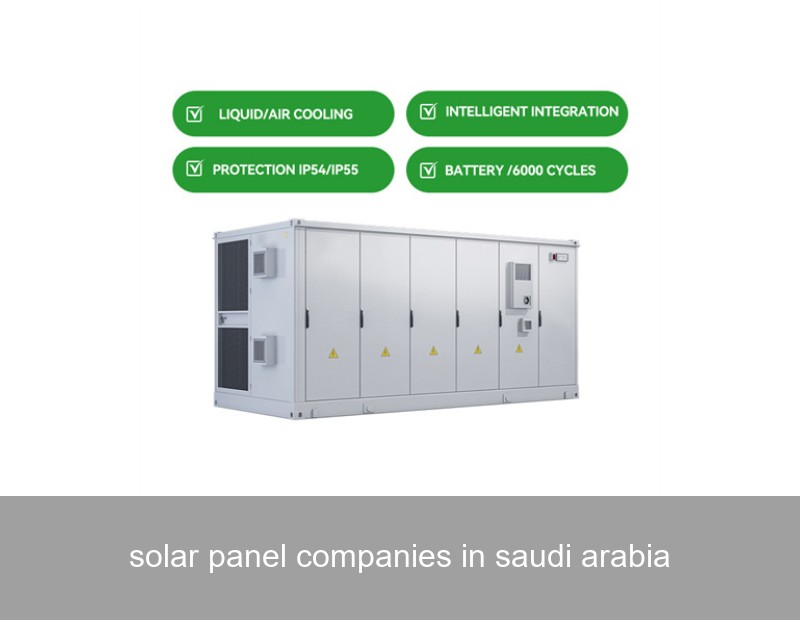
Globally, leaders in this space, like Highjoule, are providing the technological backbone for such transitions. With nearly two decades of experience since 2005, Highjoule specializes in intelligent, containerized battery energy storage systems (BESS) that are ideal for stabilizing grids with high renewable input. For a market like Saudi Arabia, integrating Highjoule's solutions means solar farms can operate more like traditional power plants—predictable, reliable, and capable of meeting demand even when the sun isn't shining. Highjoule's systems offer the efficiency, durability, and smart energy management software necessary to maximize the return on massive solar investments.
Highjoule's Role in a Maturing Market
As solar panel companies in Saudi Arabia build ever-larger projects, the partnership with storage experts becomes crucial. Highjoule's offerings for commercial, industrial, and utility-scale applications provide:
- Grid Stability: Frequency regulation and voltage support to integrate volatile solar generation seamlessly.
- Energy Time-Shifting: Storing excess solar energy generated during the day for use during peak evening hours.
- Microgrid Capability: Enabling remote communities or industrial hubs (like NEOM) to operate on sustainable, independent power networks.
This synergy between world-class solar developers and advanced storage providers is what will allow Saudi Arabia to meet its 2030 targets without compromising on reliability.
Case Study: Neom and the Dawn of 24/7 Solar
No discussion of Saudi solar is complete without mentioning NEOM, the flagship $500 billion futuristic megacity. NEOM is not just a consumer of renewable energy; it aims to be a global benchmark for a sustainable circular economy.
At its heart is the NEOM Green Hydrogen Company (NGHC) project, which will integrate up to 4 GW of solar and wind power to produce green hydrogen. However, to manage this immense, variable renewable input and power the city itself, a state-of-the-art storage solution is paramount. While specific vendor details are often project-confidential, the technological requirements align perfectly with the capabilities of global providers like Highjoule: multi-hour duration storage, seamless integration software, and ruggedized systems for harsh climates.
A report by the International Energy Agency (IEA) highlights that projects like NEOM are testing grounds for technologies that will become mainstream globally. The data point is clear: NEOM's planned reliance on renewables necessitates storage solutions on a scale of gigawatt-hours (GWh), pushing the entire industry forward. It's a living lab demonstrating that with the right combination of solar and storage, a zero-carbon metropolis is not just a vision but a near-term reality.

Image Source: Unsplash - Engineer monitoring a modern battery storage system.
What This Means for the Global Market
For observers in Europe and the US, Saudi Arabia's journey is highly instructive. It proves that solar energy, paired with storage, is now a cornerstone of national energy security and economic planning, even in nations historically built on fossil fuels. The innovations driven by the demanding conditions of the Saudi market—from dust-resistant panel coatings to heat-tolerant battery systems—will inevitably benefit global renewable deployments.
Furthermore, the scale of ambition is driving down costs for key components worldwide. According to IRENA (International Renewable Energy Agency), solar PV costs have fallen by over 80% in the last decade, a trend accelerated by large, competitive markets like Saudi Arabia. This creates a virtuous cycle, making solar and storage even more accessible for businesses and utilities in Europe and North America.
The Future Outlook for Solar in the Kingdom
The trajectory for solar panel companies in Saudi Arabia is set for exponential growth. The next phase will likely focus on:
| Trend | Description | Impact |
|---|---|---|
| Local Manufacturing | “Saudization” of the supply chain, producing panels, inverters, and eventually battery cells locally. | Reduces costs, creates jobs, and ensures supply chain security. |
| Technology Diversification | Exploring concentrated solar power (CSP) with thermal storage and floating solar on reservoirs. | Provides even more tools for 24/7 clean power generation. |
| Digital Integration | Using AI and IoT for predictive maintenance, output forecasting, and optimal storage dispatch. | Maximizes efficiency and ROI of every solar asset. |
In this evolving landscape, the collaboration between solar developers, storage technology experts, and digital innovators will define the speed and success of the transition.
The transformation happening under the Arabian sun is more than a national project; it's a signal to the world. It demonstrates that a sustainable energy future is built not on a single technology, but on intelligent systems that combine generation, storage, and smart management. As Highjoule's work with grid operators worldwide shows, the principles being proven in Saudi deserts—reliability through integration, sustainability through innovation—are directly applicable to modernizing grids everywhere. So, as you consider the future of energy in your own region, what role could integrated solar and storage solutions play in achieving your sustainability and resilience goals?
 Inquiry
 Online Chat