


How a Solar Panel Factory in Sweden Can Maximize Efficiency with Smart Energy Storage
When you think of solar energy powerhouses, sun-drenched deserts or Mediterranean coasts might come to mind. But look north, and you'll find a surprising leader: Sweden. The Swedish solar industry is booming, with ambitious companies establishing state-of-the-art solar panel factories in Sweden. These facilities are engineering marvels, producing the technology that captures clean energy. Yet, they face a unique, ironic challenge: ensuring their own operations are powered as sustainably and cost-effectively as possible. The key to unlocking this potential lies not just on the roof, but in what happens to the energy after it's generated.
The Nordic Sun Rise: Why Sweden is a Solar Powerhouse
Sweden's commitment to a fossil-free future is unwavering. With a target of 100% renewable electricity production by 2040, the nation is investing heavily in all clean tech, including solar. While sunlight hours vary, Swedish summers offer long, bright days perfect for solar generation. This, combined with innovative policies and a strong engineering tradition, has fueled the growth of domestic solar manufacturing. A modern solar panel factory in Sweden is more than a production plant; it's a statement of sustainability. But to truly walk the talk, these factories must tackle the intermittent nature of their primary energy source.

Image Source: Unsplash - Representative image of a modern industrial building suitable for solar integration.
Powering Production: The Energy Challenge for a Solar Panel Factory in Sweden
Manufacturing solar panels is an energy-intensive process. From purifying silicon to assembling photovoltaic cells and laminating modules, the production line demands a consistent, high-quality power supply. Relying solely on the grid, especially during peak tariff hours, can lead to exorbitant electricity costs that eat into margins. On the other hand, relying solely on an on-site solar array has a clear flaw: the factory's energy demand is constant, but solar production is not. What happens during cloudy days, at night, or in the deep winter when production might still be running at full tilt?
This mismatch creates a critical business and sustainability gap:
- Financial Drain: Purchasing grid power during high-price periods undermines the cost savings from solar.
- Carbon Footprint: Without a way to store and use most of the self-generated solar power, the factory may still depend on grid energy, which, while relatively clean in Sweden, isn't 100% renewable.
- Grid Strain: Injecting all surplus solar at once can stress local grids, while drawing power during peaks contributes to system-wide demand spikes.
The Storage Imperative: Turning Sunlight into a 24/7 Power Source
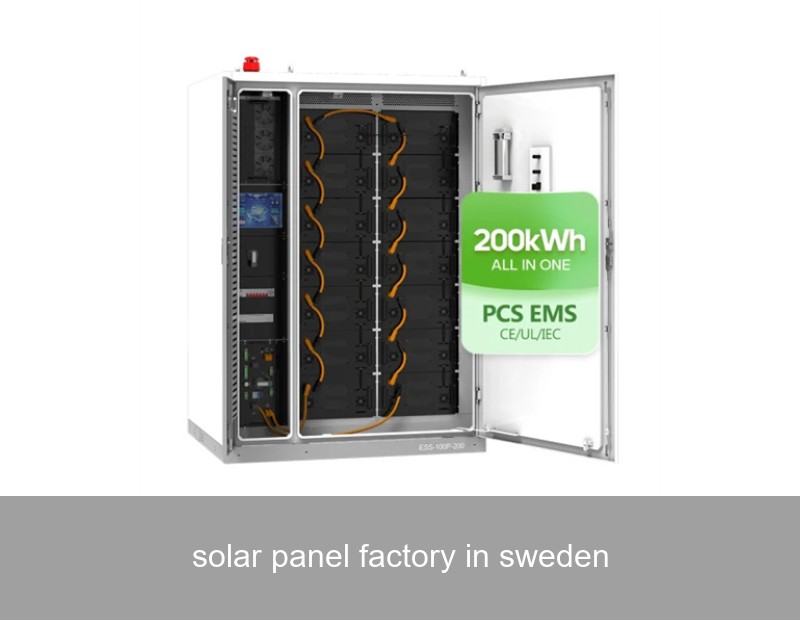
The solution is elegantly logical: store the surplus energy when the sun shines and use it when it doesn't. This is where advanced Battery Energy Storage Systems (BESS) become the indispensable brain and battery of a modern solar panel factory in Sweden. A well-integrated BESS does more than just "save" electricity; it transforms the entire facility's energy profile.
| Challenge | Traditional Solar-Only Approach | Solar + Highjoule BESS Solution |
|---|---|---|
| Nighttime Operations | 100% grid reliance | Primarily powered by stored solar energy |
| Peak Grid Tariffs | High electricity costs during peak hours | Discharge battery to avoid peak pricing, cutting costs |
| Grid Stability | Can contribute to volatility | Provides grid services, stabilizes local network |
| Energy Self-Consumption | Typically 30-50% | Can increase to 70-90% or more |
Case Study: A Solar Factory in Norrköping Powers Up with Highjoule
Consider the real-world example of a mid-sized photovoltaic module manufacturer in Norrköping. They installed a 2 MW rooftop solar array, which covered about 40% of their annual energy need. However, the timing was off. Their 1.5 MWh daily surplus at noon was fed to the grid at a low feed-in tariff, while they bought expensive power every morning and evening.
By integrating a Highjoule H3 Commercial Battery System with a capacity of 1.2 MWh and smart energy management software, they revolutionized their operations. The system was programmed to:
- Store the midday solar surplus.
- Discharge during the 4 PM to 9 PM peak tariff window, shaving nearly €450 off their daily energy bill.
- Provide a critical backup power buffer for sensitive cleanroom manufacturing steps.
The result? Within the first year, the factory increased its solar self-consumption rate from 48% to 85%, reduced its annual grid energy costs by over 60%, and improved its overall power quality. This tangible success story, verified by data from the Swedish Energy Agency, showcases the transformative impact of pairing production with intelligent storage.

Image Source: Unsplash - Representative image of a technician maintaining a commercial battery system.
The Highjoule Solution: Intelligent Energy Management for Industry
At Highjoule, we understand that an industrial facility like a solar panel factory in Sweden needs more than just hardware; it needs a comprehensive energy strategy. Our solutions are designed to provide resilience, efficiency, and control.
Our H-Series Commercial Battery Systems are built with lithium iron phosphate (LFP) chemistry, renowned for its safety, longevity, and performance in a wide range of temperatures—a perfect fit for the Swedish climate. Paired with our Energy Management Platform (EMP), the system becomes intelligent. It doesn't just react; it predicts. Using weather forecasts and production schedules, it optimizes charge/discharge cycles to maximize financial return and energy independence.
For a solar manufacturer, this means:
- Maximized ROI on Solar Assets: Get the most out of every kWh your solar panels produce.
- Predictable Energy Costs: Shield your business from volatile electricity markets.
- Enhanced Sustainability Credentials: Prove your commitment to a green value chain, from raw material to finished product.
- Operational Resilience: Ensure critical processes are protected from short grid interruptions.
The Future of Swedish Solar Manufacturing
The journey towards a fully sustainable solar industry is a closed-loop system. It starts with clean energy powering the creation of the technology that captures more clean energy. As the demand for European-made solar panels grows, the competitive advantage will belong to those who can produce them with the lowest carbon footprint and operational cost. Intelligent energy storage is the linchpin that makes this virtuous cycle possible.
So, if you're operating or planning a solar panel factory in Sweden, the question isn't just "how many panels can we produce?" It's also "how can the energy that powers our vision be as innovative and sustainable as the products we create?" How will you ensure your factory is a true beacon of the clean energy future it's helping to build?
 Inquiry
 Online Chat