


Solar Panel Fail for Sale? What Your Underperforming System is Really Telling You
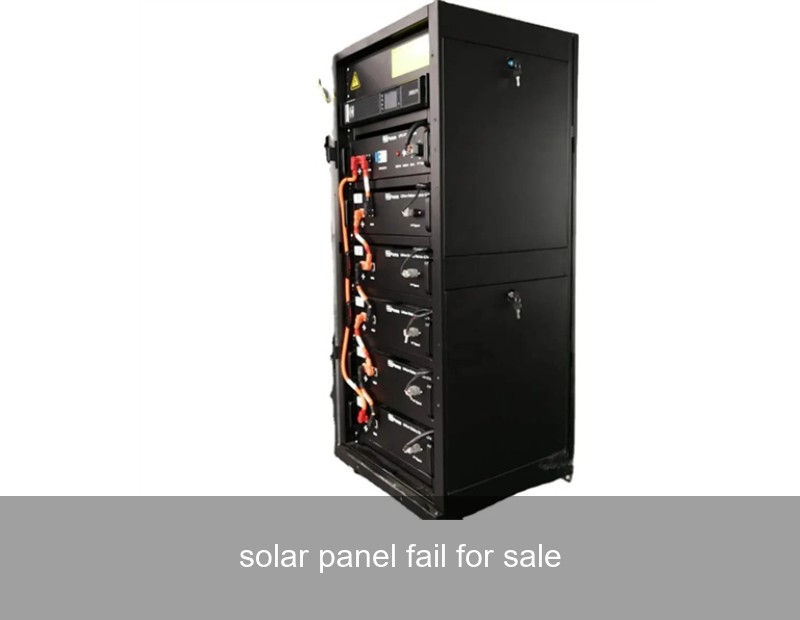
You’ve seen the ads or the listings: "Solar panel fail for sale." It might be a pallet of discounted modules from an installer, or a neighbor looking to offload panels from their roof upgrade. On the surface, it seems like a potential bargain. But as a seasoned expert in renewable energy systems, I want to offer a different perspective. That "failed" or underperforming solar panel isn't just a piece of hardware; it's a symptom. It's your entire energy system sending you a message about efficiency, reliability, and the true future of your power independence. Let's decode that message together.
What Are "Failed" Solar Panels?
First, let's clarify terminology. A "failed" solar panel for sale typically falls into one of three categories:
- Physically Damaged: Visible cracks, delamination, or broken glass from hail, debris, or improper handling.
- Performance-Degraded: Output has fallen significantly below its original rating, often due to prolonged Potential Induced Degradation (PID), snail trails, or long-term exposure.
- Electrically Faulty: Issues with junction boxes, bypass diodes, or internal cell connections causing hot spots or complete circuit failure.
While a single physically damaged panel in a large array might be a simple swap, the phenomenon of widespread underperformance is a more complex story. It often points to systemic issues—maybe the original installation wasn't optimized, or the system lacks the intelligence to adapt and protect itself.

Image Source: Unsplash - Visual signs of degradation like micro-cracks can signal deeper performance issues.
Why Do Solar Panels Fail or Underperperform?
Solar panels are famously durable, with most manufacturers guaranteeing 80-90% output after 25 years. So, what goes wrong? The reasons are a mix of environmental stress and technological oversight.
| Failure Mode | Primary Cause | Impact on System |
|---|---|---|
| Potential Induced Degradation (PID) | Voltage leak between panel and grounded frame | Can reduce a string's output by 30% or more |
| Micro-cracks | Mechanical stress during install/transport, thermal cycling | Reduced cell area, increased resistance, hot spots |
| Delamination & Discoloration | UV exposure, moisture ingress, poor encapsulation | Reduced light transmission, overheating, safety risk |
| Inverter Mismatch | Outdated or poorly sized inverter for the array | Clips production, fails to maximize panel output |
Notice that last point? Often, the "failure" isn't in the panel itself, but in the ecosystem around it. A string inverter, for instance, is only as good as its weakest panel. If one panel is shaded or degraded, it drags down the performance of the entire string. This is a critical flaw in traditional solar design that many homeowners and businesses discover too late.
The Hidden Cost of a Failing Panel
The immediate thought is, "I'll just replace the bad panel." But the real cost is cumulative and often hidden:
- Lost Revenue: Every kilowatt-hour not produced is money lost, especially with net metering policies changing in many U.S. and European markets.
- Safety Hazards: Hot spots from faulty panels or connections are a leading cause of solar rooftop fires. A 2023 German report highlighted a concerning rise in fire incidents linked to aging or faulty PV systems.
- Systemic Drag: One underperforming panel can bottleneck an entire string, as mentioned. You're not losing 5% of one panel's output; you might be losing 5% of 20 panels' potential output.
Case Study: The Data Doesn't Lie
Let's look at a real-world example from a commercial warehouse rooftop in Northern Italy, a market with high solar penetration.
The Situation: A 100kW system installed in 2015 was consistently underperforming by ~18% against projections. The operator considered buying discounted "replacement" panels to swap out suspected failures.
The Investigation: A detailed audit using drone thermography and IV curve tracing revealed that only 8% of the panels were physically faulty. The core issue was severe PID affecting nearly 40% of the array, compounded by an outdated central inverter that couldn't mitigate the losses.
The Solution & Data: Instead of a wholesale panel replacement, the owner partnered with a system integrator who recommended a holistic upgrade:
- Installed PID recovery boxes to temporarily reverse the degradation.
- Replaced the central inverter with a modern, string-level optimization solution.
- Added a 200kWh Highjoule C&I Battery Storage System to store midday excess and shift consumption to evening peak rates.
The Result: System output recovered to 98% of original capacity. More importantly, by adding storage, the facility now uses over 85% of its solar energy on-site (up from 60%), slashing grid consumption during high-tariff periods. The payback period for the upgrade and storage was under 7 years, a figure calculated using real IRENA data on declining storage costs.
Beyond Replacement: A Smarter System Approach
The Italian case shows the paradigm shift. The goal isn't just to fix a "failed panel," but to fix a failing energy strategy. This is where modern system design comes in.
Think of your solar array as the heart. But a heart needs a smart brain and a resilient circulatory system. Panel-level power electronics (optimizers, microinverters) act like neurons, ensuring each panel operates independently at its maximum point. And a battery energy storage system (BESS) is the circulatory system, storing energy and releasing it when and where it's needed most.
This approach turns a passive solar installation into an active, intelligent energy asset. It future-proofs your investment against panel degradation, changing utility rates, and even grid outages.

Image Source: Unsplash - A modern home energy system integrating solar with battery storage.
The Highjoule Solution: Intelligence Meets Storage
At Highjoule, we've been solving complex energy resilience puzzles since 2005. We see a "solar panel fail" not as an endpoint, but as a starting point for a more robust conversation about energy independence.
Our approach for residential, commercial, and microgrid clients is to integrate seamlessly with existing or new solar PV:
- Highjoule Residential ESS: Our compact, wall-mounted systems feature advanced lithium iron phosphate (LiFePO4) batteries, integrated energy management software, and hybrid inverter compatibility. They allow you to maximize self-consumption of your solar energy, protect against outages, and avoid drawing power during expensive peak times.
- Highjoule C&I PowerStack: For businesses, our scalable containerized or rack-mounted BESS solutions are the answer. They not only buffer solar production but can participate in demand charge management, grid services, and provide critical backup for essential loads. The system in our Italian case study is a perfect example.
- Highjoule AI-Powered EMS: The true magic lies in our Energy Management System software. It uses weather forecasts, consumption patterns, and real-time grid data to autonomously decide when to charge, discharge, or hold—ensuring every kilowatt-hour from your solar panels, whether they are brand new or 10 years old, is used with maximum economic value.
By pairing your solar array, even a partially underperforming one, with a Highjoule storage system, you effectively "rescue" and monetize every watt it produces.
Making the Decision: Replace or Enhance?
So, when you see "solar panel fail for sale," or notice your own system's output dipping, ask yourself these strategic questions:
- Is this a single hardware issue, or a symptom of my system's overall architecture?
- What is the true cost of lost energy over the next 10 years, versus the investment in a systemic upgrade?
- How can I make my energy infrastructure resilient to both equipment aging and volatile energy markets?
The most forward-thinking homeowners and businesses are no longer just solar buyers; they are becoming smart energy managers. The integration of storage, as supported by bodies like the U.S. Department of Energy, is no longer a luxury—it's the key to unlocking the full, reliable potential of solar photovoltaics.
Is your underperforming solar array an unexpected opportunity to build a truly intelligent and independent energy system for your home or business?
 Inquiry
 Online Chat