


Canadian On-Grid Battery Systems: A Smart Energy Upgrade for Home and Business
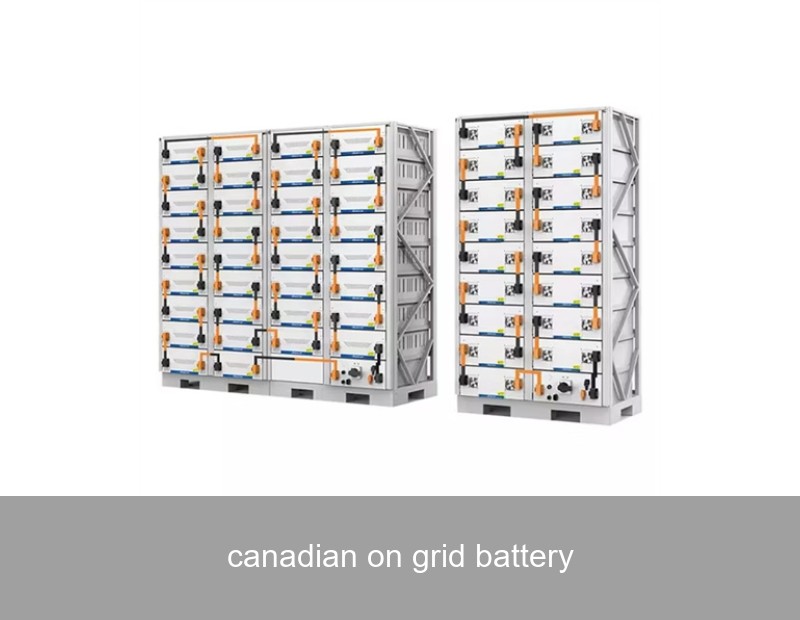
If you're a homeowner or business operator in Canada, you've likely felt the pinch of rising electricity bills and heard the growing conversation about grid reliability. Perhaps you've also considered solar panels but wondered, "What happens when the sun isn't shining?" This is where the modern Canadian on-grid battery comes into play. Unlike off-grid systems, an on-grid (or grid-tied) battery storage system is connected to the public utility network. It intelligently stores energy—often from solar panels—and releases it when you need it most, providing financial savings, increased energy independence, and valuable support to the community grid. For over 18 years, Highjoule has been at the forefront of this intelligent energy storage revolution, providing smart, efficient systems across North America and Europe that seamlessly integrate with the grid to empower consumers and stabilize the network.
Table of Contents
- The Canadian Energy Reality: More Than Just High Bills
- How an On-Grid Battery System Works: Your Personal Power Plant
- The Tangible Benefits: From Savings to Security
- A Real-World Case Study: The Ontario Manufacturing Facility
- Choosing the Right System: Key Considerations
- Highjoule's Smart Solution for the Canadian Market
- The Future is Grid-Interactive
The Canadian Energy Reality: More Than Just High Bills
Let's face it: electricity costs in many Canadian provinces are a significant household and operational expense. But the issue runs deeper. Our grids, some built decades ago, face increasing strain from extreme weather events, shifting demand patterns, and the integration of intermittent renewable sources. The Canada Energy Regulator reports notable variations and increases in electricity prices across provinces, highlighting the economic pressure. Furthermore, localized outages, while often brief, disrupt daily life and business operations. This phenomenon creates a perfect opportunity for a smart technological solution—not to leave the grid, but to enhance it and your interaction with it.
How an On-Grid Battery System Works: Your Personal Power Plant
Think of an on-grid battery system as a sophisticated energy bank account. Here’s a simple breakdown of its daily operation:
- Energy Storage: During times of low demand or high solar production (e.g., midday), your system charges its batteries with affordable or self-generated clean electricity.
- Intelligent Discharge: When electricity rates peak (typically evenings) or during a grid outage, the system automatically switches to power your essential loads with the stored energy.
- Grid Services: Advanced systems can even respond to grid signals, providing micro-support during times of regional strain, a concept known as virtual power plants (VPPs).

Image: A modern home battery storage unit, similar to systems deployed across Canada. Credit: Unsplash.
Core System Components
| Component | Role | Consideration for Canada |
|---|---|---|
| Battery Bank (Li-ion NMC or LFP) | Stores electrical energy chemically. | LFP chemistry is often preferred for its longer lifespan, safety, and better performance across a wide temperature range, crucial for Canadian winters and summers. |
| Hybrid Inverter/Controller | The "brain" that manages energy flow between solar, battery, home, and grid. | Must be certified for Canadian grid interconnection (CSA, etc.) and capable of managing complex rate structures. |
| Energy Management System (EMS) | Software that optimizes for cost, self-consumption, or backup. | Should be programmable for provincial time-of-use rates and able to receive potential utility demand-response signals. |
The Tangible Benefits: From Savings to Security
Investing in a Canadian on-grid battery isn't just about green credentials; it's a practical decision with clear returns:
- Reduced Electricity Bills: By using stored cheap energy during expensive peak periods (a practice called peak shaving), you can dramatically cut your demand charges (for businesses) and overall consumption costs.
- Enhanced Resilience: While not typically sized for whole-home indefinite backup, a properly configured system keeps your lights, fridge, and critical circuits on during most common outages.
- Maximized Solar Investment: Instead of selling excess solar power back to the grid at a low rate, store it for your own use later, increasing your self-consumption from ~30% to 70% or more.
- Grid Support & Future Revenue: As utilities develop VPP programs, your battery could become an asset that earns revenue by providing stability services to the grid.
A Real-World Case Study: The Ontario Manufacturing Facility
Let's look at concrete data from a 2022 installation. A mid-sized manufacturing facility in Ontario faced crippling monthly demand charges and frequent brief dips in power quality that disrupted sensitive machinery. They partnered with Highjoule to deploy a 500 kWh on-grid battery storage system integrated with their existing rooftop solar.
- Demand Charge Reduction: By strategically discharging the battery during their operational peak periods (8 AM - 8 PM), they reduced peak demand from the grid by an average of 40%. This translated to an annual savings of $68,000 on demand charges alone.
- Increased Solar Self-Consumption: The facility's use of its own solar generation jumped from 35% to 89%, reducing their energy purchase from the grid by an additional 18%.
- Power Quality & Uptime: The system's sub-second transition during micro-outages (< 2 seconds) prevented an estimated 15 hours of production line stoppages, safeguarding thousands in potential lost productivity.
This case exemplifies how a Canadian on-grid battery system delivers a compelling ROI for commercial entities, addressing both cost and operational reliability.
Choosing the Right System: Key Considerations
Not all battery systems are created equal, especially for the diverse Canadian climate and regulatory landscape. Here’s what to evaluate:
- Battery Chemistry & Warranty: Look for Lithium Iron Phosphate (LFP) for its safety and cycle life. Ensure the warranty covers a high number of cycles (e.g., 10,000) or a long duration (e.g., 10 years) with a guaranteed end-of-warranty capacity (e.g., 70%).
- Scalability: Can you easily add more battery modules later if your needs grow?
- Grid Compliance & Safety: The system must have all necessary Canadian certifications (CSA, ULc). Installation must be performed by a licensed electrician familiar with the Canadian Electrical Code and local utility interconnection requirements.
- Software Intelligence: The EMS should be user-configurable and ideally offer remote monitoring and control via a smartphone app.
Highjoule's Smart Solution for the Canadian Market
At Highjoule, we've engineered our GridSynergy SmartStack series specifically for markets like Canada, where performance, durability, and intelligence are non-negotiable. Our systems are built on LFP battery technology, renowned for its stability and long life. What truly sets them apart is the Adaptive EMS.
This proprietary software doesn't just follow a simple schedule. It learns your consumption patterns, integrates real-time weather forecasts for solar prediction, and can be programmed to optimize for your province's specific time-of-use rate structure (like Ontario's off-peak, mid-peak, on-peak periods). For commercial clients, our platform provides detailed analytics on demand charge savings and energy cost avoidance. Furthermore, Highjoule systems are designed to be "grid-ready," meaning they can participate in future utility VPP programs, turning your storage asset into a potential revenue stream.

Image: Renewable energy systems are designed to perform year-round in Canadian conditions. Credit: Unsplash.
The Future is Grid-Interactive
The evolution of the electricity grid is moving from a one-way street to a collaborative network. Your home or business, equipped with an intelligent Canadian on-grid battery, becomes an active node in this network. You're no longer just a consumer; you're a "prosumer" — producing, managing, and even sharing energy in a way that benefits your wallet and your community's grid stability.
As we see more extreme weather and a faster transition to renewables, the value of distributed energy storage will only grow. The question isn't necessarily if you should get a battery, but when is the right time for you to take control of your energy costs and contribute to a more resilient grid? What would a 40% reduction in your peak electricity demand do for your operational budget this coming year?
 Inquiry
 Online Chat