


Your 220V Solar Panel Inverter: The Intelligent Heart of a Modern Home Energy System
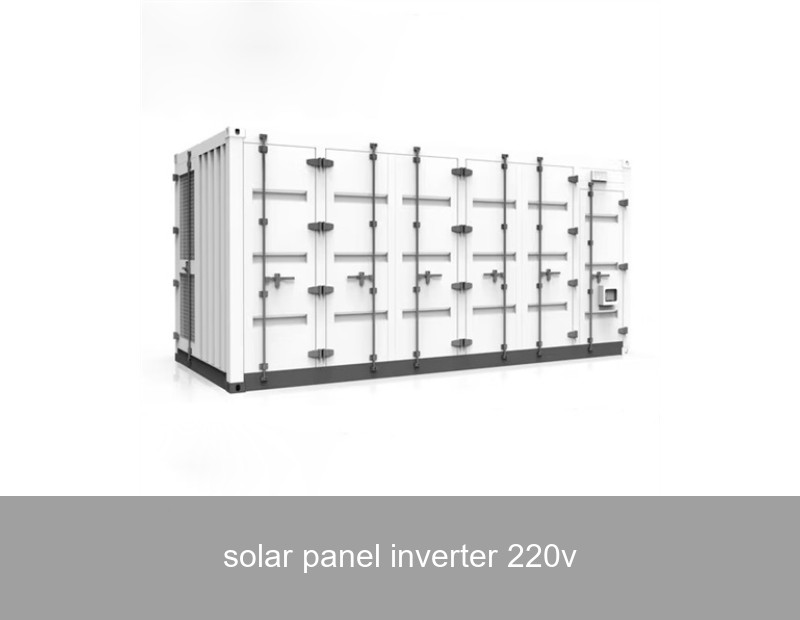
You've made the smart decision to install solar panels on your roof. You see them every day, quietly converting sunlight into potential. But have you ever wondered how that raw, direct current (DC) power becomes the safe, usable 220-volt alternating current (AC) that runs your refrigerator, charges your laptop, and lights your home? The unsung hero making this critical conversion is the solar panel inverter 220v. More than just a simple converter, today's advanced inverters are the intelligent command center for your entire energy ecosystem, determining not just how much you save, but how resilient and independent your home can become. Let's explore why choosing the right inverter is the most crucial decision for your solar investment.
Table of Contents
- What is a 220V Solar Panel Inverter?
- The Phenomenon: From Simple Conversion to Energy Intelligence
- The Data: Why Inverter Choice Dictates System Performance
- Case Study: A German Household's Journey to 92% Self-Consumption
- The Highjoule Solution: Beyond the Inverter to a Complete Energy Platform
- The Future of Home Energy: What Will Your Inverter Do Next?
What is a 220V Solar Panel Inverter?
In its most basic function, a solar inverter is the device that transforms the DC electricity generated by your photovoltaic (PV) panels into the 220V/240V AC electricity standard in European and many other homes. But that's like calling a smartphone a "telephone." Modern inverters, especially hybrid or battery-ready inverters, perform a symphony of tasks: they constantly track the maximum power point of your panels for optimal harvest, synchronize perfectly with the utility grid, manage the charging and discharging of a home battery storage system, and provide critical safety functions like automatic shutdown during a grid outage.
The Phenomenon: From Simple Conversion to Energy Intelligence
A decade ago, the primary goal of a solar system was to feed electricity into the grid. The inverter's job was relatively straightforward. Today, the landscape has shifted dramatically. With rising electricity prices and a growing desire for energy independence, the new goal is maximizing self-consumption—using the solar energy you produce directly in your own home. This shift has turned the inverter from a peripheral component into the central brain of a sophisticated energy network.
This evolution addresses a core challenge: solar production peaks in the middle of the day, when many households are empty. Energy demand, however, spikes in the early morning and evening. Without intelligence and storage, you end up exporting cheap solar power at noon only to buy back expensive grid power at night. The right 220v solar inverter solves this mismatch.
The Key Evolution: Three Types of Inverters
- String Inverters: The traditional, cost-effective choice where panels are connected in series. Efficiency can drop if one panel is shaded.
- Microinverters: Small inverters on each panel, optimizing output per panel and providing granular data. Excellent for complex roofs.
- Hybrid Inverters (The Game-Changer): These are all-in-one units designed with integrated energy management. They have built-in connections for both solar panels and battery storage, and are pre-programmed to intelligently decide when to charge the battery, power the home, or export to the grid.
The Data: Why Inverter Choice Dictates System Performance
The impact of your inverter choice isn't theoretical; it's measurable on your energy bill and system longevity. Consider these key metrics:
| Performance Factor | Basic String Inverter | Advanced Hybrid Inverter (e.g., Highjoule H-Energy Hub) | Impact on Homeowner |
|---|---|---|---|
| Peak Efficiency | ~97% | >98% | More harvested solar energy from day one. |
| Self-Consumption Optimization | Limited or none | AI-driven, weather-forecast aware | Can increase direct solar usage from ~30% to over 70%. |
| Grid Services & Resilience | Grid-tied only, shuts off during outages | Provides backup power during blackouts | Ensures critical loads remain powered during emergencies. |
| System Lifespan | 10-12 years typical | Designed for 15+ years, compatible with future tech | Better long-term return on investment (ROI). |
Data from the National Renewable Energy Laboratory (NREL) consistently shows that system-level intelligence, centered on the inverter, is the primary driver for maximizing the value of distributed energy resources like rooftop solar.

A modern hybrid inverter acts as the central hub for solar, battery, and home loads. (Image credit: Unsplash/Representative)
Case Study: A German Household's Journey to 92% Self-Consumption
Let's look at a real-world example from Bavaria, Germany. The Müller family installed a 8.2 kW solar array in 2020 with a standard inverter. Their initial self-consumption rate was just 35%. They were exporting most of their solar power under the country's Renewable Energy Act (EEG) feed-in tariff, which has been steadily decreasing.
In 2023, seeking true energy independence, they retrofitted their system with a Highjoule H-Energy Hub 10kW hybrid inverter and a matched 15 kWh Highjoule H-Cell lithium-ion battery. The results after one year were transformative:
- Self-Consumption Rate: Increased from 35% to 92% annually.
- Grid Electricity Purchases: Reduced by 86%.
- Bill Savings: Increased by €1,450 per year, despite the phase-out of high feed-in tariffs.
- Resilience: The system now automatically provides backup power for lights, refrigeration, and internet during the area's occasional grid disturbances.
"The inverter was the key," said Mr. Müller. "It didn't just add a battery; it made our entire system smarter. The Highjoule app shows it learning our habits and even saving extra battery capacity when it forecasts a cloudy tomorrow. It's the brain we didn't know we needed."
The Highjoule Solution: Beyond the Inverter to a Complete Energy Platform
At Highjoule, we understand that the solar panel inverter 220v is not a commodity. It's the core of our integrated energy philosophy. Our H-Energy Hub Series of hybrid inverters is engineered for the demands of modern European and American homes, designed from the ground up to be the centerpiece of a scalable, resilient, and efficient power system.
What sets the Highjoule platform apart?
- Seamless DC-Coupling: Our inverters and batteries communicate on a native DC bus, increasing round-trip efficiency by up to 4% compared to retrofitted AC-coupled systems.
- Adaptive Learning Software: The built-in energy management system (EMS) doesn't just follow simple rules. It analyzes consumption patterns and local weather forecasts to optimize battery cycles for longevity and maximum savings.
- Grid-Forming Technology: In the event of a blackout, our inverters can "island" your home, creating a stable microgrid that can even power sensitive electronics safely—a feature not all backup inverters offer.
- Future-Proof Design: The H-Energy Hub is ready for vehicle-to-grid (V2G) integration and can be easily updated via firmware to participate in emerging grid flexibility markets, turning your system into a potential revenue stream.
We don't just sell inverters; we provide a complete Highjoule Home Energy System—including compatible high-efficiency solar panels, scalable H-Cell battery storage, and intuitive monitoring—all controlled and optimized by our intelligent inverter platform.

Intuitive monitoring apps put the power of your hybrid inverter system in your hand. (Image credit: Unsplash/Representative)
The Future of Home Energy: What Will Your Inverter Do Next?
The trajectory is clear. The humble inverter is evolving into the home's energy operating system. With smart meters and time-of-use tariffs becoming standard, your inverter will soon automatically sell your stored power back to the grid during the 30 minutes of highest demand and price, all without you lifting a finger. It will coordinate between your EV charger, heat pump, and battery to minimize your carbon footprint and cost.
The question is no longer just "how do I convert DC to AC?" It's "How do I want my home to interact with energy?" Do you want a passive system that merely offsets bills, or an active, intelligent partner in resilience and sustainability? The choice of your 220V solar panel inverter determines the answer.
Is your current solar system just exporting potential savings, and what would a 90% self-consumption rate mean for your annual energy budget and peace of mind?
 Inquiry
 Online Chat