


Demystifying the Solar Panel Original Price: Your Guide to Long-Term Value
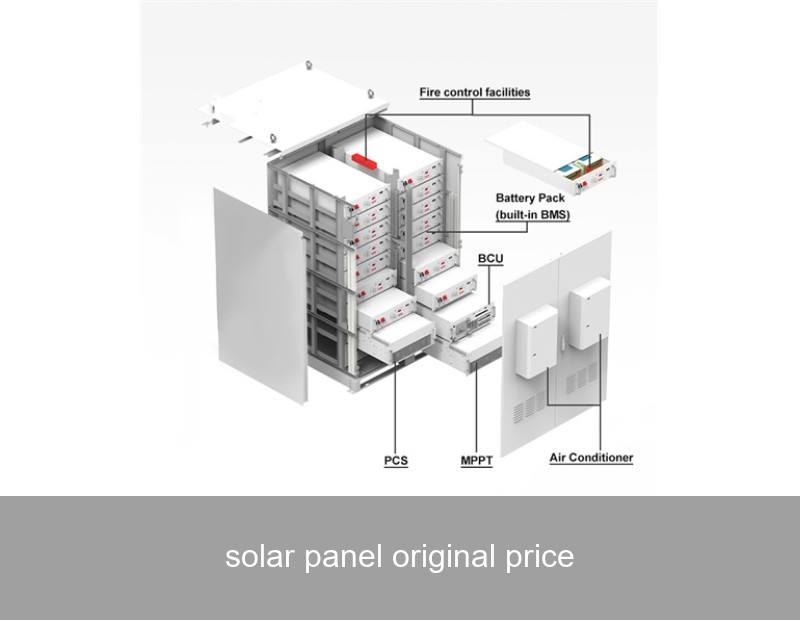
If you've started researching solar power for your home or business, you've undoubtedly encountered the "solar panel original price." It's that initial figure that can cause a sharp intake of breath. But here's a crucial insight we've learned at Highjoule after nearly two decades in the energy industry: focusing solely on the upfront cost per panel is like buying a car based only on the price of the tires. The true value—and the real savings—lie in understanding the complete system and its performance over 25 years or more. Let's peel back the layers on what determines that original price and how to translate it into genuine, lasting energy independence.
The Anatomy of a Solar Panel's Original Price: More Than Just Silicon
When a manufacturer sets a solar panel original price, it's a culmination of complex factors. It's not just a piece of glass and silicon; it's a sophisticated piece of engineering.
- Cell Technology & Efficiency: Premium monocrystalline panels, with their higher efficiency rates (often 21%+), cost more to produce than polycrystalline ones. You're paying for more power generation in a smaller footprint.
- Manufacturing Quality & Durability: This includes the robustness of the frame, the quality of the anti-reflective glass, and the durability of the encapsulation materials that protect cells from moisture and weather. A cheaper panel may degrade faster, losing its power output year over year.
- Brand & Warranty: Established brands invest heavily in research, testing, and back their products with robust 25-30 year performance warranties. This peace of mind is factored into the price.
- Supply Chain & Logistics: Geopolitical factors, raw material costs (like polysilicon), and shipping expenses from manufacturing hubs in Asia all cause fluctuations in the original price.

Image Source: Unsplash (Close-up of solar panel technology)
According to the National Renewable Energy Laboratory (NREL), hardware costs like modules now represent only about 15-25% of a total residential solar system's installed cost. The rest is in "soft costs": installation labor, permitting, customer acquisition, and the critical balance of system components.
Beyond the Sticker Price: The True Cost of Solar Energy
This is where the conversation gets interesting. The ultimate metric isn't dollars per panel, but cents per kilowatt-hour (kWh) over the system's lifetime. A lower-quality panel with a tempting original price might produce less energy and degrade faster, leading to a higher cost per kWh. Conversely, a higher-efficiency, more durable panel often delivers a lower lifetime cost.
Consider this analogy: two water heaters. One is cheap but inefficient, leaking heat and breaking down in 5 years. The other costs 50% more but is super-efficient and lasts 15 years. Which is the better financial decision? Solar panels operate on the same principle, but over a 25+ year horizon.
| Factor | Low Original Price Panel Focus | High Value & Performance System Focus |
|---|---|---|
| Primary Metric | Lowest $/Watt for hardware | Lowest $/kWh over 25 years (LCOE) |
| Efficiency & Output | Lower efficiency, needs more roof space | Higher efficiency, maximizes limited space |
| Degradation Rate | Higher (e.g., 0.7%/year) | Lower (e.g., 0.3%/year) |
| Key System Partner | Panel supplier only | Integrated solution provider (e.g., Highjoule) |
Case Study: A German Bakery's Journey from Price to Value
Let's look at a real example from Bavaria, Germany. Bäckerei Schmidt (name changed for privacy), a family-run bakery with high energy demands for ovens and refrigeration, wanted to reduce its grid dependence and rising energy costs. Their initial quotes centered on getting the largest number of panels for the lowest original price.
However, after an audit by a Highjoule partner, the focus shifted. The bakery's peak energy use was in the early morning and evening—times when solar production is low. Simply adding more panels would create a massive midday surplus sold back to the grid at a low feed-in tariff, while still buying expensive power at night.
The Solution: A smaller, high-efficiency solar array was paired with a Highjoule HI-Stack Commercial Battery Storage System. The system was sized to maximize self-consumption.
- Solar Installation: 45 kWp of high-efficiency panels (premium original price).
- Storage: 60 kWh Highjoule HI-Stack system.
- Result: The bakery's self-consumption rate jumped from an estimated 35% to over 85%. They are now shielded from peak-time pricing and have backup power for critical refrigeration. The payback period, calculated on total system cost, was under 7 years due to drastically reduced grid purchases, despite the higher initial investment in quality components and storage. The Fraunhofer ISE consistently shows that the levelized cost of electricity for solar-plus-storage in commercial applications in Germany is highly competitive.
Future-Proofing Your Investment: The Role of Smart Energy Storage
As the bakery case shows, the modern solar investment is incomplete without considering storage. This is Highjoule's core expertise. The solar panel original price is just the entry ticket. The real game-changer is a system that intelligently manages when you use that solar energy.
Our Highjoule Home Energy Hub and HI-Stack Commercial systems do exactly that. They are not just battery boxes; they are intelligent energy managers. Using advanced software, they learn your consumption patterns, weather forecasts, and utility rate schedules (like time-of-use rates common in California and parts of Europe) to automatically decide when to store solar energy, when to power your home or business, and when to export to the grid for maximum financial benefit.

Image Source: Unsplash (Home with solar and battery storage)
This intelligence dramatically increases the value of every kWh your (prudently priced) solar panels produce. It turns a capital expense into a strategic energy asset that provides bill savings, resilience during outages, and a hedge against future energy price volatility.
Choosing the Right System for Long-Term Value
So, how should you approach your solar project? Don't start with "What's the cheapest panel?" Start with your goals.
- Define Your Objectives: Is it maximum bill savings, energy independence, backup power, or sustainability?
- Audit Your Energy Profile: Analyze your hourly/daily consumption. A night-shift factory has different needs than a daytime school.
- Evaluate Integrated Solutions: Look for providers like Highjoule who offer seamless solar-plus-storage systems with a single point of control and warranty. The synergy between components is as important as the components themselves.
- Calculate Total Lifetime Value: Request analyses showing projected energy production, self-consumption, savings, and payback over 20+ years, not just an equipment quote.
At Highjoule, we design systems that optimize for this total lifetime value. Our technology ensures that the quality of your solar panels—whether you choose a premium or value tier—is fully leveraged, making your investment work smarter and harder for decades.
Now, with the knowledge that the original price is just one piece of a much larger puzzle, what question about your specific energy profile would you need answered to feel confident in designing a truly valuable solar-plus-storage system?
 Inquiry
 Online Chat