


Unlocking Gujarat's Solar Potential: A Deep Dive into the Modern Solar Panel System
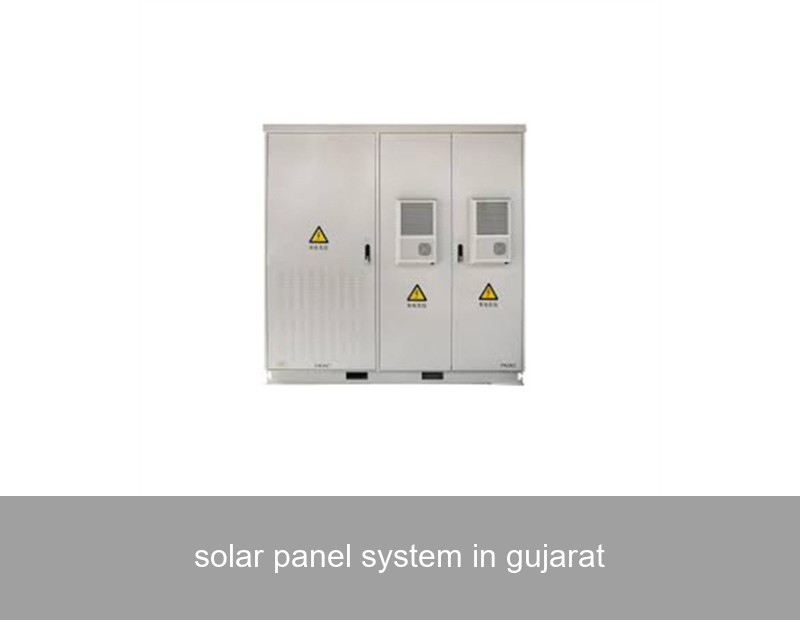
Gujarat, India, isn't just famous for its vibrant culture and coastline; it's a global frontrunner in solar energy adoption. The state's ambitious vision and abundant sunshine have made the solar panel system in Gujarat a model for renewable energy projects worldwide. But what does it take to move beyond mere installation to creating a truly resilient, efficient, and intelligent power ecosystem? The answer lies in integrating advanced energy storage solutions, a domain where companies like Highjoule, a global leader since 2005, are making a significant impact by ensuring every kilowatt-hour generated is utilized optimally.
Table of Contents
- The Gujarat Solar Phenomenon: More Than Just Panels
- Beyond Generation: The Critical Data on Curtailment and Intermittency
- Case Study: Stabilizing an Industrial Solar Panel System in Gujarat
- The Integrated Solution: Solar + Intelligent Storage
- How Highjoule Empowers Solar Projects in Gujarat and Beyond
- The Future of Solar: Questions to Consider
The Gujarat Solar Phenomenon: More Than Just Panels
If you've followed renewable energy trends, you've likely heard of Gujarat's pioneering work. The state hosts Asia's largest solar park, the Charanka Solar Park, and has consistently exceeded its renewable purchase obligations. The widespread adoption of rooftop and utility-scale solar panel systems in Gujarat is a textbook response to high insolation levels and supportive state policies. However, this rapid growth surfaces a universal challenge in renewable energy: the sun doesn't shine on demand. Generation peaks during the day, but demand often peaks in the early evening. This mismatch creates a complex puzzle for grid managers and system owners alike.

Image: The vast Charanka Solar Park in Gujarat. Source: Wikimedia Commons (CC)
Beyond Generation: The Critical Data on Curtailment and Intermittency
The success of a solar panel system in Gujarat or anywhere else can't be measured by installed capacity alone. The real metrics are utilization and reliability. Let's look at the data:
- Curtailment Issues: During periods of low demand or grid congestion, solar generation is often deliberately reduced or "curtailed." This means lost energy, lost revenue, and a lower return on investment for system owners.
- Intermittency: Cloud cover, dust storms (common in arid regions), and the daily cycle introduce volatility. For industrial and commercial users, this can make relying solely on solar power a risky proposition without a backup buffer.
- Grid Stress: High volumes of variable renewable energy can challenge grid stability, requiring rapid frequency regulation and voltage support—services traditional solar farms aren't designed to provide.
This is where the conversation evolves from simple solar generation to comprehensive energy management.
Case Study: Stabilizing an Industrial Solar Panel System in Gujarat
Consider a real-world scenario from an industrial textile unit in Surat, Gujarat. The facility installed a 2 MW rooftop solar panel system, covering about 70% of its daytime energy needs. Yet, they faced two major problems:
- Evening Power Costs: Production lines running into the evening had to switch to expensive grid power, eroding solar savings.
- Voltage Fluctuations: Sudden drops in solar output due to passing clouds caused minor production hiccups and equipment stress.
The Solution & Results: The company integrated a 1 MWh containerized battery energy storage system (BESS) with their existing solar array. This system was designed to:
- Store Excess Solar: Capture midday solar surplus instead of exporting it all to the grid.
- Provide Evening Power: Dispatch stored energy during the high-tariff evening hours (6 PM to 10 PM).
- Offer Instant Grid Support: Use the battery's rapid response to smooth out solar intermittency, maintaining stable power quality.
Outcome: Within the first year, the facility increased its solar self-consumption by 35%, reduced its grid power draw during peak hours by over 80%, and achieved a full return on the storage investment in under 5 years. The solar panel system in Gujarat was transformed from a cost-saving measure into a resilient, round-the-clock power asset.
The Integrated Solution: Solar + Intelligent Storage
As the case study shows, the modern solar panel system is incomplete without intelligent storage. Think of it this way: solar panels are the source, but the battery storage system is the brain and the bank. It manages the flow, stores the value, and ensures delivery when needed most.
Key functions of such an integrated system include:
| Function | Benefit | Impact |
|---|---|---|
| Energy Time-Shifting | Use solar power at night | Maximizes self-consumption, reduces peak tariffs |
| Frequency Regulation | Stabilizes the grid | Provides ancillary services, adds revenue stream |
| Backup Power | Ensures continuity during outages | Critical for industrial processes and microgrids |
| Ramp Rate Control | Smooths sudden solar generation changes | Protects equipment, improves grid compatibility |
How Highjoule Empowers Solar Projects in Gujarat and Beyond
This is precisely where Highjoule's expertise becomes crucial. For nearly two decades, Highjoule has been at the forefront of designing and deploying advanced battery energy storage systems (BESS) for commercial, industrial, and utility applications globally. Our systems are engineered to be the perfect partner for large-scale solar panel systems, like those flourishing in Gujarat.
For a developer or owner of a solar panel system in Gujarat, integrating a Highjoule solution means unlocking new layers of value:
- Highjoule's Intelligent Energy Management System (EMS): This is the core intelligence. Our proprietary EMS doesn't just store and release energy; it continuously forecasts solar generation and load patterns, making economic decisions in real-time to optimize financial returns—whether through arbitrage, demand charge reduction, or providing grid services.
- Scalable & Sustainable Architecture: From compact units for commercial buildings to massive, containerized solutions for solar parks, our systems are modular. They can scale alongside your solar capacity. We prioritize lifecycle management and use battery chemistries, like LFP (Lithium Iron Phosphate), known for their safety, longevity, and reduced environmental impact.
- Global Expertise, Local Resilience: Operating in diverse markets from Europe to the US has equipped us to handle varied grid codes and environmental conditions. A Highjoule BESS deployed alongside a solar panel system in Gujarat is built to withstand high temperatures and deliver reliable performance, ensuring the solar investment is fully leveraged.

Image: Advanced control systems are key to managing solar and storage. Source: Unsplash
Building a Microgrid: The Ultimate Form of Energy Independence
Looking beyond single facilities, the combination of robust solar generation and Highjoule's storage technology enables the creation of resilient microgrids. Imagine an industrial park or a remote community in Gujarat with its own solar generation and a large-scale Highjoule BESS. This microgrid can operate independently ("island mode") during grid outages or intentionally, providing 100% renewable, reliable power around the clock. This is the future of decentralized, sustainable energy infrastructure.
The Future of Solar: Questions to Consider
The journey of the solar panel system in Gujarat illustrates a global truth: the next frontier in the energy transition is not just about generating more clean energy, but about managing it with sophistication. As battery costs continue to decline and software intelligence grows, the economic case for solar-plus-storage becomes undeniable.
So, whether you are a project developer in India, a factory owner in Germany, or a municipality in California planning your energy future, the question is no longer just "How much solar can I install?" The more pivotal question is: "How will I capture, control, and maximize the value of every sunbeam I harvest?"
What specific challenge in your energy profile—peak demand charges, grid instability, or the quest for 24/7 renewable power—could be solved by adding an intelligent storage layer to your energy strategy?
 Inquiry
 Online Chat