


Understanding the Different Types of Solar Photovoltaic Panels for Your Energy Needs
You've decided to harness the sun's power. It's a smart move, both for your wallet and the planet. But as you start researching, you quickly encounter a fundamental question: what are the different types of solar photovoltaic panels, and which one is right for me? It's not just a technical detail; the choice of panel technology directly impacts your system's efficiency, aesthetics, cost, and long-term energy yield. Let's demystify the solar panel landscape, moving from the most common silicon workhorses to the latest innovations, so you can make an informed decision for your home or business.
Monocrystalline Silicon Panels: The Premium Choice
Recognizable by their uniform dark color and rounded cell edges, monocrystalline panels are the veterans of high efficiency. They are made from a single, pure crystal of silicon, grown into a cylindrical ingot and then sliced into wafers. This intricate manufacturing process results in a panel where electrons—the particles that create electricity—can move more freely.

- Efficiency: Typically 18-22% or higher. They convert more sunlight per square meter than other mainstream types.
- Space Efficiency: Ideal for roofs with limited space, as you need fewer panels to reach your power target.
- Lifespan & Performance: Often come with 25+ year warranties and exhibit lower degradation rates over time.
- Cost: Generally the most expensive option due to the energy-intensive production.
The Bottom Line: Choose monocrystalline if you prioritize maximum efficiency from a limited roof area, have a higher budget, and want a sleek, black aesthetic.
Polycrystalline Silicon Panels: The Classic Workhorse
These panels have a distinctive blue, speckled appearance, which comes from their manufacturing process. Instead of a single crystal, molten silicon is poured into a square mold and cooled, forming multiple crystals. This method is simpler and produces less waste.
- Efficiency: Slightly lower, typically in the 15-18% range. The crystal boundaries impede electron movement a bit more.
- Cost-Effectiveness: Historically, they have been the budget-friendly option, though the price gap with monocrystalline has narrowed.
- Space Consideration: You'll need more panels (and thus more roof space) to generate the same power as a monocrystalline system.
- Durability: Still very robust and backed by long manufacturer warranties.
The Bottom Line: Polycrystalline is a solid, cost-conscious choice for larger residential or commercial roofs where space isn't a primary constraint.
Thin-Film Panels: The Flexible Challenger
This category is a different beast altogether. Instead of rigid silicon wafers, thin-film panels are made by depositing one or more thin layers of photovoltaic material (like Cadmium Telluride - CdTe, or Amorphous Silicon - a-Si) onto a substrate like glass, plastic, or metal.
- Appearance & Flexibility: They can be lightweight, flexible, and have a uniform, low-profile look. Some types can even be integrated into building materials.
- Performance in Low Light: They often perform better than crystalline silicon in diffuse light conditions (cloudy days, dawn/dusk).
- Efficiency & Space: Generally have the lowest efficiency rates (10-13% for commercial modules), requiring significantly more installation area.
- Applications: Excellent for large-scale utility projects, unconventional roofs, or portable solar applications where weight and flexibility are key.
The Bottom Line: Consider thin-film for large commercial/industrial buildings with ample space, for specialized architectural integration, or where high temperatures are a concern, as some thin-film technologies have better temperature coefficients. The National Renewable Energy Laboratory (NREL) provides ongoing research on thin-film advancements.
Bifacial Panels: The Two-Sided Innovator
Imagine a solar panel that can generate electricity from both its front and its back. That's the promise of bifacial technology. These panels, often using monocrystalline cells, have a transparent backsheet that allows reflected light (albedo) from the ground—be it white gravel, a reflective membrane, or even snow—to be captured.
| Panel Type | Typical Efficiency | Key Advantage | Best Suited For |
|---|---|---|---|
| Monocrystalline | 18-22%+ | High efficiency, space-saving | Residential, limited space |
| Polycrystalline | 15-18% | Cost-effective, proven | Large residential/commercial roofs |
| Thin-Film (CdTe) | 10-13% | Low-light performance, flexible | Utility-scale, specialized buildings |
| Bifacial (Mono) | Front + 5-25% rear gain* | Higher energy yield per panel | Ground mounts, commercial with reflective surfaces |
*Gain depends heavily on ground reflectivity and installation height.
Case Study: A German Dairy Farm's Energy Transformation
Let's look at a real-world application in Europe. A medium-sized dairy farm in Bavaria, Germany, faced rising energy costs and sought energy independence. Their key challenge: maximizing annual energy production from a south-facing, sloped field adjacent to the barn, not just peak power.
The Solution: After analysis, the installer chose a ground-mounted system using high-efficiency bifacial monocrystalline panels. The panels were installed about 1.5 meters above a bed of light-colored gravel to enhance rear-side reflection.
- System Size: 250 kWp
- Panel Choice: Bifacial Mono PERC panels
- Key Data: Monitoring over the first year showed an 8-12% higher energy yield compared to a standard monofacial system of the same peak power, thanks to the bifacial gain. This extra energy was crucial for powering the farm's cooling systems and feeding surplus electricity into the grid under Germany's Renewable Energy Act (EEG).
This case highlights that the "best" panel isn't just about the spec sheet; it's about the specific environment and energy goals.
Choosing the Right Panel for Your Project
So, how do you navigate this choice? Ask yourself and your installer these questions:
- What is my available space? (Limited roof = high-efficiency mono).
- What is my budget? (Balance upfront cost vs. long-term yield).
- What are my aesthetic preferences? (Sleek black vs. industrial blue).
- What is my local climate? (Frequent clouds? High heat?).
The installer's expertise in modeling these factors is paramount. A professional will use software like PVsyst to simulate the performance of different panel types on your specific site.
Beyond the Panels: The Critical Role of Energy Storage
Here's a crucial insight often overlooked: the choice of solar panel is only half the energy independence story. The sun doesn't shine at night, and peak production often doesn't match peak consumption. This is where advanced energy storage systems become the enabling heart of a truly resilient and efficient power setup.
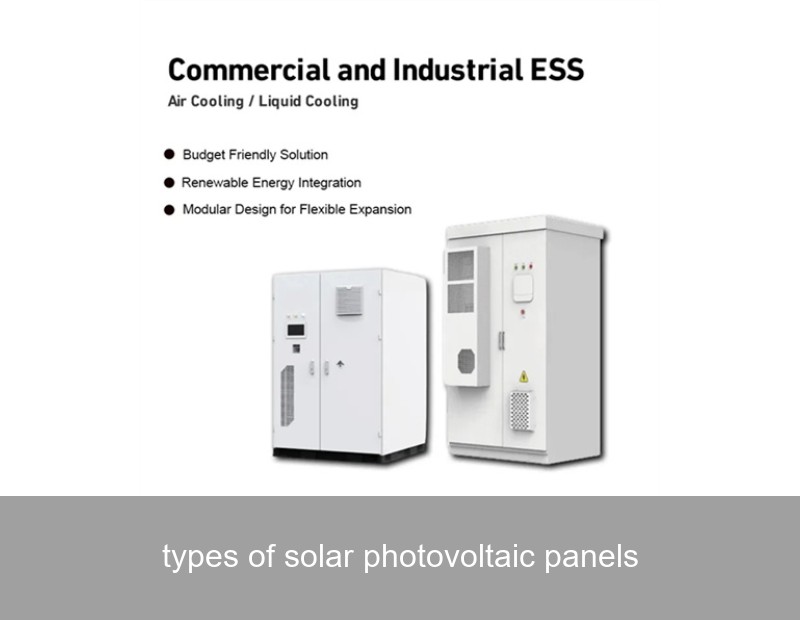
This is precisely where Highjoule excels. As a leader since 2005, we understand that generating clean energy is one thing; managing it intelligently is another. Our H-Series commercial and industrial battery energy storage systems (BESS) are designed to seamlessly integrate with any solar PV array—whether monocrystalline, polycrystalline, or thin-film.

By pairing your solar installation with a Highjoule BESS, you can:
- Maximize Self-Consumption: Store excess solar energy produced during the day for use in the evening, drastically reducing reliance on the grid.
- Ensure Backup Power: Provide critical electricity during grid outages, a key concern for businesses and homeowners alike.
- Optimize Financial Returns: Participate in demand charge management or grid services (where markets allow), turning your stored energy into an additional revenue stream.
- Future-Proof Your Investment: Our smart energy management software allows the system to adapt to changing energy tariffs and usage patterns.
Think of it this way: the solar panels are your clean energy generators, and the Highjoule storage system is your intelligent energy bank and manager. One is far more powerful with the other.
Now that you understand the map of solar panel technologies and the transformative potential of adding storage, what's the first step you'll take to evaluate which combination is the true key to unlocking your site's full energy potential?
 Inquiry
 Online Chat