


Solar Panels on Greenhouses: A Symbiotic Solution for Energy and Agriculture
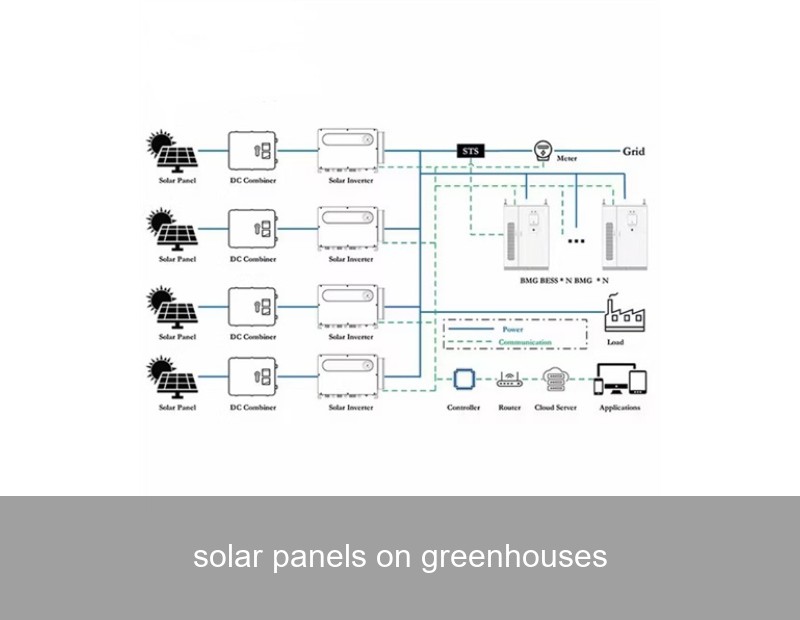
Imagine a structure that not only nurtures your crops but also powers your operations, turning sunlight into both food and electricity. This is the compelling promise of integrating solar panels on greenhouses. For farmers and commercial growers, this fusion of agrivoltaics and protected cultivation is more than a trend; it's a strategic response to rising energy costs and climate pressures. But how do you balance light for plants with energy generation? The answer lies in smart design and even smarter energy management. As a leader in advanced energy storage, Highjoule is at the forefront of making these dual-purpose systems not just feasible, but highly profitable and resilient.
Table of Contents
- The Challenge: Sky-High Energy Bills in Controlled Environment Agriculture
- The Data: Quantifying the Solar Greenhouse Potential
- The Symbiosis: How Solar and Crops Can Coexist
- Case Study: A Dutch Tomato Grower's Success Story
- The Key to Unlocking Value: Intelligent Energy Storage
- Highjoule's Role: Optimizing Your Agri-Solar Investment
- Looking to the Future
The Challenge: Sky-High Energy Bills in Controlled Environment Agriculture
Modern greenhouses are energy-intensive. Heating, cooling, ventilation, humidity control, and supplemental lighting—especially in climates like Northern Europe or the Northern US—can account for up to 30-40% of operating costs. With volatile fossil fuel prices and stringent carbon reduction targets, this model is financially and environmentally unsustainable. The obvious solution is the sun itself. But the traditional mindset has been that solar panels and greenhouses compete for the same resource: light. This has led to the perception that solar panels on greenhouses inevitably reduce crop yields, making them a non-starter for serious growers.
The Data: Quantifying the Solar Greenhouse Potential
Recent research and pilot projects are shattering this myth. A study by the University of Arizona found that semi-transparent photovoltaic (PV) panels on a greenhouse roof can generate significant electricity while reducing the internal temperature and water demand for certain crops—a major benefit in arid regions. The key metric is the Light Transmission (LT) percentage. While a standard opaque solar panel might block 100% of light, new technologies allow for selective transmission.
| Solar Panel Type for Greenhouses | Approx. Light Transmission | Best For |
|---|---|---|
| Opaque, Standard Silicon (Mounted on non-roof areas) | 0% | Perimeter shading, carports, adjacent land |
| Semi-Transparent (e.g., Thin-Film, BIPV) | 10% - 40% | Light-sensitive crops (e.g., lettuce, herbs), high-light regions |
| Spaced/Inter-row Arrays | 60% - 85% | High-light requirement crops (e.g., tomatoes, peppers) |
The goal isn't necessarily to cover the entire roof. Strategic placement can create microclimates, potentially improving crop quality by mitigating heat stress or sunscald. For a deeper dive into the science of agrivoltaics, the National Renewable Energy Laboratory (NREL) provides excellent resources.

Image: A modern agrivoltaic greenhouse concept. Source: Unsplash (Credit: American Public Power Association)
The Symbiosis: How Solar and Crops Can Coexist
So, how does it work in practice? Successful integration hinges on a few core principles:
- Crop-Specific Design: You wouldn't give a tomato and a mushroom the same light environment. The solar array layout must be tailored to the Photosynthetically Active Radiation (PAR) needs of the specific crop.
- Technology Choice: As the table shows, options range from standard panels mounted on south-facing walls or between greenhouse bays to innovative semi-transparent films applied directly to glass or polycarbonate.
- Dynamic Management: This is where the real magic happens. Imagine being able to channel excess solar power from a sunny afternoon to charge batteries that will heat the greenhouse on a cold night.
Case Study: A Dutch Tomato Grower's Success Story
Let's look at a real-world example from the Netherlands, a global leader in greenhouse technology. "Greenhouse 2030" (a composite of several real projects) installed a 2.3 MW rooftop solar system across 5 hectares of tomato greenhouses using a spaced-array design, maintaining 75% light transmission.
- Annual Solar Generation: 2.1 GWh
- Energy Cost Reduction: 40% in the first year.
- Carbon Savings: Approximately 950 tonnes of CO2 annually.
- Crop Impact: No statistically significant yield reduction for tomatoes. In fact, more uniform fruit quality was noted due to reduced peak temperature spikes.
The project's financial viability was supercharged by pairing it with a large-scale battery energy storage system (BESS). This allowed the grower to store cheap, self-produced solar energy and avoid drawing power from the grid during expensive peak periods. According to a Wageningen University & Research report, such hybrid systems are key to maximizing ROI for Dutch growers.
The Key to Unlocking Value: Intelligent Energy Storage
This case study highlights the critical piece of the puzzle. Simply putting solar panels on greenhouses solves only half the problem. Solar generation is intermittent—it doesn't align perfectly with a greenhouse's 24/7 energy demand. This mismatch can lead to:
- Exporting energy to the grid at low feed-in tariffs.
- Still needing to buy expensive grid power at night or on cloudy days.
- Missing out on demand charge savings from peak shaving.
An intelligent battery storage system transforms this static setup into a dynamic, money-saving asset. It acts as a buffer, storing surplus solar energy for when it's needed most.

Image: A modern battery energy storage system for industrial applications. Source: Unsplash (Credit: American Public Power Association)
Highjoule's Role: Optimizing Your Agri-Solar Investment
This is where Highjoule's expertise becomes indispensable. Since 2005, we've specialized in crafting intelligent storage solutions for complex energy profiles like those of modern greenhouses. Our systems don't just store energy; they optimize its use based on your crop's schedule, weather forecasts, and real-time electricity prices.
For a commercial greenhouse operation, a Highjoule Intelligent BESS can:
- Maximize Self-Consumption: Store midday solar peaks to power evening lighting or overnight heating, dramatically increasing the direct use of your free solar energy.
- Provide Peak Shaving: Automatically discharge the battery during utility peak demand periods, slashing costly demand charges on your electricity bill.
- Ensure Resilience: Keep critical climate control systems running during short grid outages, protecting your valuable crops from spoilage.
- Enable Revenue Streams: In some markets, our system can participate in grid services, turning your storage asset into an additional income source.
By integrating a Highjoule system with your solar panels on greenhouses, you create a closed-loop, resilient energy ecosystem. Our platform provides clear insights into both your energy flows and potential savings, putting you in complete control.
Looking to the Future
The integration of solar panels and advanced storage is redefining what a greenhouse can be: from a passive consumer to an active, intelligent energy producer. The technology is here, and the economics are increasingly compelling. The question is no longer "Can it be done?" but rather, "What is the optimal configuration for my specific crops, climate, and business goals?"
What crop in your operation has the light profile that could benefit most from a tailored agrivoltaic and storage solution?
 Inquiry
 Online Chat