


Solar Panels to Reduce Power Bills: A Smart Investment for Your Home and Business
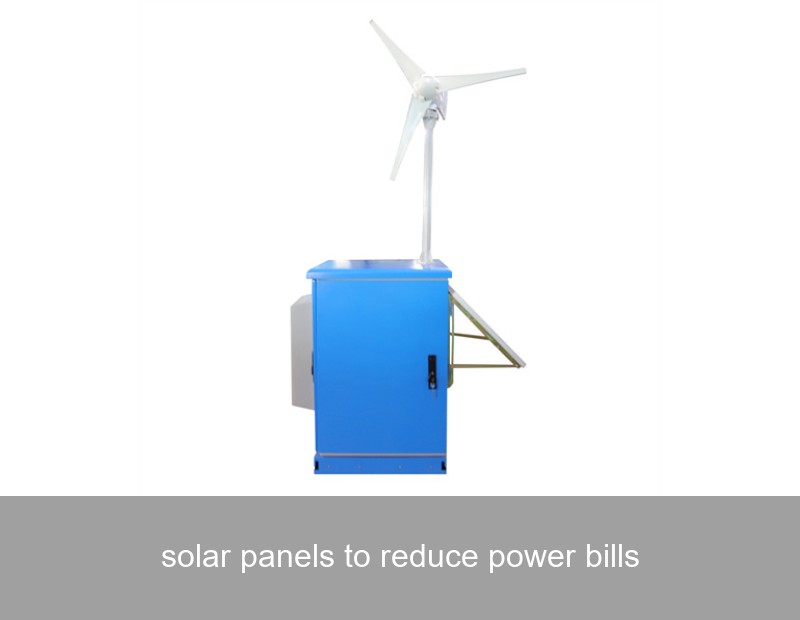
Let's talk about a universal truth: everyone wants to lower their monthly expenses. For homeowners and business operators, the electricity bill often stands as one of the most significant and fluctuating costs. It's a persistent line item that seems to only creep upward. But what if you could turn your roof or property into a personal power station, actively fighting back against rising energy rates? This isn't a futuristic dream; it's the present-day reality of using solar panels to reduce power bills. This article will guide you through the tangible financial benefits, the crucial role of modern energy storage, and how companies like Highjoule are making this transition smarter and more accessible than ever.
The Rising Cost Phenomenon: More Than Just a Seasonal Spike
We've all experienced it. A particularly hot summer leads to relentless air conditioning use, or a cold snap forces the heating system to work overtime. The result? A dreaded electricity bill that can be double or triple the usual amount. However, the issue runs deeper than seasonal demand. Grid infrastructure is aging, the transition to new energy sources requires investment, and global fuel market volatility directly impacts retail electricity prices. This creates a scenario where consumers feel powerless, subject to the whims of the market and utility rate hikes. The desire for predictability and control over this major expense is a primary driver for the solar revolution.
The Data: How Solar Panels Directly Slash Your Power Bills
The mechanism is beautifully simple. Solar photovoltaic (PV) panels convert sunlight into direct current (DC) electricity, which an inverter then changes to alternating current (AC) for use in your home or business. This self-generated power offsets what you need to pull from the utility grid. The math is straightforward: every kilowatt-hour (kWh) your solar system produces is a kWh you don't have to buy from your utility company.
According to the National Renewable Energy Laboratory (NREL), residential solar PV systems can typically reduce a household's electricity purchases from the grid by 70-90%, depending on location, system size, and energy consumption patterns. For commercial entities with large, flat rooftops, the savings can be even more substantial, directly lowering operational overhead. The key metric here is "levelized cost of energy" (LCOE), which for solar has plummeted over 90% in the last decade, making it one of the cheapest sources of new electricity in history.
The Bill Transformation: A Before-and-After Snapshot
| Cost Component | Traditional Utility Bill | Bill with Solar Panels Only | Bill with Solar + Storage (e.g., Highjoule) |
|---|---|---|---|
| Energy Usage Charge | High (100% grid power) | Low (60-90% offset) | Very Low to Zero (90-100% offset) |
| Peak Demand Charges (Commercial) | Very High | Moderately Reduced | Dramatically Reduced |
| Grid Dependency | 100% | High (no power at night/outages) | Minimal |
| Monthly Bill Predictability | Unpredictable | More Predictable | Highly Predictable |
Beyond the Panel: The Storage Revolution for True Energy Independence
Here's the catch with solar alone: the sun doesn't shine 24/7. Without a battery, excess solar energy produced in the midday sun is often sent back to the grid for a small credit (net metering), and you draw expensive grid power at night. This limits your bill reduction. Furthermore, in many regions, utility rate structures are shifting to less favorable net metering policies and higher "demand charges" for commercial users.
This is where advanced battery energy storage systems (BESS) become the game-changer. Think of storage as your personal energy savings account. You "deposit" excess solar energy during the day and "withdraw" it when you need it most—in the evening, during peak rate hours, or even during a grid outage. This maximizes self-consumption of your solar energy, shielding you from peak-time utility rates and providing invaluable backup power.

Image: A modern home energy system combining solar panels and battery storage. (Source: Unsplash, Photographer: Andreas Gücklhorn)
A Real-World Case Study: Freiburg, Germany
Let's look at a concrete example from Europe. A medium-sized manufacturing workshop in Freiburg, Germany, faced an average monthly electricity bill of €2,800, with significant demand charges. In 2022, they installed a 50 kW rooftop solar array paired with a 40 kWh Highjoule CubeStack commercial battery system.
- Result after 12 months: Their annual electricity procurement from the grid dropped by 82%.
- Peak demand reduction: The intelligent Highjoule energy management system deliberately used stored battery power to "shave" peak loads, reducing demand charges by over 60%.
- ROI: The combined system is projected to pay for itself in under 7 years, thanks in part to Germany's supportive regulatory environment for renewables. For the remaining 15+ years of the system's life, the energy produced is essentially free, drastically improving the business's bottom line.
How Highjoule's Smart, Integrated Solutions Maximize Your Savings
Founded in 2005, Highjoule has grown into a global leader by understanding that simply selling hardware isn't enough. Our mission is to deliver intelligent, efficient, and sustainable power *solutions*. For a homeowner or business looking to use solar panels to reduce power bills, the choice of storage technology and its brain—the energy management system (EMS)—is critical.
Highjoule's product suite, like the ResiCore for homes and CubeStack for commercial applications, is built on lithium iron phosphate (LFP) battery chemistry, renowned for its safety, longevity, and stability. But the real magic lies in our Adaptive EMS software. This system doesn't just store and release energy; it learns your consumption patterns, forecasts weather and solar production, and integrates with utility rate schedules (like Time-of-Use rates in California or dynamic tariffs in the EU).
It automatically makes thousands of decisions per day to optimize when to charge from solar, when to discharge to power your home, and when to potentially participate in grid services—all with the primary goal of minimizing your specific power bill. For microgrid applications, this intelligence ensures community resilience and cost savings.

Image: Utility-scale solar farms are driving down energy costs globally. (Source: Unsplash, Photographer: American Public Power Association)
Key Considerations to Maximize Your Bill Reduction
1. System Sizing is Everything
An undersized system won't cover your needs; an oversized one may not offer a good return. A Highjoule partner will analyze 12 months of your utility bills to design a system tailored to your consumption profile.
2. Understand Your Local Utility Policies
Net metering rules, feed-in tariffs, and rate structures vary wildly. In the U.S., the federal Investment Tax Credit (ITC) significantly lowers the upfront cost of solar + storage. Your strategy in Texas (deregulated market) will differ from one in a European country with a fixed tariff.
3. Plan for the Long Term
Consider future electric vehicle (EV) charging, a home addition, or business expansion. A modular system like Highjoule's allows for cost-effective capacity expansion later.
Your Energy Future: A Question of Control
The journey to significantly lower power bills through solar is now a proven path, but the difference between a good outcome and a great one hinges on integration and intelligence. It's no longer just about the panels on your roof; it's about having a smart, resilient system that stores and manages that energy to work precisely for your financial benefit.
So, as you look at your next electricity bill, what specific cost would you like to eliminate? Is it the volatile fuel adjustment charge, the steep commercial demand peak, or the simple anxiety of not knowing what your energy costs will be next year? How much control do you want over that line item?
 Inquiry
 Online Chat