


Understanding Solar Power Batteries Cost: A Smart Investment for Energy Independence
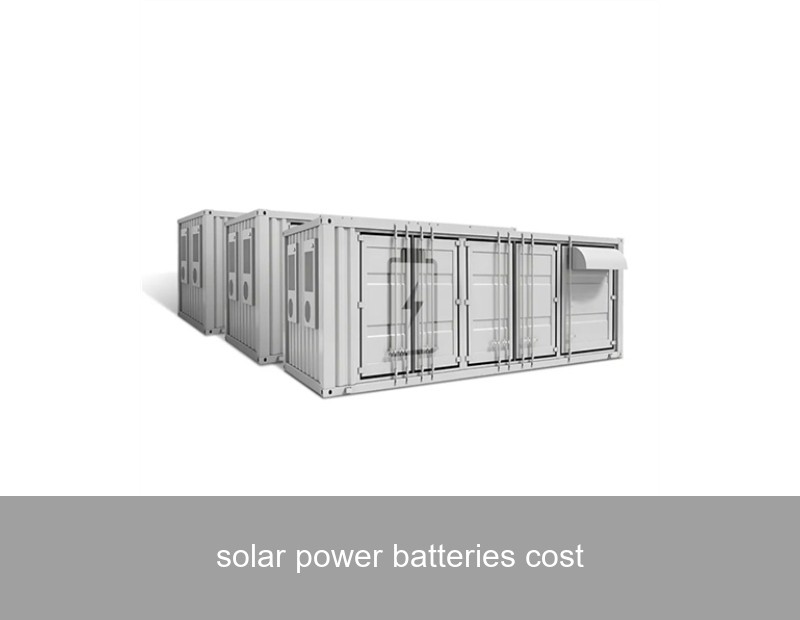
Thinking about going solar? You're not alone. Across Europe and the U.S., homeowners and businesses are embracing photovoltaic (PV) panels to slash electricity bills and reduce their carbon footprint. But there's a crucial piece of the puzzle many consider next: the battery. The conversation inevitably turns to solar power batteries cost. While the upfront price tag can give pause, understanding the full financial picture—from long-term savings to grid resilience—reveals it's less of an expense and more of a strategic investment. Let's break down the real value behind the cost.
Table of Contents
- The Phenomenon: Solar's Rise and the Storage Question
- Solar Battery Cost Breakdown: What Are You Paying For?
- The Savings Math: How a Battery Pays for Itself
- A Real-World Case: The Smith Residence in California
- Beyond Savings: The Intangible Value of Resilience
- Choosing Your System: Highjoule's Smart Solutions
- The Future Outlook: Costs, Incentives, and Your Next Step
The Phenomenon: Solar's Rise and the Storage Question
The solar energy boom is undeniable. According to the International Energy Agency (IEA), global renewable capacity additions soared by almost 50% in 2023, with solar PV accounting for three-quarters of this growth. Yet, this creates a new challenge: solar panels produce power when the sun shines, often peaking midday when your home's demand might be low. Without a battery, excess energy gets sold back to the grid at a lower rate, only for you to buy it back at night at a higher price. This mismatch is why the discussion about solar power batteries cost is so pivotal—it's the key to truly harnessing your own production.
This is where advanced energy storage systems (ESS) come in. Companies like Highjoule, a global leader since 2005, have pioneered intelligent battery storage that seamlessly integrates with your solar array, turning a one-way system into a resilient, personal energy network.
Solar Battery Cost Breakdown: What Are You Paying For?
So, what determines the cost? It's more than just a box with cells. A complete, safe, and efficient system comprises several key components:
- Battery Cells & Chemistry: Most modern systems use Lithium Iron Phosphate (LFP) due to its long lifespan, safety, and stability. While sometimes more expensive upfront than older chemistries, LFP offers better total cost of ownership.
- Battery Management System (BMS): The brain of the operation. A sophisticated BMS, like those in every Highjoule unit, ensures optimal performance, safety, and longevity by monitoring each cell.
- Power Conversion System (Inverter/Charger): This critical component converts DC electricity from the battery to AC for your home. An integrated, high-efficiency inverter minimizes energy loss.
- Software & Energy Management: Intelligent software learns your usage patterns, weather forecasts, and utility rates to automatically optimize when to store and when to discharge, maximizing your financial return.
- Installation & Professional Services: Proper system design, permitting, and installation by certified professionals are essential for safety, performance, and warranty compliance.
For a typical residential installation in the U.S. or Europe, the total installed cost for a quality solar battery system can range from $8,000 to $15,000, depending on capacity and brand. Highjoule's residential systems are designed with modularity in mind, allowing you to start with what you need and expand later, making the initial investment more manageable.
The Savings Math: How a Battery Pays for Itself
Viewing the cost in isolation is misleading. The true analysis is in the return on investment (ROI). Here’s how a battery generates value:
| Savings Mechanism | How It Works | Financial Impact |
|---|---|---|
| Increased Self-Consumption | Store excess daytime solar for use at night, avoiding grid purchase. | Can increase solar self-consumption from 30-40% to 70-80% or more. |
| Time-of-Use (TOU) Arbitrage | Store solar or cheap off-peak grid energy, use during expensive peak hours. | In regions with high peak rates, savings can be $500-$1,000+ annually. |
| Backup Power During Outages | Provides electricity during grid failures (often a critical value, not direct savings). | Prevents food spoilage, enables remote work, and provides security. |
| Grid Services & Incentives | Some utilities offer rebates or payments for allowing grid support (VPP programs). | Direct cash incentives or bill credits can significantly shorten payback period. |
When you factor in these ongoing savings, the payback period for a well-sized system in a favorable market can be between 7 to 12 years. Given that Highjoule's commercial and residential batteries are engineered for a lifespan of 15+ years, you're looking at years of essentially free, resilient power after the system pays for itself.
A Real-World Case: The Smith Residence in California
Let's make this tangible. The Smith family in Sacramento, CA, installed a 10 kW solar array in 2020. Despite having solar, they were still paying high bills due to Pacific Gas & Electric's steep Time-of-Use rates, where evening power costs over $0.40 per kWh.
In 2022, they added a Highjoule ResiPlus 10 battery system (10 kWh usable capacity). Here's the impact one year later, based on their monitored data:
- Annual Electricity Bill Pre-Battery: ~$900 (after solar credits).
- Annual Electricity Bill Post-Battery: ~$150 (primarily for winter grid top-ups).
- Annual Savings: $750.
- System Cost (after 26% Federal ITC): ~$11,000.
- Simple Payback Period: Just under 15 years.
But the story doesn't end there. California's Self-Generation Incentive Program (SGIP) provided an additional rebate of $3,500. Factoring this in, the Smiths' payback drops to under 10 years. Furthermore, they've experienced three brief grid outages where the battery automatically kept their lights, fridge, and internet running seamlessly—a value they now say is "priceless."

Beyond Savings: The Intangible Value of Resilience
While the financials are critical, the solar power batteries cost also buys resilience. Whether it's increasing severe weather events in the U.S. Midwest or grid stability concerns in parts of Europe, having a personal energy reserve is becoming a form of modern insurance. A Highjoule system with built-in islanding capability detects a grid failure in milliseconds and creates a secure microgrid for your home, ensuring continuity for medical devices, security systems, and peace of mind.
Choosing Your System: Highjoule's Smart Solutions
Navigating the cost and complexity is where partnering with an expert matters. Highjoule doesn't just sell hardware; we provide tailored power solutions. Our ResiPlus series for homes and CommEss series for businesses are built with scalable, LFP technology and feature our proprietary EnergyOS platform.
This AI-driven software is the differentiator. It doesn't just react; it forecasts. By analyzing your consumption, solar production forecasts, and real-time utility rate data, EnergyOS makes autonomous decisions to optimize your economic return. For our commercial clients, this can involve sophisticated demand charge management, shaving peak loads to avoid hefty utility fees. We handle the system design, advanced commissioning, and ongoing performance monitoring, ensuring you extract maximum value from your investment.
The Future Outlook: Costs, Incentives, and Your Next Step
Industry analysts from BloombergNEF report that battery pack prices are continuing a long-term downward trend, making systems more accessible. Coupled with strong government incentives like the U.S. Federal Investment Tax Credit (ITC) – which now covers 30% of storage costs even without solar – and similar programs in many European countries, the effective solar power batteries cost is more attractive than ever.
The question is no longer just "Can I afford a battery?" but rather "Can I afford *not* to have control over my energy future, given the rising grid costs and increasing climate volatility?"

What specific energy challenge—be it unpredictable bills, frequent outages, or a desire for true energy independence—is motivating you to look into a solar battery system today?
 Inquiry
 Online Chat