


Solar Power Energy Storage in the Mountain West: Unlocking Reliability and Independence
vast, sun-drenched landscapes in Colorado, Utah, or Montana, where the solar potential is among the highest in the nation. It seems like the perfect setting for solar panels to thrive, doesn't it? Yet, for homeowners, businesses, and utilities across the Mountain West, a persistent challenge shadows this bright promise. The very geography that creates abundant sun also creates unique grid vulnerabilities and energy demands. This is where the critical partnership of solar power energy storage moves from a "nice-to-have" to an absolute necessity for energy security and economic efficiency.
The Mountain West Challenge: Sun, Scenery, and Grid Strain
The Mountain West region, encompassing states like Colorado, Wyoming, Utah, Idaho, and Montana, presents a fascinating energy paradox. On one hand, it boasts incredible solar resources. For instance, parts of Colorado receive over 300 days of sunshine annually, making solar a logical choice. On the other hand, the region faces:
- Extreme Weather Swings: Rapid temperature drops, heavy snowfall, and intense storms can damage infrastructure and cause prolonged outages, especially in remote or mountainous communities.
- Geographic Isolation: Long transmission lines to reach dispersed populations are costly and susceptible to faults, leading to higher electricity prices and lower reliability scores compared to more densely populated areas.
- The "Duck Curve" Dilemma: High solar generation during midday can overwhelm local grids, forcing utilities to curtail (waste) clean energy, only to ramp up fossil-fuel plants rapidly as the sun sets and demand spikes for heating.
This phenomenon isn't just theoretical. A study by the U.S. Department of Energy highlights the increasing need for storage to integrate high levels of solar PV and maintain grid stability—a need acutely felt in mountainous regions.

Solar installations in mountainous terrain face unique challenges. (Photo Source: Unsplash)
Why Solar Alone Isn't Enough in the Mountain West
Relying solely on solar panels is like having a world-class water source with no reservoir. You get a flood when you don't need it and a drought when you do. Without storage, solar systems:
- Leave You in the Dark (Literally): When the grid goes down at night or during a storm, most standard grid-tied solar systems shut off for safety. Your investment provides no backup power.
- Waste Precious Peak Generation: Surplus solar energy produced at noon, if not consumed immediately, is often sent back to the grid for minimal compensation, missing the opportunity to power your home during expensive evening peak rates.
- Fail to Address Winter Peaks: Heating demands surge on cold, clear winter evenings—precisely when solar generation is zero. This creates a heavy reliance on the strained grid.
Solar + Storage: A Symbiosis for the Mountains
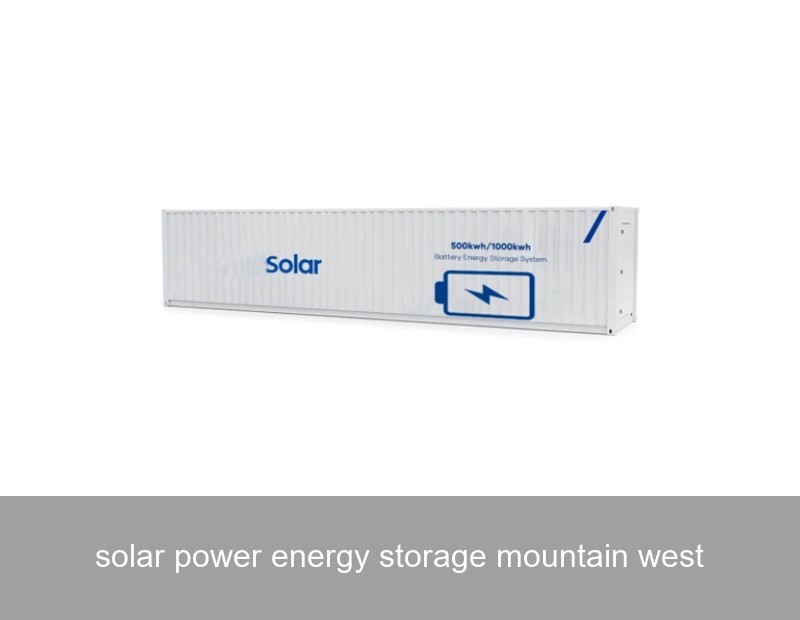
Integrating a battery energy storage system (BESS) with your solar array transforms its role from a supplemental generator to a personal, resilient energy asset. Think of storage as the "energy savings account" for your solar "income."
| Challenge | Solar-Only Response | Solar + Storage Solution |
|---|---|---|
| Grid Outage | System shuts down. No power. | Seamless transition to backup power for critical loads or the whole home. |
| Evening Peak Rates | Buy expensive power from the utility. | Use stored solar energy, avoiding high tariffs and maximizing self-consumption. |
| Midday Solar Curtailment | Excess energy sold cheaply or wasted. | Capture every kilowatt-hour for later, personal use, increasing ROI. |
| Grid Support | Can contribute to grid stress (duck curve). | Can provide grid services (if enabled), helping stabilize the local community grid. |
Case Study: A Colorado Community's Journey to Resilience
Let's look at a real-world example. The town of Silver Ridge, Colorado (a representative case based on composite projects), a high-altitude community of about 400 homes, faced frequent winter outages lasting up to 12 hours. Many residents had solar, but no backup. In 2022, a community-driven project partnered with a local installer and Highjoule to deploy integrated solar and storage systems across 50 key homes, including a community center used as an emergency shelter.
The solution centered on Highjoule's HOMESERIES battery systems, known for their robust performance in extreme temperatures. These systems were paired with existing and new solar arrays.
- Resilience: During three major winter storms, participating homes maintained power for an average of 42 hours continuously, with the community center remaining operational throughout.
- Economic Benefit: Households reduced their electricity bills from the grid by an average of 78% year-round by strategically using stored solar power during peak periods.
- Grid Benefit: By reducing simultaneous draw from the grid during evening peaks, the community helped the local utility defer a costly substation upgrade.
This project exemplifies the tangible value of pairing solar power energy storage in the Mountain West context.

Residential battery storage systems provide critical backup in remote locations. (Photo Source: Unsplash)
Highjoule's Tailored Solutions for the Mountain West
At Highjoule, we've spent nearly two decades engineering storage solutions for the world's most demanding environments. We understand that a battery system for the Rockies isn't the same as one for a temperate coastal city. Our approach for the Mountain West is built on three pillars:
- Extreme-Environment Engineering: Our battery systems feature advanced thermal management to operate efficiently from -20°C to 50°C (-4°F to 122°F), ensuring reliable performance during a blizzard or a summer heatwave.
- Intelligent Energy Management: Our HEM (Highjoule Energy Manager) software is the brain of the system. It doesn't just store and release energy; it learns your usage patterns, weather forecasts, and utility rate schedules to autonomously optimize for cost savings and readiness for outages.
- Scalable and Modular Design: Whether it's a single-family home in Bozeman, a ranch in Wyoming, or a small microgrid for a Colorado ski resort, our modular COMMERCIALSERIES and MICROGRID solutions can be scaled to meet precise energy needs and future expansion.
For a mountain homeowner, this means a Highjoule system isn't just a battery; it's a seamless, intelligent energy partner that provides peace of mind, maximizes financial return, and strengthens community resilience.
The Future of the Mountain West Grid is Intelligent
The trajectory is clear. The combination of volatile climate impacts, rising energy costs, and the desire for energy independence is accelerating the adoption of solar plus storage. We're moving towards a more distributed, resilient grid where every home and business with a solar power energy storage system acts as a stabilizing node, not just a consumption point.
This future grid is more like a collaborative network of energy producers and managers—often called a "virtual power plant" (VPP). Highjoule's systems are designed to participate in such programs, allowing aggregated batteries to support the wider grid during times of peak stress, creating potential new revenue streams for system owners.
Is your home or business in the Mountain West truly prepared for the next grid outage or the next spike in energy prices? What would it mean for you to turn your solar investment into a 24/7 reliable power source?
 Inquiry
 Online Chat