


Solar Power Lighting Tower: Illuminating the Future of Off-Grid and Temporary Lighting
Imagine a construction site buzzing with activity well after sunset, a remote community event glowing safely under the night sky, or an emergency response operation proceeding with clarity in a blackout. For decades, these scenarios were dominated by the roar, fumes, and ongoing cost of diesel-powered lighting towers. Today, a silent revolution is brightening our nights and transforming industries: the solar power lighting tower. Combining high-efficiency photovoltaics with advanced battery storage, these systems offer a clean, intelligent, and remarkably cost-effective alternative. As a global leader in advanced energy storage, Highjoule is at the forefront of this shift, integrating our smart battery technology into next-generation solar lighting solutions to deliver reliable, sustainable light wherever it's needed.
Table of Contents
- The Diesel Dilemma: Why the Old Model is Fading
- How Solar Lighting Towers Actually Work: More Than Just Panels and a Bulb
- The Illuminating Economic Case: Data-Driven Savings
- Real-World Case Study: A European Construction Giant's Transition
- Key Considerations When Choosing a Solar Lighting Tower
- The Highjoule Role: Smart Storage for Superior Solar Lighting
- Is the Future of Temporary Lighting 100% Solar?

Image Source: Unsplash (Representative image of solar lighting application)
The Diesel Dilemma: Why the Old Model is Fading
The traditional diesel lighting tower is a familiar sight, but its drawbacks are becoming impossible to ignore. Operators face a trifecta of challenges: cost volatility, environmental impact, and operational inefficiency.
- Soaring Operational Costs: Fuel is a constant, unpredictable expense. With diesel prices subject to geopolitical and market swings, budgeting for long-term projects becomes a gamble. Add in regular maintenance, engine repairs, and filter changes, and the total cost of ownership climbs steadily.
- Noise and Emissions: The constant drone of a diesel generator is more than a nuisance; it restricts working hours near residential areas, hospitals, or schools. Furthermore, the CO2 and particulate emissions directly contradict corporate sustainability goals and increasingly strict local emissions regulations, particularly in urban centers across Europe and North America.
- Logistical Burden: Diesel towers require refueling, which means scheduling deliveries, on-site fuel storage (with associated safety risks), and manual operation. In remote locations, this logistics chain becomes even more costly and complex.
This "diesel dilemma" creates a clear market pull for a better solution. Enter the solar alternative.
How Solar Lighting Towers Actually Work: More Than Just Panels and a Bulb
A modern solar power lighting tower is a sophisticated, integrated energy system. Its reliability hinges on the seamless interaction of three core components:
- The Solar Array: High-efficiency monocrystalline or bifacial photovoltaic panels capture sunlight during the day. Their tilt and orientation are often adjustable to maximize energy harvest across seasons.
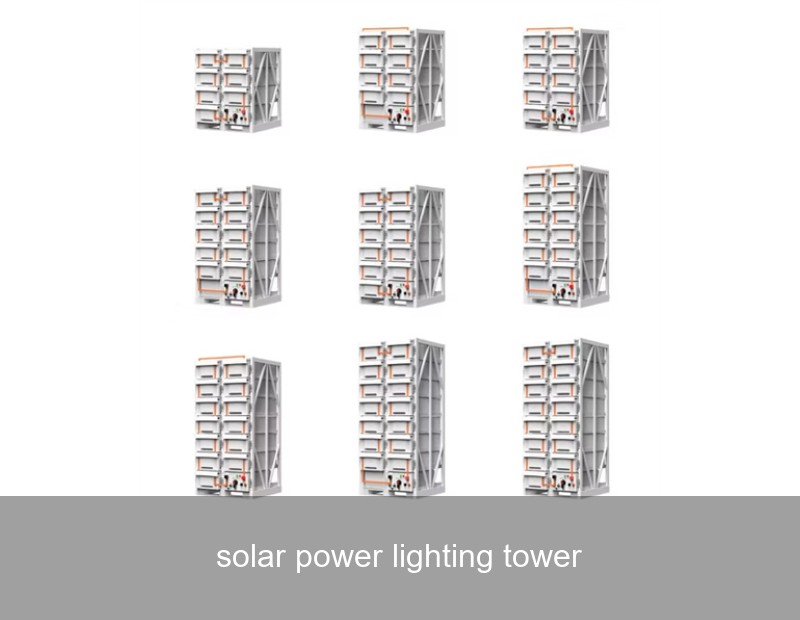
- The Brain and Brawn: Battery & Energy Management System (EMS): This is the heart of the system. The captured solar energy is stored not in simple lead-acid batteries, but in high-cycle life Lithium Iron Phosphate (LiFePO4) battery packs. The integrated EMS is the intelligent brain. It manages charging/discharging, protects the battery, and can often be programmed or monitored remotely. This is where Highjoule's expertise is critical. Our HI-Stack Commercial Battery Systems are engineered for exactly this type of demanding, daily-cycle application, offering exceptional depth of discharge and a lifespan that dwarfs traditional batteries.
- Efficient Lighting & Structure: The energy powers ultra-efficient LED luminaires, which provide bright, uniform light while consuming a fraction of the power of metal-halide lamps. The mast, often telescoping for easy transport, completes the robust, self-contained unit.
On a sunny day, the system fully recharges, storing enough energy to power the lights through the night and often for multiple cloudy days, thanks to oversized storage capacity.
The Illuminating Economic Case: Data-Driven Savings
Let's move from concept to numbers. The financial argument for solar lighting towers is compelling, especially when analyzed through a Total Cost of Ownership (TCO) lens over a 5-10 year period.
| Cost Factor | Diesel Lighting Tower | Solar Power Lighting Tower |
|---|---|---|
| Fuel Cost | High & Volatile ($2,000-$5,000+/year*) | ZERO |
| Routine Maintenance | High (Oil, filters, engine parts) | Very Low (Panel cleaning, system check) |
| Carbon Tax / Compliance | Increasingly Applicable | Typically Exempt |
| Noise Violation Risk | Possible | None |
| Operational Lifespan | ~5-7 years (engine-dependent) | 15+ years (panel & battery-dependent) |
*Estimate based on average diesel consumption. Source: Aggregated industry cost analysis.
The initial capital expenditure (CAPEX) for a solar tower may be higher, but the near-zero operational expenditure (OPEX) leads to a rapid payback period—often between 1-3 years depending on local fuel costs and sun hours. After that, the "fuel" is free, and maintenance is minimal.
Real-World Case Study: A European Construction Giant's Transition
Consider the experience of a major infrastructure contractor working on a 24-month highway bypass project in Southern Germany. Facing strict local noise ordinances and ambitious corporate carbon reduction targets, they piloted four Highjoule-integrated solar lighting towers against four traditional diesel units on a designated site section.
- Project Duration: 6-month pilot, extended night work required.
- Data Collected: Fuel consumption, maintenance hours, CO2 emissions, and operator feedback.
- Results:
- Cost Savings: The solar towers eliminated €8,400 in diesel costs for the pilot period alone.
- Emissions Avoided: Approximately 21 tonnes of CO2 were not emitted, equivalent to taking 5 passenger cars off the road for a year (EPA Equivalency Calculator).
- Operational Feedback: Site managers praised the silent operation, which allowed work to continue later into the night without community complaints. The "set and forget" reliability reduced on-site labor for refueling and checks.
This case underscores that the benefits are not just environmental or financial, but also practical and social, enhancing community relations and worksite efficiency.

Image Source: Unsplash (Representative image of solar and storage tech)
Key Considerations When Choosing a Solar Lighting Tower
Not all solar lighting towers are created equal. To ensure your investment pays off, focus on these critical specifications:
- Battery Capacity & Chemistry: This is your "fuel tank." Look for a capacity (in kWh) that guarantees runtime through the longest winter nights, plus a buffer for cloudy days. Insist on LiFePO4 chemistry for safety, longevity (3,500+ cycles), and performance across a wide temperature range. Highjoule's HI-Stack systems, for instance, are built with automotive-grade LiFePO4 cells and feature integrated thermal management for reliable operation from Scandinavian winters to Texan summers.
- Solar Panel Wattage & Efficiency: The recharge rate matters. Higher wattage panels recharge the battery faster, getting you back to 100% even on shorter winter days.
- Light Output & Control: Lumen output should match your area coverage needs. Look for towers with programmable lighting schedules and motion-sensing capabilities to further conserve energy.
- Remote Monitoring & Management: Can you check the state of charge, performance, and receive alerts via a smartphone app or web portal? This feature, often powered by the EMS, transforms a passive asset into a smart, manageable one.
The Highjoule Role: Smart Storage for Superior Solar Lighting
While Highjoule does not manufacture the complete lighting tower structure, we are the essential technology partner for leading OEMs. We provide the core intelligence and storage that make modern solar lighting towers viable and superior. Our role focuses on the Energy Management System (EMS) and the battery storage unit.
Think of it this way: the solar panels generate the energy, but it's Highjoule's technology that harnesses, stores, optimizes, and dispatches it with maximum efficiency. Our HI-Connect EMS platform allows for remote monitoring of state-of-charge, system health, and energy flows. For larger-scale temporary power needs—like powering an entire off-grid event site or a microgrid for a remote mining camp—Highjoule's containerized Battery Energy Storage Systems (BESS) can be paired with large solar arrays to provide silent, fume-free power for lighting, tools, and facilities, going far beyond a single tower's capability.
By partnering with equipment manufacturers, we enable them to offer a top-tier product that stands out on durability, intelligence, and return on investment.
Is the Future of Temporary Lighting 100% Solar?
The trajectory is clear. With advancements in PV efficiency, the continuous cost reduction in lithium batteries, and the global push for decarbonization, solar power lighting towers are moving from a niche alternative to the mainstream choice. They answer the critical needs of cost control, regulatory compliance, and environmental stewardship simultaneously.
However, the transition relies on choosing systems with robust, professional-grade energy storage at their core. This is where the partnership between innovative lighting manufacturers and seasoned storage experts like Highjoule becomes invaluable, ensuring the light doesn't just go on—it stays on, intelligently and sustainably.

Image Source: Unsplash (Representative image of scaled solar lighting deployment)
What's the biggest operational hurdle on your next project that a silent, zero-fuel lighting solution could solve?
 Inquiry
 Online Chat