


Solar Powered Automatic Irrigation System Project: A Guide to Sustainable Farming
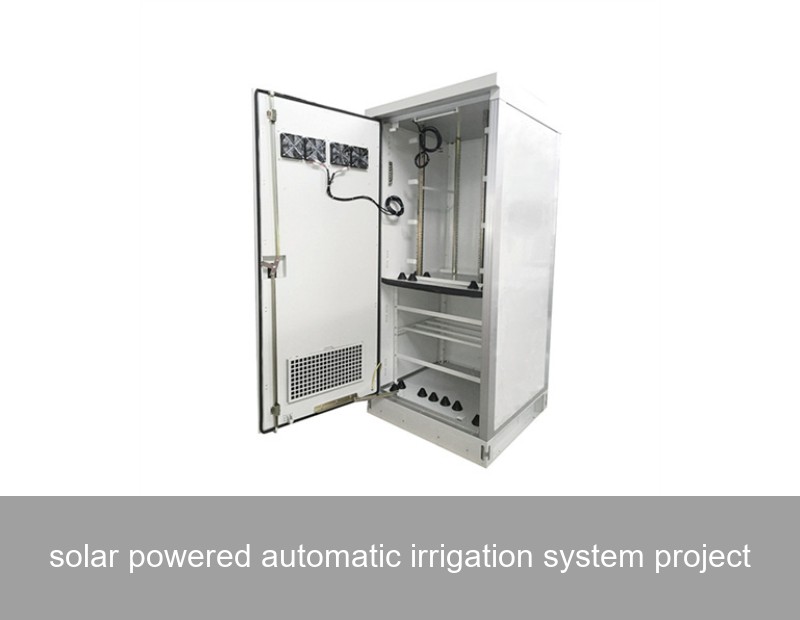
Imagine a farm that waters itself, drawing power not from the grid but from the sun overhead. This isn't science fiction; it's the reality enabled by a well-executed solar powered automatic irrigation system project. For farmers and land managers across Europe and the U.S., merging solar technology with precision irrigation is becoming a cornerstone of resilient, cost-effective, and sustainable agriculture. It addresses a fundamental tension: agriculture is both a major consumer of water and increasingly vulnerable to climate-induced water stress. By harnessing photovoltaic (PV) energy to power pumps, sensors, and controllers, these systems create a closed loop of sustainability. But the true genius lies not just in solar panels powering a pump; it's in the intelligent integration of energy generation, storage, and management that ensures water flows exactly when and where crops need it, day or night. As a leader in advanced energy storage, Highjoule understands that the reliability of such a critical system hinges on stable, predictable power—which is where modern battery technology steps in to complete the picture.
The Phenomenon: The Growing Thirst of Modern Agriculture
Agriculture accounts for approximately 70% of global freshwater withdrawals, according to the UN's Food and Agriculture Organization. In regions like California, the Mediterranean, or parts of Southern Europe, recurring droughts and heatwaves are putting immense pressure on traditional irrigation methods that often rely on erratic grid power or expensive diesel generators. The phenomenon is clear: volatile energy costs and uncertain water availability are squeezing farm profitability. The manual management of irrigation is not only labor-intensive but also prone to inefficiency—overwatering wastes precious resources and energy, while underwatering risks crop yield. The need for a autonomous, off-grid capable solution that leverages a free and abundant energy source—the sun—has never been more apparent.
The Smart Solution: Anatomy of a Solar Powered Automatic Irrigation System
A modern solar irrigation project is more than just solar panels and a water pump. It's an integrated system of several key components working in concert:
- Solar PV Array: The primary power source, sized to meet the total daily energy demand of the pump and control systems.
- Solar Pump Controller/Inverter: Converts the DC power from the panels to the AC or DC needed by the pump motor, often with maximum power point tracking (MPPT) to optimize energy harvest.
- Water Pump: The workhorse, typically a submersible or surface pump selected based on water source depth and required flow rate.
- Irrigation Network & Smart Controllers: Drip lines, sprinklers, or pivots managed by automated controllers that can schedule watering based on time or sensor input.
- Soil Moisture & Weather Sensors: The "brains" of the operation, providing real-time data to prevent over or under-watering.
- The Critical Enabler: Energy Storage System (ESS): This component, often overlooked in basic designs, is what transforms a daylight-only system into a 24/7 reliable asset. It stores excess solar energy for use during cloudy periods, at night, or for running control systems continuously.

Image: A solar array powering agricultural operations. Source: Unsplash
By the Numbers: Data-Driven Impact of Solar Irrigation
The benefits of a solar powered automatic irrigation system project are quantifiable. Let's look at the data:
| Metric | Traditional Grid/Diesel System | Solar-Powered System with Storage |
|---|---|---|
| Operational Energy Cost | High & Unpredictable | Near-Zero after ROI |
| Water Use Efficiency | Can be 40-60% efficient | Can reach 80-95% efficiency |
| Carbon Footprint | High (Diesel: ~2.68 kg CO₂/liter) | Minimal (Operational) |
| System Availability | Subject to Grid Outages/Fuel Supply | High (24/7 with storage) |
| Long-term ROI | Ongoing fuel/utility costs | Typically 4-8 years, then "free" energy |
Studies, such as those cited by the International Renewable Energy Agency (IRENA), highlight that solar for water pumping can reduce diesel consumption by billions of liters annually if adopted widely.
Case Study: A California Vineyard's Transformation
Let's ground this in reality. A 50-acre vineyard in Sonoma County, California, faced soaring electricity costs and mandatory water-use restrictions during drought years. Their diesel backup was costly and unreliable for their drip irrigation system. In 2021, they initiated a comprehensive solar powered automatic irrigation system project.
The Solution: A 45 kW ground-mounted solar array was installed, paired not just with a new pump, but with a Highjoule HI-Stack 30 commercial battery storage system. Soil moisture sensors were deployed across different terroirs.
The Outcome (Data after 2 years):
- Energy Cost Reduction: Eliminated $18,000 annual grid/diesel costs.
- Water Savings: Precise irrigation reduced water usage by 35%.
- Increased Resilience: During a 3-day grid outage (wildfire prevention shutoff), the Highjoule ESS powered the entire irrigation cycle and critical monitoring systems, saving a crucial pre-harvest watering.
- Yield Consistency: More precise water stress management contributed to a noted improvement in grape Brix level consistency across the estate.
This case underscores that the project's success was not solely due to solar panels, but to the integration of storage that provided control and resilience.
The Beating Heart: Why Energy Storage is the Unsung Hero
Many initial solar irrigation designs skip storage to save cost. This is a short-sighted approach. Without a battery, irrigation is forcibly limited to sunny daylight hours, which may not align with optimal watering times (e.g., early morning or evening to reduce evaporation). More critically, it leaves the system vulnerable to passing clouds or variable weather, causing pump shutdowns and inconsistent water pressure. An Energy Storage System acts as a buffer and a reservoir of power, just as a water tank is a reservoir of water. It ensures the smooth, uninterrupted operation of both the pump and the sophisticated sensors and controllers that make the system "smart" and automatic. This is where Highjoule's expertise becomes pivotal.
Highjoule's Role: Powering Reliability Beyond Daylight
At Highjoule, we specialize in the component that turns a good solar project into a great one: intelligent, durable battery energy storage systems (BESS). For a commercial or industrial-scale solar powered automatic irrigation system project, reliability is non-negotiable. Our solutions, like the HI-Stack series for commercial use or integrated microgrid controllers for larger agricultural complexes, are designed for this very purpose.
Our BESS provides three key functions in an irrigation project:
- Energy Time-Shifting: Store excess midday solar energy for use during morning/evening irrigation windows or overnight system operation.
- Voltage & Frequency Stabilization: Provide "clean," stable power to sensitive pump motors and electronics, extending their lifespan.
- Full Off-Grid Capability: Enable the entire irrigation system to operate independently of the utility grid, a critical feature for remote farms or areas with unreliable infrastructure.
By incorporating a Highjoule storage system, farmers are not just buying a battery; they are investing in the operational certainty of their water supply, which directly protects their crop yield and revenue.

Image: A modern battery energy storage system for industrial applications. Source: Unsplash
Planning Your Project: Key Implementation Steps
Embarking on your own project requires careful planning:
- Assessment & Design: Conduct a detailed site survey. Determine water needs (flow, pressure), solar resource, and load profile. This stage is crucial for correctly sizing both the solar array and the storage system. Under-sizing storage is a common pitfall.
- Component Selection: Choose high-efficiency, corrosion-resistant components suited for agricultural environments. Partner with technology providers, like Highjoule, who understand the duty cycle and environmental demands of farming.
- Smart Integration: Ensure the irrigation controller, sensors, solar inverter, and battery management system can communicate. A unified monitoring platform is invaluable.
- Financing & Incentives: Explore available grants, tax credits (like the U.S. Investment Tax Credit for solar+storage), and green financing options prevalent in the EU and U.S. The U.S. Department of Energy and the European Commission often have relevant funding avenues.
- Installation & Commissioning: Work with certified installers. Thoroughly test the system under different conditions.
The Future Field: What's Next for Smart Farm Energy?
The convergence of solar power, advanced storage, IoT sensors, and AI is creating the truly autonomous farm. Future solar powered automatic irrigation system projects will likely integrate directly with weather forecasting APIs, allowing the system to pre-charge batteries ahead of a cloudy week or adjust watering based on predicted evapotranspiration. The role of storage will evolve from a simple battery to the central energy management hub for the entire farmstead, potentially powering electric farm vehicles and processing facilities. The question for forward-thinking farmers and agribusinesses is no longer if to adopt solar irrigation, but how smart and resilient they can make their system to future-proof their operations against climate and market volatility.
Is your agricultural operation ready to explore how a solar-powered irrigation system, backed by reliable energy storage, could secure your water and energy independence for the next harvest and beyond?
 Inquiry
 Online Chat