


Solar Powered Irrigation Pumps: The Ultimate Guide to Sustainable Farming
Imagine a farm where the very resource that grows the crops—the sun—also powers the irrigation system. This isn't a futuristic dream; it's the reality of solar powered irrigation pumps. For farmers across Europe and the U.S., rising energy costs and the push for sustainability are more than just trends; they're pressing challenges that impact the bottom line. The solution, increasingly, is harnessing solar energy to pump water. It’s a simple, powerful idea: use free, abundant sunlight to power the pumps that nourish your fields. In this guide, we'll explore how this technology works, its undeniable benefits, and how pairing it with smart energy storage, like solutions from Highjoule, unlocks true energy independence and resilience for modern agriculture.
Table of Contents
- The Challenge: Energy Costs and Water Security
- How Do Solar Powered Irrigation Pumps Work?
- Key Benefits: Beyond Just "Going Green"
- The Critical Piece: Why Solar Alone Isn't Enough
- The Highjoule Solution: Intelligent Storage for 24/7 Water Security
- Real-World Impact: A Case Study from California
The Challenge: Energy Costs and Water Security
Farmers have always been at the mercy of nature, but today's pressures are multifaceted. In regions like Southern Europe and the American Southwest, irrigation is essential for crop survival, yet it's a major operational expense. Traditional diesel or grid-electric pumps tie farming costs to volatile fuel prices and electricity rates. Furthermore, grid reliability can be an issue in remote agricultural areas, and diesel generators bring noise, pollution, and ongoing maintenance. The phenomenon is clear: to remain profitable and sustainable, agriculture needs a decoupling from these unpredictable energy inputs.
How Do Solar Powered Irrigation Pumps Work?
At its core, a solar irrigation system converts sunlight into water flow. Here’s the basic setup:
- Solar Photovoltaic (PV) Array: A series of solar panels, typically mounted on the ground or a tracking structure, capture sunlight.
- Pump Controller/Inverter: This crucial device converts the direct current (DC) produced by the panels into the alternating current (AC) needed for most pumps. It also regulates voltage and protects the system.
- Water Pump: This can be a surface pump for canals or ponds, or a submersible pump for wells and boreholes. The pump type is selected based on water source and required pressure.
- Water Delivery System: The existing network of pipes, hoses, or drip irrigation lines that carries the water to the crops.

Image source: Unsplash - Representative image of solar-powered agriculture.
The beauty of the system is its elegant simplicity during the day. When the sun shines, the pump runs. But what happens on cloudy days, at night, or when water demand peaks at dawn? This is where the conventional system hits a limit.
Key Benefits: Beyond Just "Going Green"
Adopting solar for irrigation isn't merely an environmental statement; it's a strategic business decision.
- Drastically Reduced Operating Costs: After the initial investment, the "fuel" (sunlight) is free. This shields farmers from energy price spikes.
- Low Maintenance & High Reliability: Solar PV systems have few moving parts, requiring significantly less maintenance than diesel engines.
- Energy Independence: Operate your essential irrigation off-grid or reduce grid dependence, ensuring water access regardless of utility outages.
- Environmental Sustainability: Zero on-site emissions, reducing the farm's carbon footprint—a growing market advantage.
- Government Incentives: Many governments, including the U.S. (via USDA REAP grants) and EU member states, offer subsidies, tax credits, or favorable loans to accelerate adoption. (You can learn more about U.S. federal policies at the U.S. Department of Energy).
The Critical Piece: Why Solar Alone Isn't Enough
Here's the catch: solar irradiation is intermittent. Crops often need water in the early morning or evening to reduce evaporation loss, times when solar output is low. Relying solely on solar panels means your pump's schedule is forced onto the sun's schedule, which isn't always optimal for crop health or water efficiency. This gap between energy production and energy demand is the single biggest hurdle to maximizing the value of a solar irrigation system.
The Highjoule Solution: Intelligent Storage for 24/7 Water Security
This is where advanced energy storage transforms a good system into a perfect one. By integrating a battery energy storage system (BESS), you can store excess solar energy generated at midday and use it to power the pump whenever it's needed. Highjoule, with nearly two decades of expertise since 2005, specializes in this exact integration.
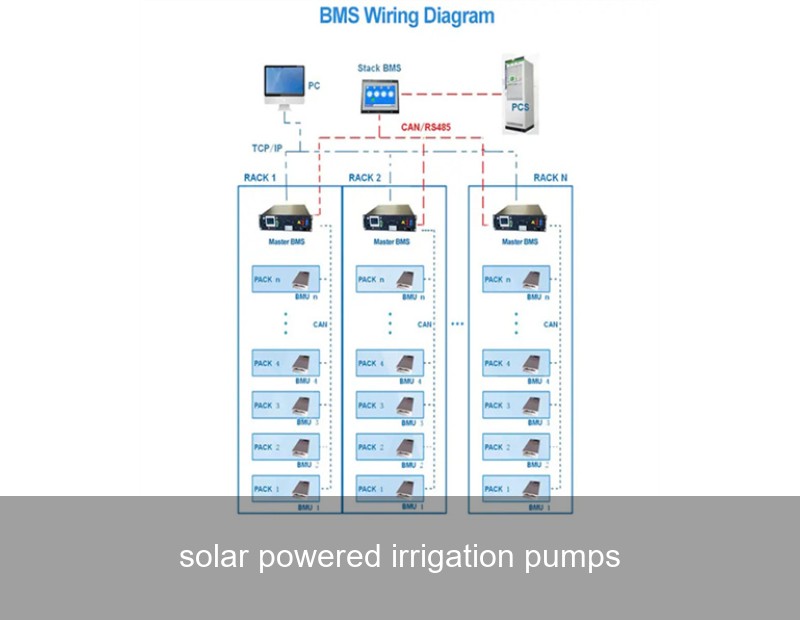
Our HI-Stack Commercial & Industrial Battery Systems are designed for rugged, reliable performance in agricultural settings. Here’s how we bridge the gap:
- Demand Shifting: Store cheap, self-generated solar power and run the pump during peak sun or optimal irrigation times, day or night.
- Uninterrupted Operation: Our systems provide seamless backup power, ensuring irrigation continues during grid outages or periods of low sunlight.
- Intelligent Energy Management: Highjoule's smart controllers can prioritize solar self-consumption, manage grid import/export, and schedule pumping cycles to align with water needs and electricity tariff rates, maximizing savings.
- Scalability: Whether you're a smallholder or managing a large industrial farm, our modular systems can be scaled to match your specific water volume and pressure requirements.

Image source: Unsplash - Representative image of modern battery storage technology.
For remote or microgrid applications, Highjoule provides complete, containerized Microgrid Solutions that combine solar generation, battery storage, and advanced control systems to create a self-sufficient water and power hub for the entire farm operation.
Real-World Impact: A Case Study from California
Let's look at the data. A 100-acre almond orchard in California's Central Valley faced annual electricity costs of over $28,000 for its grid-tied irrigation pumps. Water demand was highest in the hot summer months, coinciding with peak utility rates and grid strain.
The Solution: The farm installed a 250 kW solar PV array paired with a 500 kWh Highjoule HI-Stack battery system.
The Results (after 12 months):
| Metric | Before | After |
|---|---|---|
| Grid Electricity for Irrigation | ~320,000 kWh/yr | ~45,000 kWh/yr |
| Energy Cost for Irrigation | $28,000+ | $4,000 |
| Grid Demand During Peak | High, incurring demand charges | Minimal, charges avoided |
| Irrigation Scheduling | Limited to off-peak grid windows | Optimal for crop needs (early morning) |
The system paid for itself in under 7 years, and now provides nearly free irrigation while enhancing the farm's resilience to public safety power shutoffs, which are increasingly common in the state. (Studies on agricultural energy use are available from institutions like the Food and Agriculture Organization of the UN).
Making the Switch: What to Consider
Thinking about a solar-powered irrigation pump? Here’s a quick checklist:
- Water Source & Demand: Assess your well depth, flow rate, and daily/seasonal water needs.
- Solar Resource: Evaluate your site's solar exposure (tools from the European Commission's PVGIS can help).
- Energy Storage: Seriously consider battery storage from the start. It's not an add-on; it's a force multiplier for reliability and ROI.
- System Sizing & Partner: Work with an experienced integrator who understands both agronomy and energy systems. Highjoule partners with a global network of certified installers to design, deliver, and support turnkey solutions.
The Future of Farming is Self-Powered
Solar powered irrigation pumps represent a fundamental shift toward autonomous, cost-effective, and sustainable agriculture. When enhanced with intelligent energy storage from a trusted provider like Highjoule, farmers gain complete control over their most critical inputs: water and energy. The technology is proven, the economics are compelling, and the time for resilience is now.
What would the ability to irrigate on your own terms—completely free from fuel costs and grid schedules—do for the productivity and future of your farm?
 Inquiry
 Online Chat