


Understanding the Global Ripple Effect of Solar Price in China Today
If you're exploring solar energy for your home or business in Europe or the US, you've likely encountered a surprising trend: increasingly affordable prices. But did you know that a significant driver of this trend originates thousands of miles away? The "solar price in China today" isn't just a local market metric; it's a powerful force shaping the global clean energy landscape. As a world-leading manufacturer, China's economies of scale, technological advancements, and supply chain dominance directly influence the cost and accessibility of photovoltaic (PV) modules worldwide. This article will demystify this connection and explore what it means for your energy independence journey, highlighting how companies like Highjoule leverage these global dynamics to deliver superior, intelligent storage solutions.
Table of Contents
- The China Price Phenomenon: More Than Just Cheap Modules
- Data: Decoding the Global Impact
- Case Study: A German Industrial Park's Strategic Shift
- Beyond the Module: The Total System Cost Perspective
- Highjoule: The Intelligent Storage Advantage
- Future Outlook and Your Role
The China Price Phenomenon: More Than Just Cheap Modules
For over a decade, China's solar industry has been on a remarkable trajectory. It's not simply about lower labor costs. It's a story of vertical integration, massive state-backed and private investment in R&D, and the creation of the world's most efficient solar manufacturing ecosystem. From polysilicon to ingots, wafers, cells, and final panel assembly, Chinese companies control a dominant share of each stage. This control allows for relentless innovation and cost reduction. When we talk about the "solar price in China today," we're referring to the output of this highly optimized machine. The result? High-efficiency monocrystalline PERC, TOPCon, and even heterojunction (HJT) panels are produced at scales and prices that are challenging for manufacturers elsewhere to match. This creates a double-edged sword: it accelerates the global energy transition through affordability but also creates supply chain dependencies.

Credit: Unsplash - Solar Farm. Global solar deployment is heavily influenced by module pricing trends.
Data: Decoding the Global Impact
Let's look at the numbers. According to the International Energy Agency (IEA), China is home to over 80% of the world's manufacturing capacity for all key stages of solar panel production. This concentration has driven a stunning over 80% reduction in global solar PV module prices since 2010. In 2023, module prices in Europe and the U.S., while higher than in China due to tariffs, logistics, and distributor margins, still largely follow the downward trend set by Chinese benchmark prices. For instance, a price drop for Chinese modules can, within a quarter, translate to more competitive bids for utility-scale projects in Texas or commercial rooftop installations in Spain. However, this reliance has sparked debates on energy security and resilience, prompting regions like the EU and US to develop their own manufacturing incentives, such as the EU Solar Strategy and the U.S. Inflation Reduction Act (IRA).
Case Study: A German Industrial Park's Strategic Shift
Consider the real-world example of a mid-sized industrial park in North Rhine-Westphalia, Germany. Facing volatile electricity prices and ambitious corporate sustainability targets, the park's management decided in 2022 to invest in a 2.5 MW rooftop solar system. Their initial procurement analysis showed that modules sourced directly from Chinese manufacturers were approximately 25-30% cheaper than European-made alternatives at the time. This significant upfront cost saving allowed them to allocate a larger portion of their budget to a critical, often overlooked component: a sophisticated battery energy storage system (BESS).
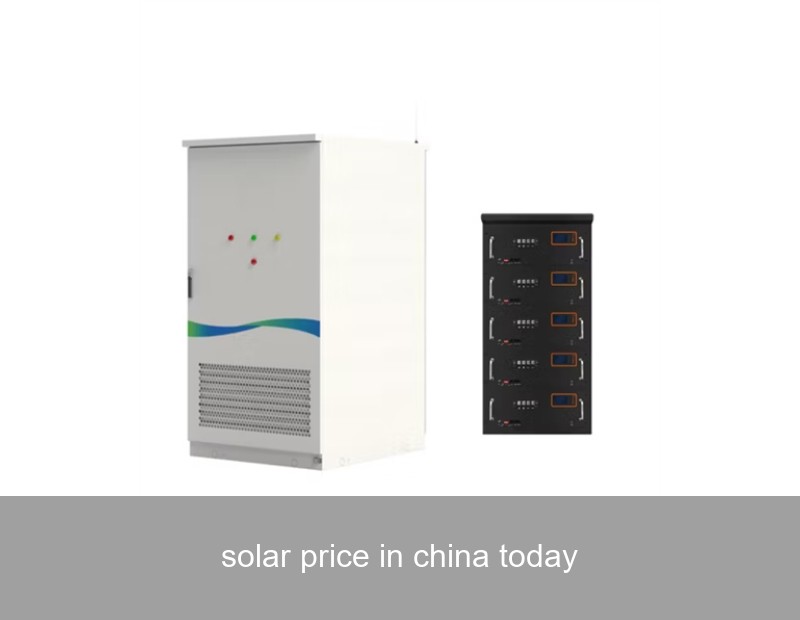
They partnered with Highjoule to integrate a 1 MWh Highjoule C&I Stack battery system. The logic was powerful: the competitively priced solar panels would generate abundant, low-cost energy, but without storage, excess power at midday would be fed back to the grid at low rates, while they would still buy expensive power in the evening. The Highjoule system, with its advanced energy management software, stores midday surplus and dispatches it during peak price hours. The result? A 68% reduction in their grid electricity purchases and a project payback period shortened by nearly 3 years. This case illustrates the holistic thinking modern energy projects require: leveraging global supply chains for generation while investing in smart, localized storage for control and resilience.
| Component | Specification | Strategic Rationale |
|---|---|---|
| Solar PV Modules | 2.5 MW, Tier-1 Chinese Manufacturer | Maximize generation capacity per initial euro invested. |
| Battery Storage (Highjoule C&I Stack) | 1 MWh, Lithium Iron Phosphate (LFP) | Enable energy time-shifting, peak shaving, and grid services. |
| Key Outcome | 68% grid demand reduction | Translated directly to cost savings and energy independence. |
Beyond the Module: The Total System Cost Perspective
While module costs are crucial, they are just one piece of the puzzle. For an end-user, the "solar price" that truly matters is the Levelized Cost of Energy (LCOE) – the total lifetime cost of the system divided by the energy it produces. This is where balance of system (BOS) costs – inverters, mounting, wiring, and critically, installation labor – play a massive role. In the US and Europe, these "soft costs" remain significantly higher than in China. Furthermore, the true value of a solar installation is now unlocked by pairing it with storage. This is the paradigm shift. The conversation is moving from "how cheap are the panels?" to "how can my entire energy system optimize self-consumption, protect me from outages, and provide grid stability?"
Highjoule: The Intelligent Storage Advantage
This is precisely where Highjoule's expertise becomes indispensable. Founded in 2005, Highjoule has grown into a global leader not by manufacturing panels, but by mastering the intelligence behind the power. We understand that the value of affordable solar is lost without reliable storage and smart management. Our product suites are designed to seamlessly integrate with solar arrays, regardless of module origin, to maximize return on investment.
- For Homes (Highjoule Home Hub): Our residential systems use safe, long-life LFP battery chemistry and AI-driven software to learn your consumption patterns. It automatically decides when to store solar energy, power your home, or sell back to the grid, ensuring you get the most financial benefit from every kilowatt-hour your panels produce.
- For Business & Industry (Highjoule C&I Stack & Grid Matrix): These scalable, containerized solutions offer more than backup power. They provide active energy management for peak shaving, demand charge reduction, and participation in grid service markets, turning your solar investment into a revenue-generating asset. Our systems are designed with interoperability in mind, fitting into diverse project landscapes.
By focusing on storage intelligence, Highjoule helps customers transcend the simple economics of panel pricing. We enable them to build resilient, efficient, and truly sustainable energy ecosystems.

Credit: Unsplash - Home Solar and Storage. Intelligent storage, like Highjoule's Home Hub, is key to maximizing solar value.
Future Outlook and Your Role
The solar industry is dynamic. Geopolitical factors, trade policies, and new technologies like perovskite solar cells will continue to influence the "solar price in China today" and its global echoes. While onshoring efforts in the West are important for supply chain diversity, China's cost and technological leadership in PV manufacturing is likely to persist for the foreseeable future. Therefore, the strategic approach for consumers and businesses is not to fixate on a single component's origin but to focus on building a robust, intelligent system. The future belongs to integrated solar-plus-storage solutions that provide energy sovereignty.
So, as you evaluate your path to clean energy, ask yourself this: Is your primary goal the lowest upfront panel cost, or is it achieving the highest level of energy independence and long-term savings over the next 25 years? How will you ensure your solar investment remains resilient and valuable amidst fluctuating grid prices and policies?
 Inquiry
 Online Chat