


Finding the Right Solar System for Sale in South Africa: A Guide to Smart Energy Independence
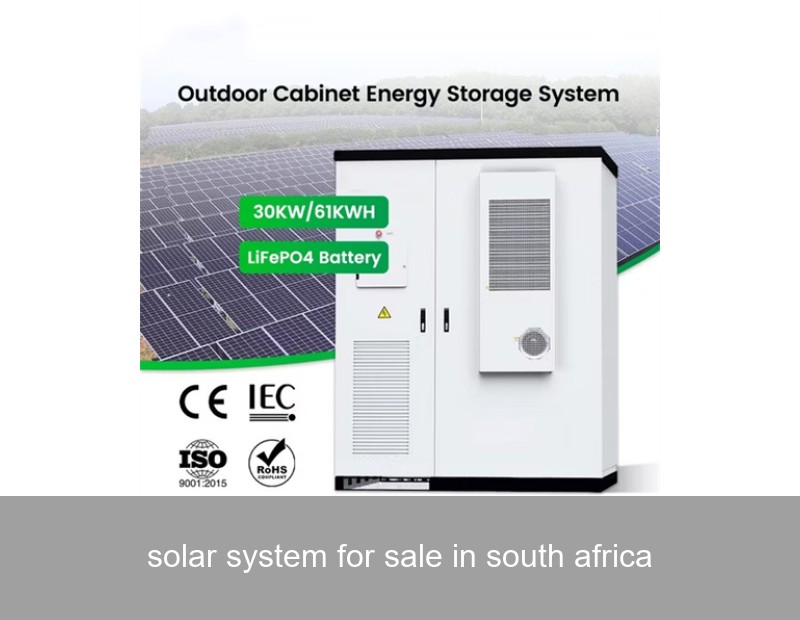
If you're in South Africa and researching a solar system for sale, you're not just shopping for panels and batteries. You're investing in resilience, cost control, and a sustainable future. The South African energy landscape, marked by persistent load-shedding and rising electricity costs, has transformed solar power from a luxury into a critical solution for homes and businesses alike. But with so many options, how do you ensure your investment is intelligent, efficient, and built to last? This guide will walk you through the key considerations, backed by data and real-world examples, to help you navigate your journey toward energy independence.
Table of Contents
- The South African Energy Reality: More Than Just Load-Shedding
- Beyond the Panels: The Critical Role of the Battery Storage System
- Case Study: A Johannesburg Manufacturing Plant's Transformation
- Key Components of a High-Performance Solar System
- Why Highjoule's Solutions Are Engineered for South Africa's Demands
- Your Path to Power: Questions to Ask Before You Buy
The South African Energy Reality: More Than Just Load-Shedding
We all know the immediate pain: the schedule, the darkness, the disrupted plans. But the impact of load-shedding and an unstable grid runs much deeper. For businesses, it means lost productivity, damaged equipment, and data risks. For families, it's about more than inconvenience—it's about food spoilage, security concerns, and the relentless climb of the electricity tariff. The Council for Scientific and Industrial Research (CSIR) in South Africa regularly reports that renewable energy sources, particularly solar PV, are leading the charge in new generation capacity, highlighting a fundamental shift in the country's energy mix.
This isn't a temporary crisis; it's a structural shift. Investing in a solar system is now a strategic financial decision. The right system doesn't just keep the lights on; it locks in your energy costs for decades, protects your assets, and increases property value. The question has evolved from "Should I go solar?" to "How do I choose the best solar system for sale in South Africa for my specific needs?"
Beyond the Panels: The Critical Role of the Battery Storage System
Many first-time buyers focus solely on solar panels. While panels are the engine that captures the sun's energy, the battery energy storage system (BESS) is the intelligent heart of a true off-grid or backup solution. It's what turns intermittent sunlight into reliable, 24/7 power. Think of it this way: panels generate power during the day, but your highest energy use might be in the evening. Without storage, you'd still be reliant on the grid during peak hours and powerless at night during load-shedding.
A high-quality BESS does more than just store energy. It manages the flow of electricity with precision, prioritizing solar consumption, ensuring seamless backup during grid failures, and protecting your sensitive electronics from surges. The technology inside—particularly the battery chemistry and the energy management software—is what separates a basic setup from a resilient power plant.

Image source: Unsplash (Representative image of a residential battery system)
Lithium-Ion vs. Other Technologies
When evaluating a solar system for sale, the battery choice is paramount. Most modern systems use Lithium Iron Phosphate (LiFePO4) batteries, and for good reason:
| Feature | Lithium-Ion (LiFePO4) | Traditional Lead-Acid |
|---|---|---|
| Lifespan & Cycles | 6,000+ cycles (10-15+ years) | 1,000-1,500 cycles (3-5 years) |
| Depth of Discharge | Up to 90%+ usable capacity | ~50% to avoid damage |
| Efficiency | >95% round-trip efficiency | 70-85% efficiency |
| Maintenance | Virtually maintenance-free | Requires regular watering and checks |
The data is clear: while the upfront cost of lithium-ion is higher, its total cost of ownership and performance over time make it the only sensible choice for a system designed to provide long-term energy security.
Case Study: A Johannesburg Manufacturing Plant's Transformation
Let's look at a real example from the industrial sector. A medium-sized plastic injection molding plant in Johannesburg faced crippling downtime due to stage 4-6 load-shedding. Running 12-hour shifts, a single 2-hour outage meant halting production lines, risking spoilage of materials in mid-process, and paying staff for idle time.
Their Solution & Results: In 2023, they installed a tailored 250 kW solar PV array coupled with a 500 kWh Highjoule industrial battery storage system. The system was designed not just for backup, but for strategic "peak shaving"—using stored solar energy to avoid drawing expensive grid power during high-tariff periods.
- Energy Cost Savings: Reduced grid electricity consumption by 75% during daylight operations.
- Downtime Eliminated: Zero production losses due to load-shedding in the 12 months post-installation.
- ROI Timeline: Projected payback period of 4.2 years based on combined savings from avoided diesel generation (previous stop-gap) and reduced municipal energy bills.
- Sustainability Impact: Offsets approximately 320 tonnes of CO2 annually, aligning with corporate sustainability goals.
This case underscores that a well-designed solar system for sale is a capital investment with a measurable, attractive return, not just an expense.
Key Components of a High-Performance Solar System
To make an informed decision, you need to understand the core components:
- Solar Panels (PV Modules): Convert sunlight to DC electricity. Look for tier-1 manufacturers with strong warranties (25+ years performance).
- Inverters: The brain of the system. Hybrid inverters convert DC to AC for home use and manage battery charging/discharging. Highjoule's systems feature integrated, smart inverters that allow for precise control and monitoring.
- Battery Storage System: As discussed, the reservoir of power. Capacity (kWh) determines how long you can run; power rating (kW) determines what appliances you can run simultaneously.
- Energy Management System (EMS): The software intelligence. A good EMS, like the one in every Highjoule unit, learns your usage patterns, optimizes for self-consumption, and can be controlled via a user-friendly app.
- Balance of System (BoS): Mounting, cabling, switchgear, and safety components. Quality here ensures durability and safety over decades.

Image source: Unsplash (Representative image of a residential solar installation)
Why Highjoule's Solutions Are Engineered for South Africa's Demands
As a global leader in advanced energy storage since 2005, Highjoule doesn't offer one-size-fits-all products. We engineer solutions for specific challenges, and the South African market is a prime example. Our systems are built with the understanding that reliability is non-negotiable.
For the residential and commercial buyer looking for a solar system for sale in South Africa, Highjoule provides:
- All-in-One Integrated Systems: Our Highjoule H-series units combine the inverter, lithium-ion battery, and EMS into a single, sleek, UL-certified cabinet. This simplifies installation, improves reliability, and offers a compact footprint.
- Intelligent Energy Management: Our cloud-connected platform allows you to monitor and control your energy in real-time, set preferences, and receive updates. You can see exactly how much solar you're producing, consuming, and saving.
- Scalability: Start with what you need and add more battery capacity as your needs grow. Our modular design protects your initial investment.
- Robust Support & Warranty: We work with a network of certified, trained installers across South Africa. Our products come with comprehensive warranties, giving you peace of mind for the long term.
- Grid Services Ready: For larger commercial and microgrid applications, our systems are designed to potentially provide grid-stabilization services in the future, turning your energy asset into a potential revenue stream.
Our technology is proven in demanding environments from North American winters to European grid-support applications, making it exceptionally well-suited for the unique reliability demands of the South African context.
Your Path to Power: Questions to Ask Before You Buy
Before you commit to any solar system for sale, arm yourself with these questions for your provider:
- What is the full breakdown of costs, including installation, commissioning, and any grid-connection fees?
- Can you provide a detailed simulation of my energy production and savings based on my historical consumption (provide a bill)?
- What is the specific chemistry and warranty of the batteries? (Look for a warranty that guarantees 70%+ capacity retention after 10 years).
- Is the system using a hybrid inverter, and is it compatible with future battery expansion?
- Can you share case studies or references from local installations similar to my project?
- What does the after-sales support and maintenance package include?
As the International Energy Agency (IEA) notes, solar PV is now one of the most cost-effective new sources of electricity in most of the world. The key is pairing it with the right storage and intelligence.
Ready to Define Your Energy Future?
The journey to energy independence starts with a conversation about your specific needs, site, and goals. What would a day without worrying about load-shedding or the next tariff hike look like for your home or business? What critical processes would you secure first with reliable, clean power?
 Inquiry
 Online Chat