


Unlocking Maximum Power: A Guide to Solar Panels with the Highest Performance
You've made the smart decision to go solar. You're excited about clean energy, reducing your electricity bills, and increasing your energy independence. But as you research, you encounter a sea of technical specifications. One term, in particular, stands out: solar panel höchste leistung – the quest for the highest power output. It's not just about picking the panel with the biggest wattage number on the label. True high performance is about how much clean electricity your system reliably delivers to your home or business, year after year. This article will cut through the complexity and show you how to achieve genuine, long-term power maximization for your investment.
Table of Contents
- The Power Puzzle: Label Rating vs. Real-World Output
- Key Factors That Truly Define High Leistung
- Beyond the Panel: The System is the Solution
- Case Study: Maximizing Output for a Bavarian Dairy Farm
- Future-Proofing Your High-Performance Solar Investment
The Power Puzzle: Label Rating vs. Real-World Output
Let's start with a common scenario. Two homeowners install different brands of 400-watt panels. On paper, they should produce identical power. Yet, after a year, one system consistently generates 8-10% more electricity. Why? The "nameplate" wattage (STC) is measured under perfect, laboratory conditions: brilliant, cold sunlight hitting the panel at a perfect angle. Our world, however, is imperfect—it gets hot, cloudy, and dusty.
The real metric to watch is the Performance Ratio (PR). According to the Fraunhofer Institute for Solar Energy Systems, the PR measures how close your system comes to its theoretical potential, factoring in all real-world losses. A high PR, often above 85%, is the true hallmark of a high-performance installation. It means your system is resilient, efficient, and intelligently managed.

Image source: Unsplash. High-performance panels often feature uniform, dark cells and robust framing to minimize degradation.
Key Factors That Truly Define High Leistung
So, what should you look for beyond the wattage? Here are the engineering pillars of lasting power:
- Cell Technology & Efficiency: Panels using monocrystalline PERC, TOPCon, or HJT cells convert more sunlight into electricity, especially in low-light conditions. An efficiency rating of 22%+ is now the benchmark for premium panels.
- Temperature Coefficient: This is critical! Panels lose power as they heat up. A lower temperature coefficient (e.g., -0.29%/°C vs. -0.40%/°C) means your system performs better on a hot summer day—exactly when you need it most.
- Low Light Performance: Can the panel harvest energy at dawn, dusk, or on cloudy days? Superior cell technology and anti-reflective coatings make a significant difference in daily energy yield.
- Degradation Rate: A panel's power output naturally decreases over time. Tier-one manufacturers guarantee a lower degradation rate, often 0.5% per year, ensuring your "höchste leistung" lasts for decades.
At Highjoule, we engineer our systems with these principles at the core. We partner with leading cell manufacturers and subject all components to rigorous testing, ensuring that the performance promised on the datasheet is the performance you get on your roof.
Beyond the Panel: The System is the Solution
Think of the solar panel as the heart, but the overall system—inverters, wiring, monitoring, and especially storage—as the circulatory and nervous system. A weak link anywhere here cripples overall performance.
This is where holistic design and smart energy management become non-negotiable. A high-performance panel coupled with a basic inverter can lose up to 5% or more in conversion losses. Pairing it with a system-level solution, like the Highjoule Harmony ESS, changes the game. Our integrated platform doesn't just convert DC to AC; it constantly optimizes energy flow, deciding whether to power your home, charge the battery, or export to the grid based on real-time consumption, weather forecasts, and tariff rates.
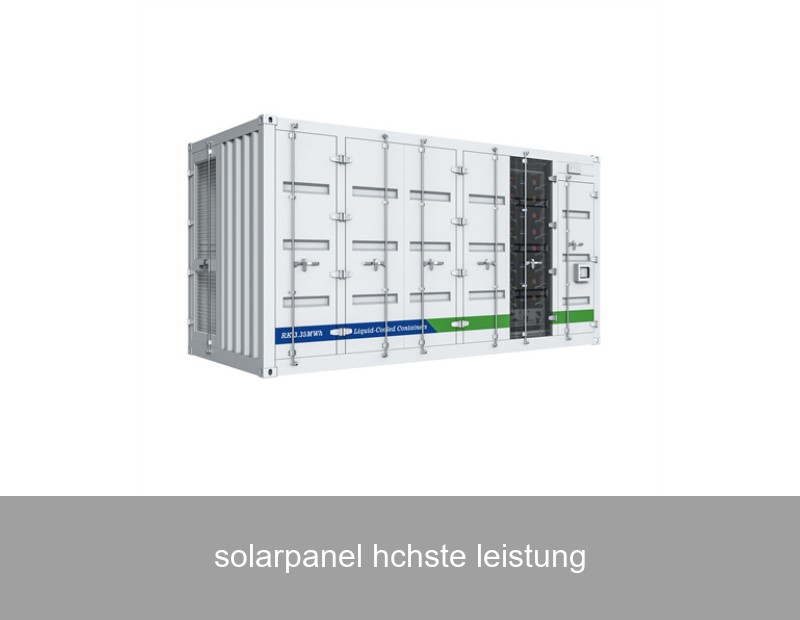
For commercial and industrial applications, our Highjoule Matrix BESS (Battery Energy Storage System) takes this further. It allows facility managers to stack value: maximizing self-consumption of solar, providing backup power, and participating in grid services—all managed through an intuitive, AI-driven interface.
| Component | Common System Challenge | High-Performance Solution |
|---|---|---|
| Panels | Mismatched strings, shading losses | Optimized string design + micro-inverters/optimizers |
| Inverter | Peak clipping, low efficiency at partial load | High-clipping ratio inverters with wide operating voltage |
| Storage | Slow response, shallow cycling degrading battery | High-cycle life LiFePO4 batteries with sub-second response |
| Monitoring | Basic production data only | Per-panel & system-level performance analytics with alerts |
Case Study: Maximizing Output for a Bavarian Dairy Farm
Let's look at a real-world example from our European operations. A dairy farm in Bavaria, Germany, had a 100 kWp rooftop solar array installed in 2018. While initially meeting expectations, the farmers noticed their summer production wasn't aligning with their high milking and cooling loads, and a significant portion of midday solar was being sold to the grid at low feed-in tariffs.
The Goal: Increase self-consumption from 35% to over 70% and ensure stable power for critical cooling systems.
The Highjoule Solution: We conducted a detailed energy audit and installed a tailored 40 kWh Highjoule Harmony ESS with a hybrid inverter. The system was integrated with the existing panels and configured for time-of-use optimization.
The Data-Driven Result (12-month period):
- Self-Consumption Rate: Increased from 35% to 78%.
- Grid Energy Purchased: Reduced by 62%.
- Effective System Yield: While panel output remained physically the same, the utilized yield for the farm's operations increased by over 120%. The battery stored excess noon production for use during high-price evening hours and provided seamless backup during two brief grid outages, preventing milk spoilage.
This case, documented in a report by the U.S. Department of Energy's Solar Energy Technologies Office on storage value, illustrates that true "höchste leistung" is measured not in kilowatts on the roof, but in reliable, usable kilowatt-hours for your specific needs.

Image source: Unsplash. Highjoule technicians provide ongoing analysis to ensure systems perform at their peak.
Future-Proofing Your High-Performance Solar Investment
The energy landscape is dynamic. Today's high feed-in tariff may dwindle tomorrow. Electric vehicles become another household load. Future-proofing is key. This means choosing a system that is modular and software-upgradable.
Our Highjoule systems are designed with this in mind. The Harmony ESS can be expanded with additional battery modules. Its software receives regular updates that improve algorithms for energy arbitrage or enable new grid service functionalities. For microgrids and larger commercial sites, the Matrix BESS platform is inherently scalable, allowing capacity to be added as your business grows or your energy strategy evolves.
Ultimately, achieving and maintaining solar panel höchste leistung is a continuous partnership. It requires quality hardware, intelligent software, and expert support. It's about looking at the complete picture—from the initial site assessment and financial modeling to decades of performance monitoring and maintenance.
Ready to See What True Maximum Performance Looks Like for Your Property?
What specific energy challenge—be it unpredictable bills, demand charges, or a desire for complete resilience—would you like your high-performance solar and storage system to solve?
 Inquiry
 Online Chat