


Why Specialised Battery Systems Are the Cornerstone of a Reliable Energy Future
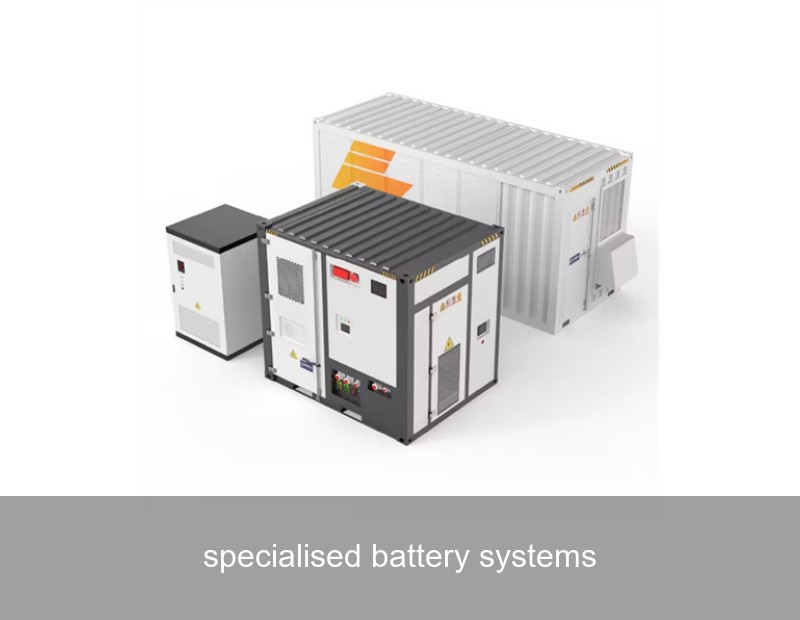
Have you ever wondered why some solar installations seem to effortlessly power through a blackout, while others sputter out? Or why certain industrial facilities can shave massive amounts off their energy bills, while others see less dramatic results? The secret often lies not just in having a battery, but in deploying a specialised battery system. These aren't one-size-fits-all power packs; they are engineered solutions designed for specific challenges, from stabilizing a national grid to powering a single-family home efficiently. As we transition to renewable energy, understanding the critical role of these tailored systems is key to unlocking true energy independence, resilience, and cost savings.
Table of Contents
What Are Specialised Battery Systems?
At its core, a specialised battery system goes far beyond the basic battery cells. It is an integrated ecosystem comprising the battery chemistry itself, a sophisticated Battery Management System (BMS), thermal management, power conversion (inverters), and control software that is precisely calibrated for its primary application. Think of it like vehicles: a family sedan, a heavy-duty truck, and a Formula 1 car all have engines and wheels, but their designs are radically optimised for different purposes. Similarly, a system designed for frequent, rapid grid services differs profoundly from one optimised for daily solar self-consumption in a home.
For instance, a system for frequency regulation needs to respond in milliseconds and handle thousands of partial charge cycles per year. Its chemistry and software are tuned for speed and longevity under those conditions. Conversely, a long-duration storage system for an off-grid microgrid prioritises energy density and cycle life over instantaneous power, ensuring lights stay on through multiple cloudy days.
The Data: Why Specialisation is No Longer Optional
The global push for renewables is creating specific, measurable challenges that generic storage can't solve. According to the International Energy Agency (IEA), the world needs to add nearly 600 GW of energy storage capacity by 2030 to meet climate goals, with the majority being grid-scale battery storage. However, a 2023 study by the U.S. Department of Energy's National Renewable Energy Laboratory (NREL) highlighted that the value of storage is highly dependent on its configuration and the grid services it provides, with value varying by over 300% based on use case.
This isn't just about capacity; it's about capability. A specialised battery system maximises its economic and technical value by being the right tool for the job. Deploying an ill-suited system leads to faster degradation, safety risks, and poor return on investment—a risk no business or utility can afford.
Case Study: Grid Stability in Germany's "Wind North"
Let's look at a real-world example from Northern Germany, a region with a very high penetration of wind energy. The local grid operator faced a recurring problem: grid congestion during periods of high wind and low local demand, forcing them to curtail (waste) clean energy, while simultaneously needing to maintain grid frequency stability.
They deployed a 50 MW / 100 MWh specialised battery storage system with a dual-purpose design. This system wasn't just for bulk energy shifting. Its primary specialisations were:
- Primary Frequency Response (PFR): The system's power electronics and control software were tuned to detect grid frequency deviations and inject or absorb power within seconds, acting as a digital shock absorber for the grid.
- Congestion Management: Its advanced forecasting algorithms, integrated with wind generation data, allowed it to store excess wind power before lines became congested, then release it later when demand rose.

In its first two years of operation, this single system:
- Reduced wind curtailment in its zone by an estimated 18%.
- Provided over 99% availability for frequency containment reserve.
- Generated significant revenue streams from multiple grid service markets, proving its financial viability.
This success story underscores that a purpose-built system delivering multiple, high-value services is fundamentally different from a simple "store and release" battery.
Key Components of a High-Performance Specialised System
What makes a system truly specialised? It's the integration of these critical components:
| Component | Role | Specialisation Example |
|---|---|---|
| Battery Chemistry & Cell Design | Determines core characteristics like energy density, power density, cycle life, and safety. | Lithium Iron Phosphate (LFP) for high-cycle daily use vs. NMC for high power density. |
| Battery Management System (BMS) | The "brain" that monitors and manages cell voltage, temperature, and state of charge. | An industrial BMS for a 40-ft container system handles thousands of cells, while a residential one manages a single cluster. |
| Thermal Management System | Maintains optimal operating temperature for safety, performance, and lifespan. | Liquid cooling for high-power, rapid-cycling grid systems; air cooling for milder residential climates. |
| Power Conversion System (PCS/Inverter) | Converts DC battery power to AC grid power and controls the flow. | A modular, bi-directional inverter stack for scalable commercial systems vs. a single-phase hybrid inverter for homes. |
| Energy Management System (EMS) & Software | The "orchestra conductor" that optimises system operation based on goals (e.g., save money, support grid). | AI-driven software that forecasts energy prices and automatically trades in markets for a utility-scale system. |
The Highjoule Approach: Engineering Specialised Battery Systems for Every Scale
At Highjoule, with nearly two decades of experience since 2005, we believe true innovation lies in precision engineering, not generic packaging. Our portfolio is built around the principle of application-driven design. We don't just sell batteries; we deliver integrated specialised battery systems that are optimised from the cell level up for their intended mission.
For our commercial and industrial (C&I) clients across Europe and the U.S., this means systems like our H-Series Industrial Stack. It's engineered for demanding duty cycles like peak shaving and demand charge management. Its liquid-cooled architecture and high-cycle LFP chemistry ensure it can discharge deeply and recharge daily for 15+ years, directly translating to maximum bill savings and ROI. The integrated EMS can be programmed to follow complex utility rate schedules automatically.

For utility and microgrid applications, our MegaArray Platform is a containerised solution specialising in grid services and renewable firming. It features a modular design that allows for independent scaling of power and energy capacity. This means a grid operator can tailor the system specifically for frequency regulation (high power, lower energy) or for solar smoothing (longer duration), using the same foundational technology. Our proprietary GridSync™ control software is what makes it truly specialised, enabling seamless, compliant participation in ancillary service markets like FERC 841 in the U.S. or balancing markets in Europe.
Even for residential users seeking energy independence, our approach is tailored. The Highjoule Home Hub isn't just a wall-mounted battery. It's a system designed for seamless integration with existing solar, intelligent backup power management that prioritizes critical loads, and software that maximizes self-consumption of rooftop solar based on the homeowner's unique usage patterns.
Choosing the Right Specialised System: Key Questions to Ask
Navigating the world of specialised battery systems can be complex. To find the right solution, start by asking these questions:
- What is my primary objective? (e.g., Reduce electricity bills, ensure backup power, provide grid services, increase renewable usage?)
- What is my site's specific energy profile? Analysis of your load curves and generation patterns is essential.
- What are the regulatory and market opportunities? Are there incentives, tariffs, or grid service programs available?
- How is the system's software intelligence tailored to my goal? The hardware is only half the solution.
- Does the provider have proven experience in my specific application? Ask for case studies and references.
The future of energy is not just stored; it's intelligently orchestrated. As we move towards grids powered by variable renewables, the flexibility and precision offered by specialised battery systems become the linchpin of reliability and efficiency. They transform batteries from passive storage units into active, value-generating assets.
What specific energy challenge is your business or community looking to solve, and how could a purpose-built storage system be designed to address it?
 Inquiry
 Online Chat