


Understanding Speicher mit Nulleinspeisung: The Future of Energy Self-Consumption
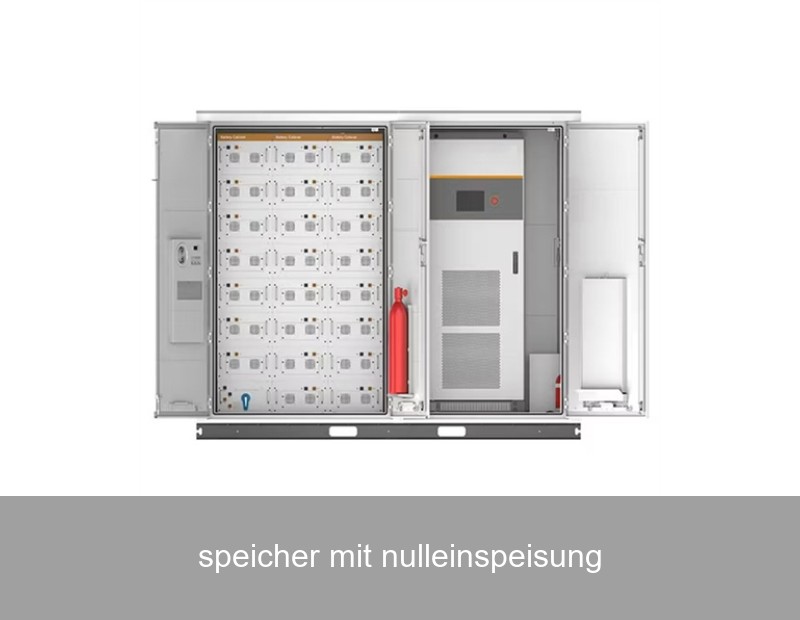
Have you ever looked at your solar panels on a bright, sunny day and wondered if you could use all that free energy they're producing? For many homeowners and businesses across Europe and the US, this is a common thought. The electricity meter spins backwards as excess power feeds into the grid, but what if you could capture every kilowatt-hour for yourself? This is where the concept of Speicher mit Nulleinspeisung—or a storage system with zero feed-in—comes into play. It's a transformative approach to energy management that prioritizes self-consumption, maximizes independence, and is rapidly gaining traction as grid dynamics evolve. As a leader in advanced energy storage, Highjoule has been at the forefront of developing intelligent systems that make this high-efficiency model not just possible, but practical and profitable.
Table of Contents
- What is a "Speicher mit Nulleinspeisung"?
- The Driving Forces: Why Zero Feed-In is Gaining Momentum
- How Does a Zero Feed-In System Actually Work?
- A Real-World Case Study: The Schmidt Family Home
- Highjoule's Intelligent Solutions for Zero Feed-In
- Is a Zero Feed-In System the Right Choice for You?
What is a "Speicher mit Nulleinspeisung"?
Let's break down the term. "Speicher" means storage, referring to a battery energy storage system (BESS). "Nulleinspeisung" translates to zero feed-in. Combined, it describes a setup where a photovoltaic (PV) system is coupled with a battery, and all the solar energy produced is either used directly in the home or business, or stored in the battery for later use. None of the surplus energy is exported to the public electricity grid.
This is a significant shift from traditional net-metering or feed-in tariff models. In those systems, excess solar power is sold back to the utility, often at a rate lower than the retail price of electricity. A Speicher mit Nulleinspeisung flips the script: it treats the grid purely as a backup, not a battery. The primary goal is to achieve the highest possible degree of energy self-sufficiency (Autarkiegrad).

Image Source: Unsplash - A modern home equipped for solar self-consumption.
The Driving Forces: Why Zero Feed-In is Gaining Momentum
The trend towards Speicher mit Nulleinspeisung isn't happening in a vacuum. It's a direct response to several powerful economic and regulatory currents.
- Declining Feed-in Tariffs (FiTs): Across Europe, generous subsidies for solar power fed into the grid are being phased out. In Germany, for instance, the EEG (Renewable Energy Act) feed-in rates for new systems are now far below consumer electricity prices. Clean Energy Wire reports that the economics now strongly favor self-consumption.
- Rising Electricity Prices: Volatile energy markets have led to consistently high retail electricity costs. Every kilowatt-hour you self-consume is one you don't have to buy at these high rates, offering a direct and predictable return on investment.
- Grid Stability Concerns: As more renewables come online, utilities are managing increasingly decentralized and variable power flows. In some regions, grid operators are even limiting new PV connections or imposing strict feed-in caps. A zero-feed-in system proactively addresses these grid constraints.
- Desire for Energy Independence: Beyond economics, there's a growing consumer desire for resilience and control over one's energy supply, insulating from blackouts and price spikes.
How Does a Zero Feed-In System Actually Work?
The magic lies in sophisticated energy management. It's not simply about disconnecting from the grid. Here's the typical operational logic:
- Priority 1: Direct Consumption: Solar power generated during the day is first used to power active appliances in the home.
- Priority 2: Battery Charging: Any excess solar energy, instead of going to the grid, is directed to charge the battery storage system.
- Priority 3: Grid as Backup: When solar production is low (at night or on cloudy days) and the battery is depleted, power is drawn from the public grid.
- The Control Unit: A smart inverter or energy management system (EMS) constantly monitors production, consumption, and battery state of charge. It dynamically regulates the flow of energy, ensuring zero export at the grid connection point. This requires precise, millisecond-level control.
This is where Highjoule's expertise becomes critical. Our IntelliBESS 5.0 platform features an advanced EMS with patented forecasting algorithms. It doesn't just react; it learns your consumption patterns and predicts solar generation, optimizing battery charging and discharging cycles to maximize self-consumption while protecting battery health and ensuring you never inadvertently feed the grid.
A Real-World Case Study: The Schmidt Family Home, Bavaria, Germany
Let's look at concrete data. The Schmidt family installed a 10 kWp rooftop PV system with a Highjoule HomePower 10 battery (13.8 kWh usable capacity) configured for Speicher mit Nulleinspeisung in early 2023.
| Metric | Data (First Full Year) |
|---|---|
| Total PV Production | 9,850 kWh |
| Total Household Consumption | 8,200 kWh |
| Self-Consumption Rate (from PV & Battery) | 94% |
| Grid Import (Backup) | ~500 kWh |
| Grid Export (Feed-In) | 0 kWh (as designed) |
| Estimated Energy Cost Savings* | €2,460 annually |
*Based on a conservative electricity price of 0.30 €/kWh. Savings include avoided grid purchases and all grid fees and taxes on self-consumed energy.
"Our goal was to be as independent as possible and not stress the local grid with our solar power," says Mr. Schmidt. "The Highjoule system manages it seamlessly. We barely notice it working, but our electricity bills have been reduced to just the basic service charge for most of the year." This case exemplifies the tangible benefits: near-total energy self-sufficiency, significant cost savings, and a grid-friendly profile.
Highjoule's Intelligent Solutions for Zero Feed-In
At Highjoule, we don't just sell batteries; we provide integrated, intelligent energy ecosystems. Our products are engineered from the ground up to excel in Speicher mit Nulleinspeisung applications.
- Highjoule HomePower Series: Our residential battery systems feature built-in, UL-certified islanding protection and advanced grid-interactive controls. They come pre-configured with zero-feed-in profiles that can be easily activated by the installer, complying with local grid codes (like VDE-AR-N 4105 in Germany or UL 1741 SA/CA in the US).
- IntelliBESS Energy Management Software: The brain of the system. It uses AI-driven forecasting to pre-charge the battery before predicted low solar periods and can integrate with smart home devices to shift loads (like EV charging or heat pumps) to high-production times, further optimizing self-use.
- Commercial & Industrial (C&I) Solutions: For businesses, our GridMax C&I storage systems perform peak shaving and demand charge management while operating in zero-export mode. This is crucial for facilities with strict grid connection agreements or in areas with weak grid infrastructure.
Our approach ensures that achieving zero feed-in doesn't mean sacrificing performance, safety, or compliance. It's about smarter, more efficient energy utilization.

Image Source: Unsplash - Representative image of a commercial-scale battery storage system.
Is a Zero Feed-In System the Right Choice for You?
While powerful, Speicher mit Nulleinspeisung is not a one-size-fits-all solution. Consider these factors:
- Your Local Regulations: Some grid operators mandate specific technical requirements for zero-feed-in systems. Highjoule's global partner network is well-versed in these local codes.
- System Sizing: Critical for success. The PV and battery system must be sized to match your consumption profile throughout the year, not just peak summer production. Oversizing the battery can be uneconomical; undersizing it leaves potential savings untapped.
- Financial Model: With diminishing feed-in revenue, the business case for self-consumption strengthens. Calculate based on your cost to avoid grid electricity, not on lost feed-in income.
- Future-Proofing: Consider future loads like an electric vehicle or heat pump. A flexible system like Highjoule's can be expanded with additional battery modules as your needs grow.
The Path Forward for Energy Independence
The energy landscape is shifting from a centralized, one-way grid to a decentralized, interactive network. Speicher mit Nulleinspeisung represents a mature, grid-supportive step in this transition. It empowers consumers, alleviates grid stress, and accelerates the renewable transition by making every clean electron count right where it's generated.
At Highjoule, we believe the future of energy is intelligent, self-optimizing, and user-centric. Our systems are designed to give you control, whether your goal is 100% self-consumption or a more nuanced approach. What energy consumption pattern does your home or business follow, and how might an intelligent storage system reshape it?
 Inquiry
 Online Chat